Exploring Stockholm

Exploring Stockholm
Stockholm, Sweden’s magnificent capital city, is a unique urban marvel. Founded in the 13th century, it quickly rose as a strategic trading post. It commanded access between Lake Mälaren and the Baltic Sea. The city’s very foundation lies in its unique geography, built across islands and peninsulas. Historically, Stockholm Municipality famously spans two ancient provinces: Uppland to the north and Södermanland to the south. Its historic core, Gamla Stan, lies firmly in Uppland. It has served as the royal capital and the nation’s political and cultural center for centuries.

Population
Stockholm Municipality has a population of approximately 990,000 people as of early 2025. This makes it Sweden’s largest single municipality. It’s also its most densely populated. The city’s inhabitants are spread across numerous districts. Each has a distinct character. While Stockholm is a singular city, its various areas feel like interconnected urban villages.
Location
Stockholm Municipality is strategically located on Sweden’s eastern coast. It’s built on 14 islands and adjacent peninsulas. Here, Lake Mälaren meets the Baltic Sea. This unique geographical position, straddling both fresh and saltwater, has been central to its historical development. It also underpins its status as a major port city. The municipality is primarily nestled within the historical provinces of Uppland and Södermanland.
Geography
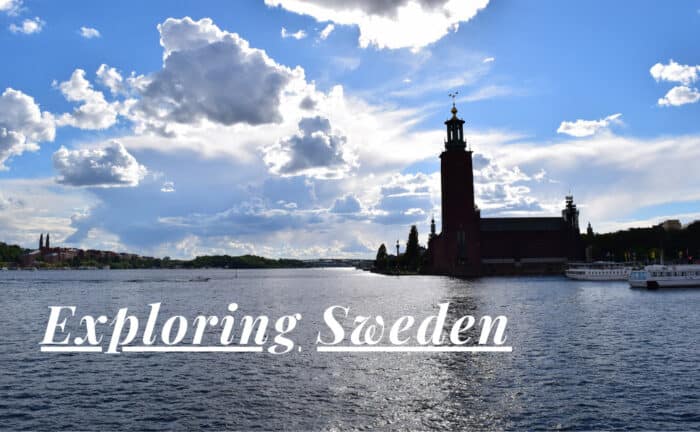
Stockholm’s geography is remarkably distinctive. It is defined by its island cityscape, where land and water intertwine. The city center is built on islands, connected by numerous bridges. To the east, the city flows seamlessly into the vast Stockholm Archipelago. This is one of the world’s largest archipelagos. It features thousands of islands and skerries. Lake Mälaren lies to the west. Its fresh waters are also dotted with islands. Green spaces and urban parks are abundant within the city. This creates a balance between urban development and nature. The terrain is generally low-lying. Some elevated areas provide scenic viewpoints.
Entry Points to Stockholm
Stockholm Municipality is exceptionally well-connected globally. It serves as Sweden’s primary hub for international and domestic travel.
By Air
Stockholm is served by multiple major airports. Stockholm Arlanda Airport (ARN) is Sweden’s largest and most significant international airport. Located north of Stockholm (in Uppland), Arlanda offers extensive direct flights worldwide. Frequent train services, like Arlanda Express, and airport buses provide fast connections to Stockholm city center and Uppsala. Stockholm Bromma Airport (BMA), situated just west of Stockholm city center, primarily handles domestic flights. It offers convenient connections to other Swedish cities and is popular for business travelers. From both Arlanda and Bromma, ground transport is readily available.
By Sea
Stockholm’s unique position allows significant sea access, particularly through its major ports. Stockholm Ports, including Värtahamnen, Frihamnen, and Stadsgården, are major international passenger ferry terminals. They offer regular ferry services to Finland, Estonia, and other Baltic Sea countries. Operators like Tallink Silja Line and Viking Line provide these routes. These ports directly serve the city center. Numerous smaller harbors and marinas also dot the coastline. They cater to leisure boats and local archipelago traffic. Scenic boat tours explore the vast archipelago from various city quays.
By Land
Land travel is exceptionally convenient due to Stockholm’s central location. It has highly developed road and rail infrastructure, centered around Stockholm.
- By Car: Major national highways converge in Stockholm. The E4 highway, Sweden’s main north-south artery, runs directly through Stockholm. It connects to Uppsala and Arlanda in the north. It also links to Södertälje and southern Sweden. The E18 highway links Stockholm with Västerås and Oslo. The E20 connects to Gothenburg. Driving offers superb flexibility for exploring the city’s surroundings, but city driving can be busy.
- By Train: Stockholm Central Station is Sweden’s main railway hub. It has direct connections to all major Swedish cities. Long-distance trains efficiently link to Gothenburg, Malmö, and all parts of Sweden. Regional trains (SL commuter trains, Mälartåg) provide extensive services within the Stockholm region. This allows easy travel between various city districts and nearby towns.
- By Bus: Various long-distance bus companies offer comprehensive services to Stockholm. These connect the capital to regions across Sweden and even parts of Europe. Extensive regional bus networks (SL buses) provide excellent local coverage within the city and its surrounding areas. This facilitates convenient public transport.
Places to Explore in Stockholm


Explore more of Sweden and Europe