Vlkolínec | Exploring Slovakia
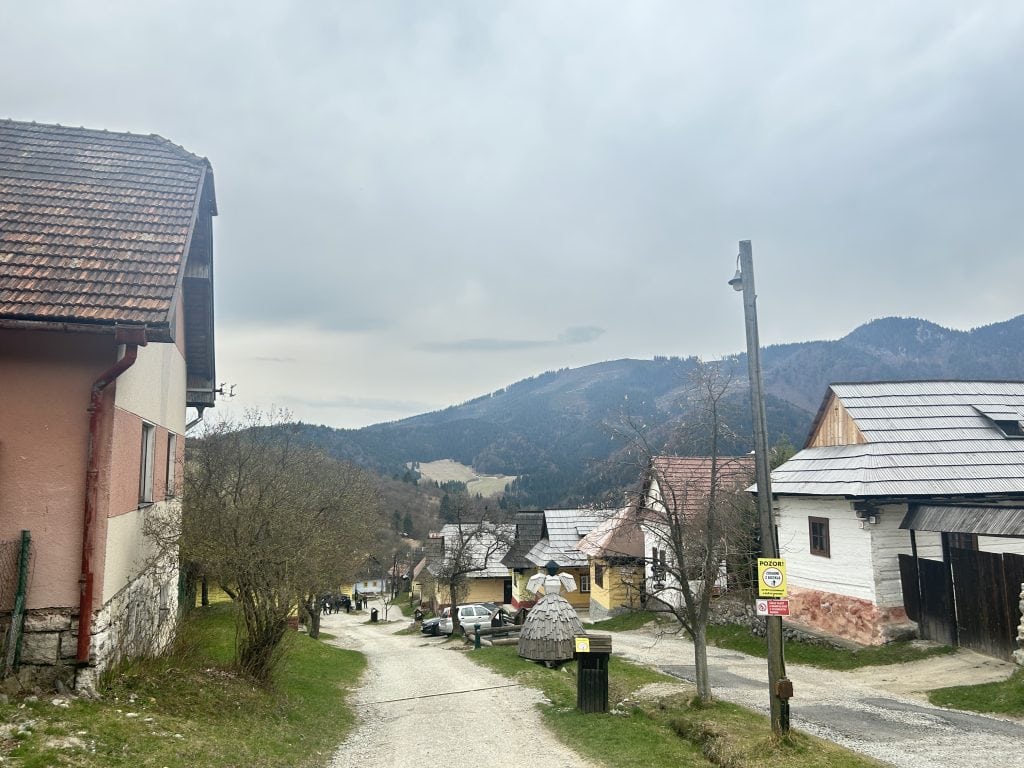
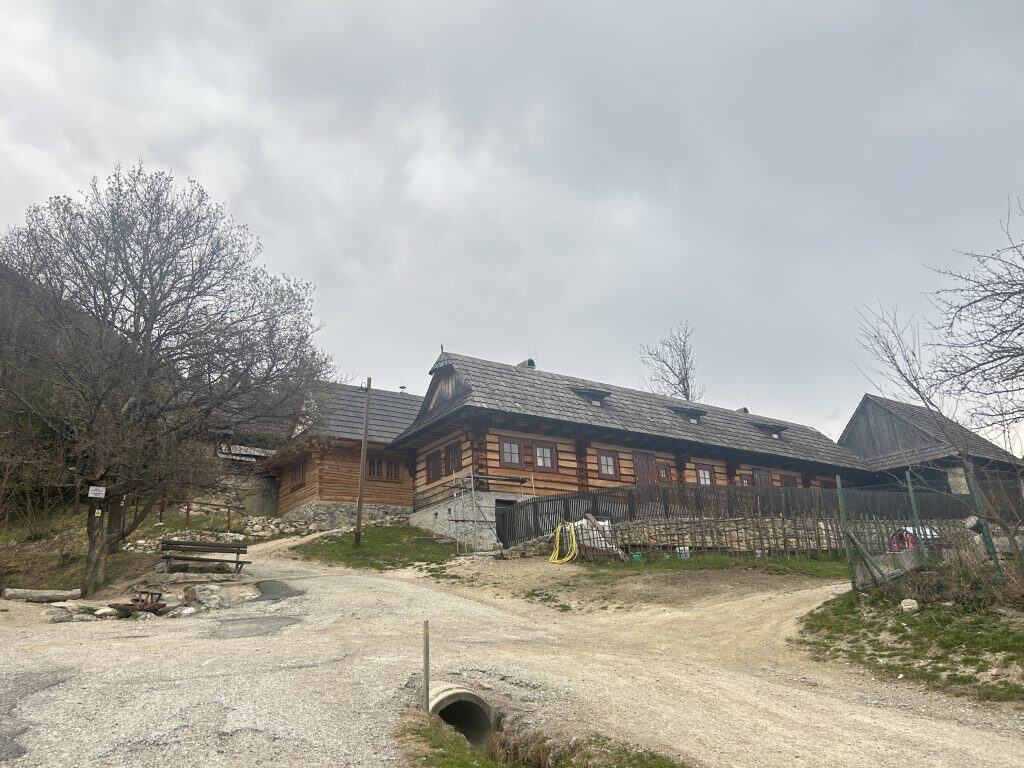
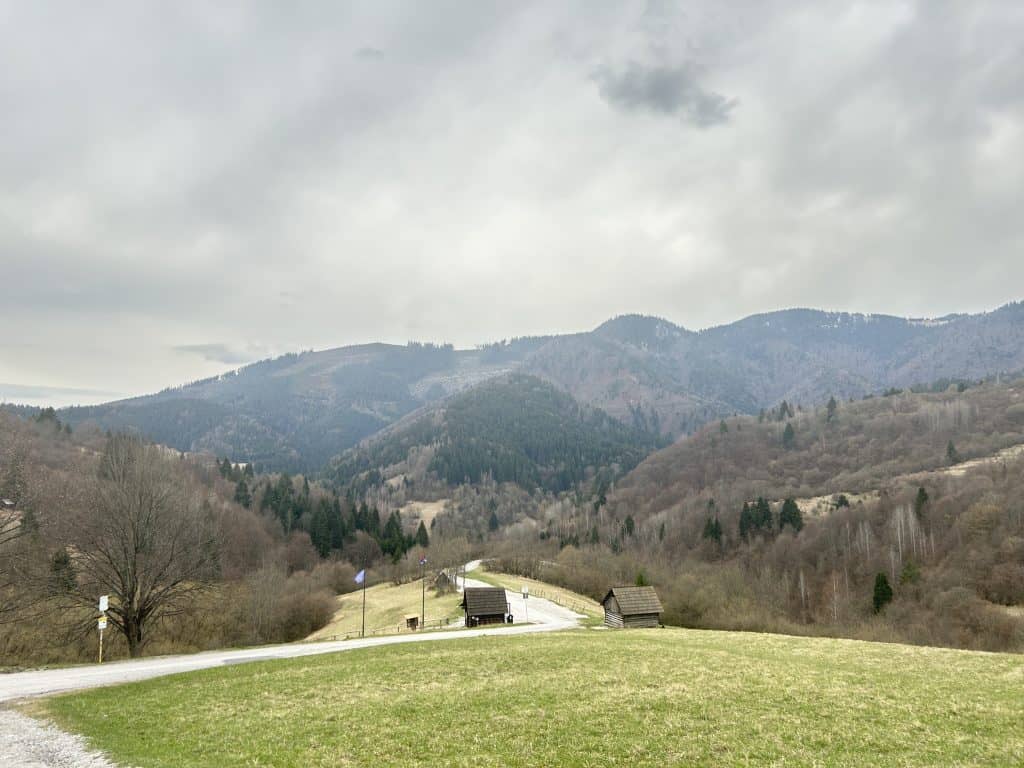
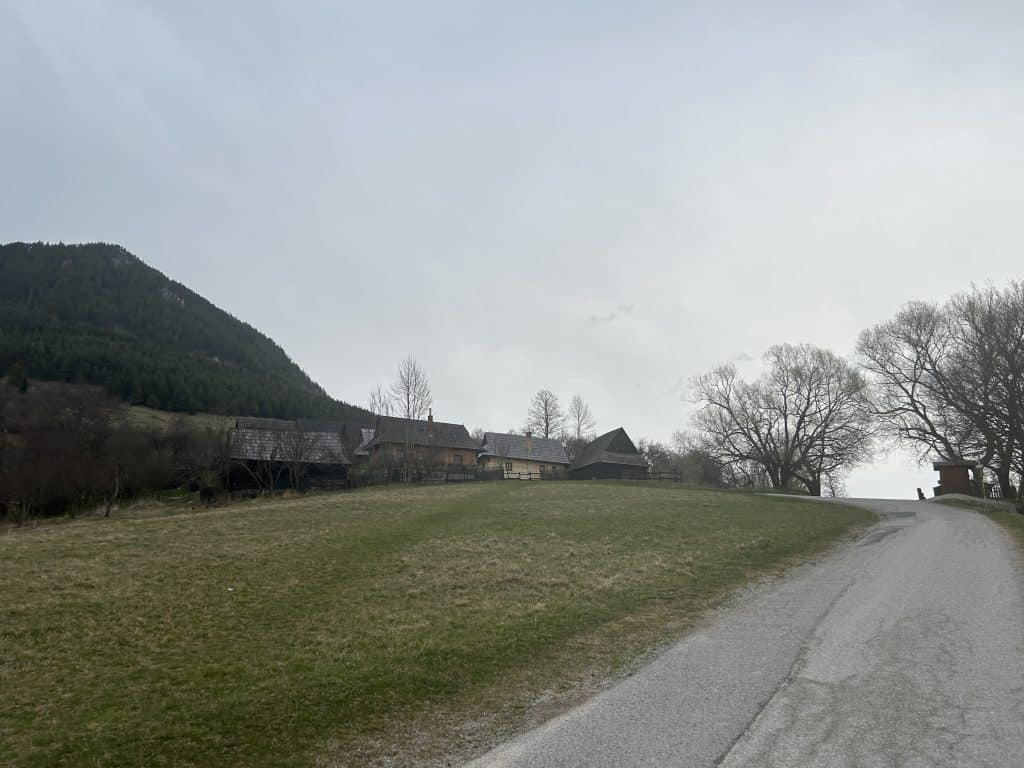
Vlkolínec is a village in central Slovakia, administratively part of the town of Ružomberok. It is located in a valley beneath the mountains of the Greater Fatra (Veľká Fatra) range. The village is a UNESCO World Heritage site, recognized for its well-preserved folk architecture. It is a small, still-inhabited settlement, with a permanent population of around 30 people.
The character of Vlkolínec is defined by its status as a nearly perfectly intact example of a traditional Central European mountain village. Its layout, log-house architecture, and rural setting have been preserved with minimal modern intrusions. The village provides a direct look into the building techniques, agricultural life, and social structure of a rural community from centuries past.


A Short History of Vlkolínec
The history of Vlkolínec is that of a remote mountain settlement whose isolation became the key to its preservation. Its development from a feudal property to a protected heritage site reflects its unique journey through the centuries.
Medieval Origins and Feudal Rule
The origins of Vlkolínec trace back to the medieval period, with its first written mention in historical records dating to 1376. It was originally part of the extensive Likavka castle estate, which controlled much of the surrounding territory. The village developed as a typical mountain and forest settlement. Its inhabitants primarily lived off subsistence farming, logging, and sheep herding, relying directly on the land for their sustenance.
A Legacy of Wooden Architecture
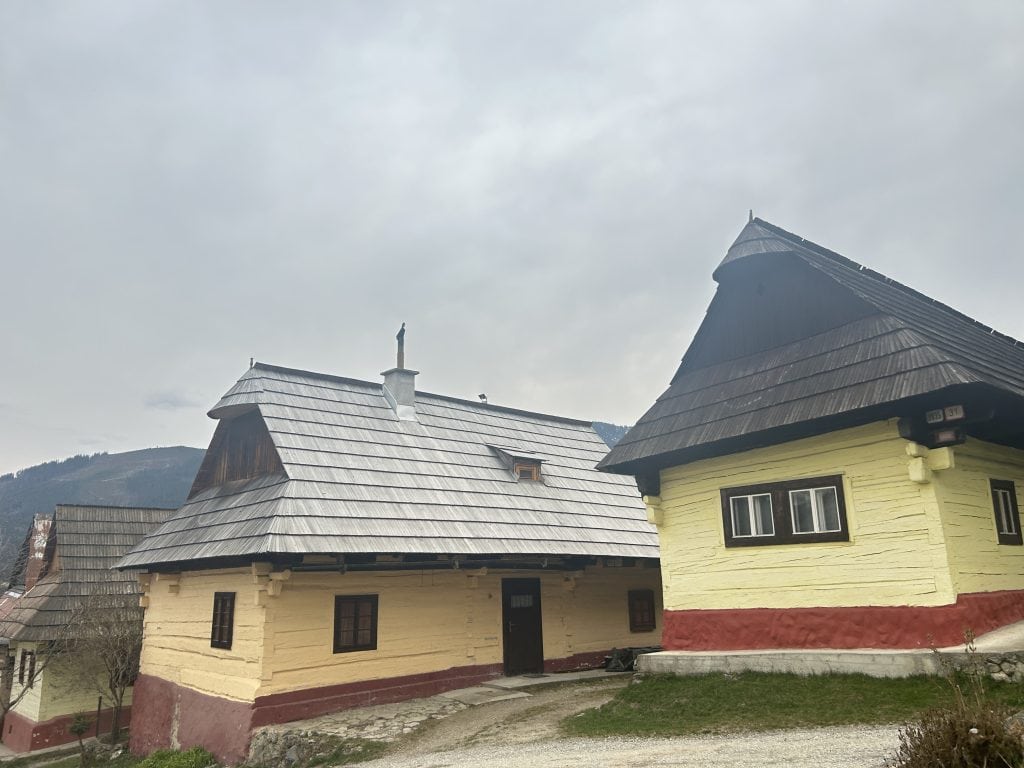
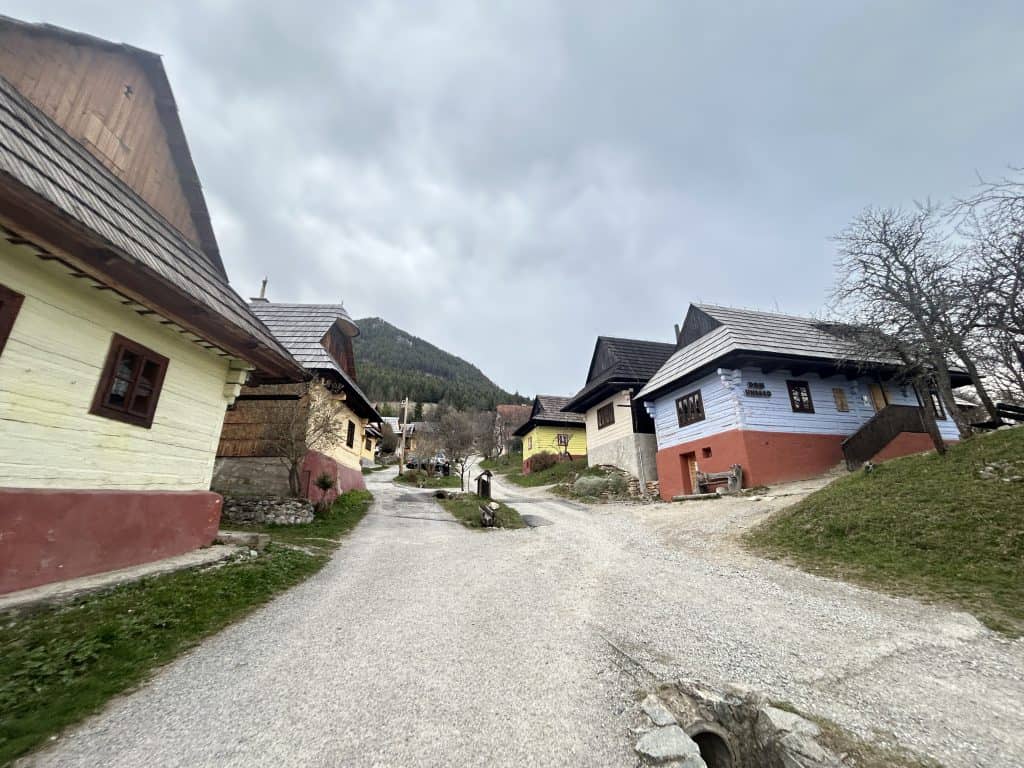
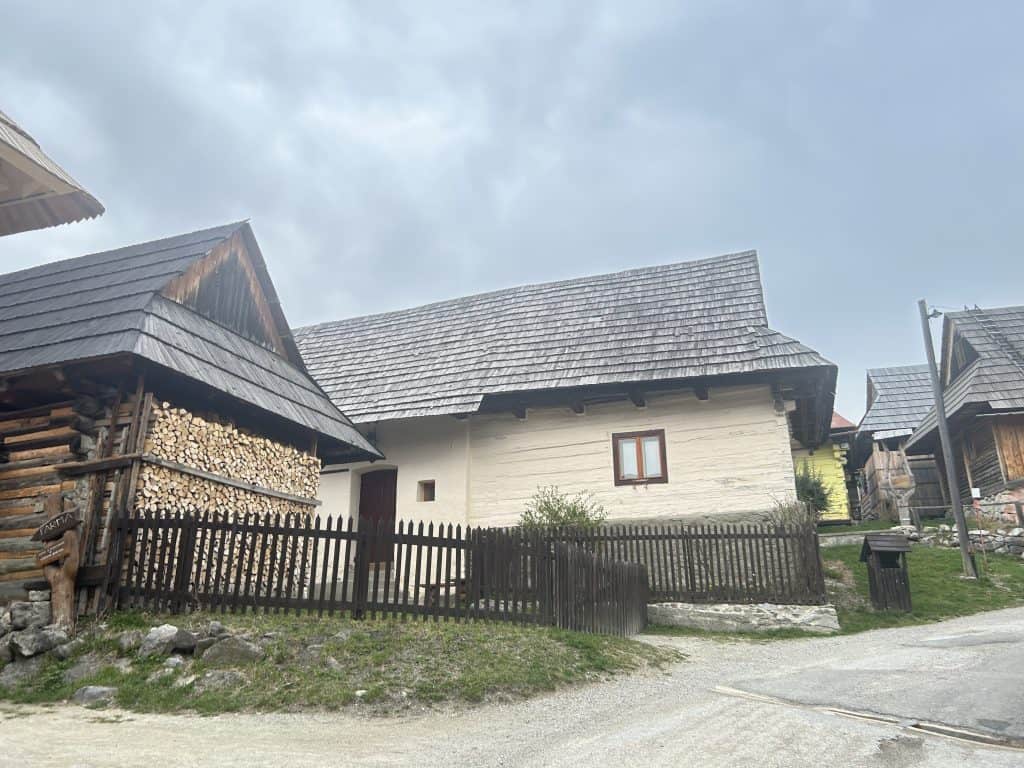
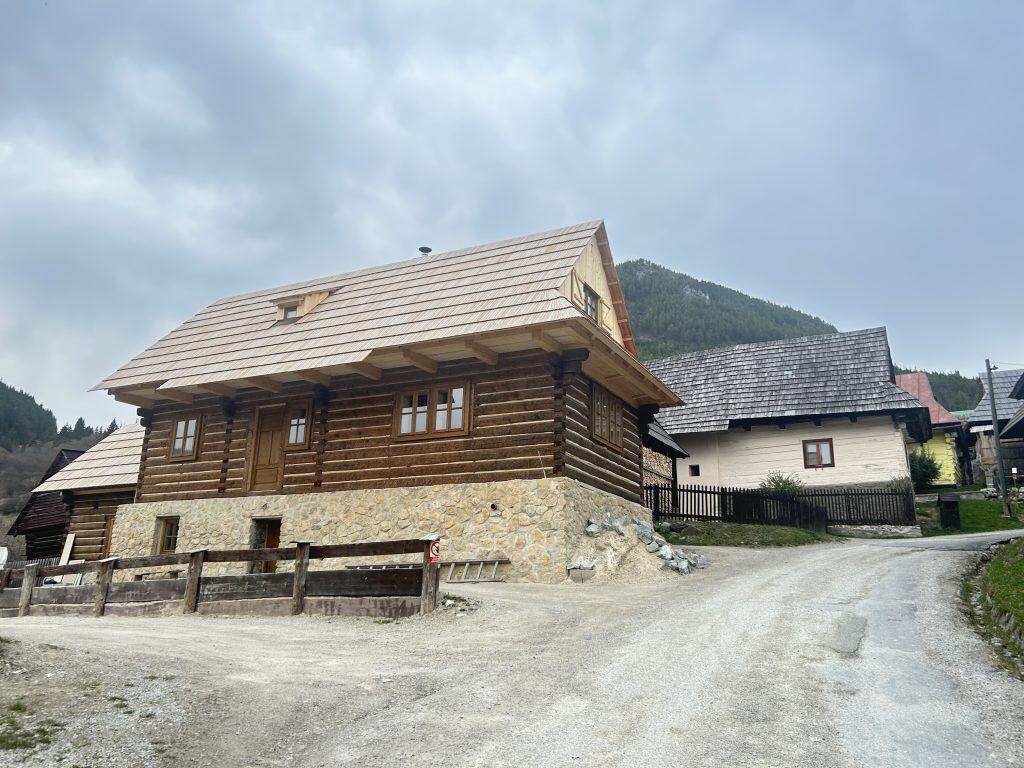
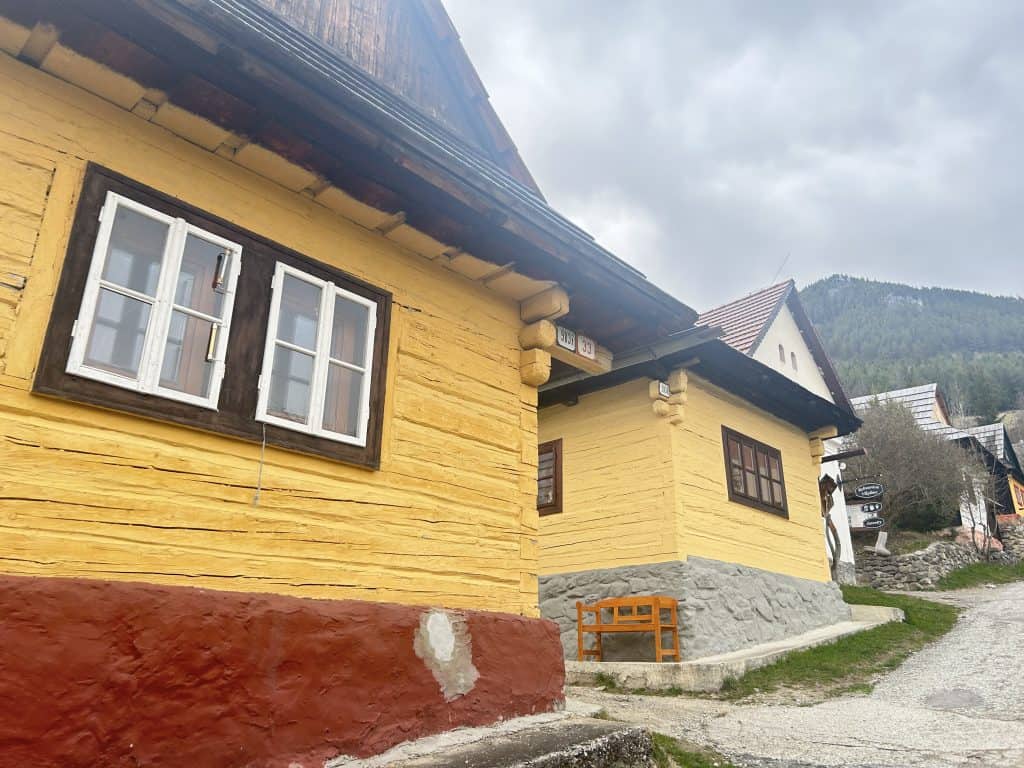
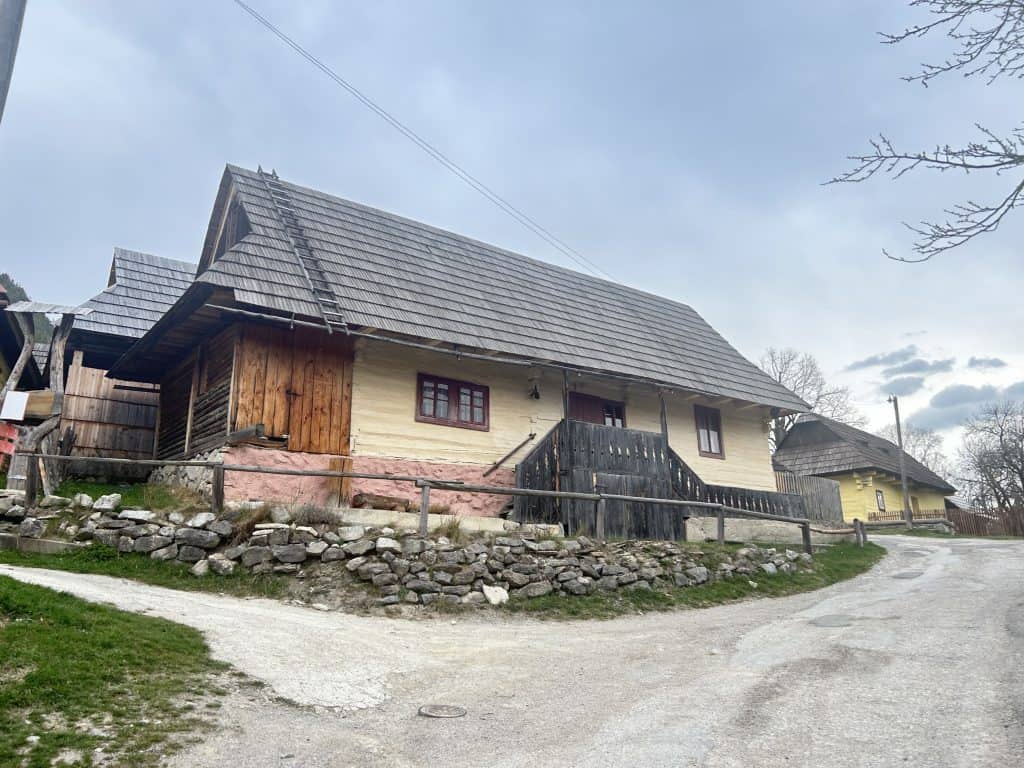
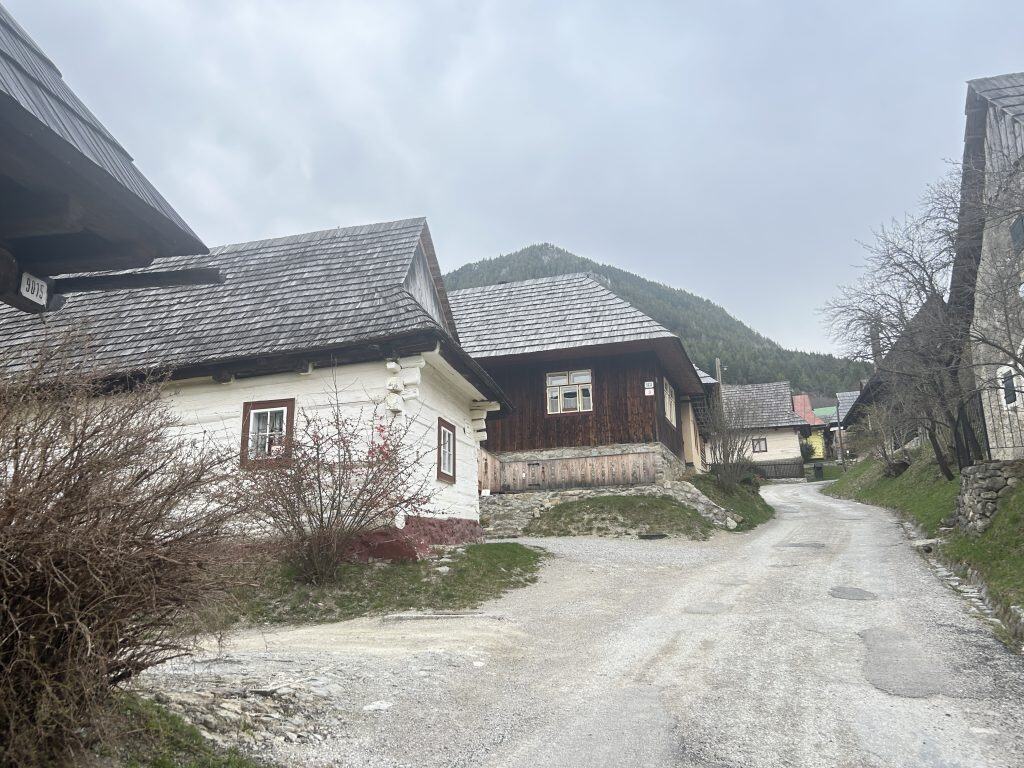
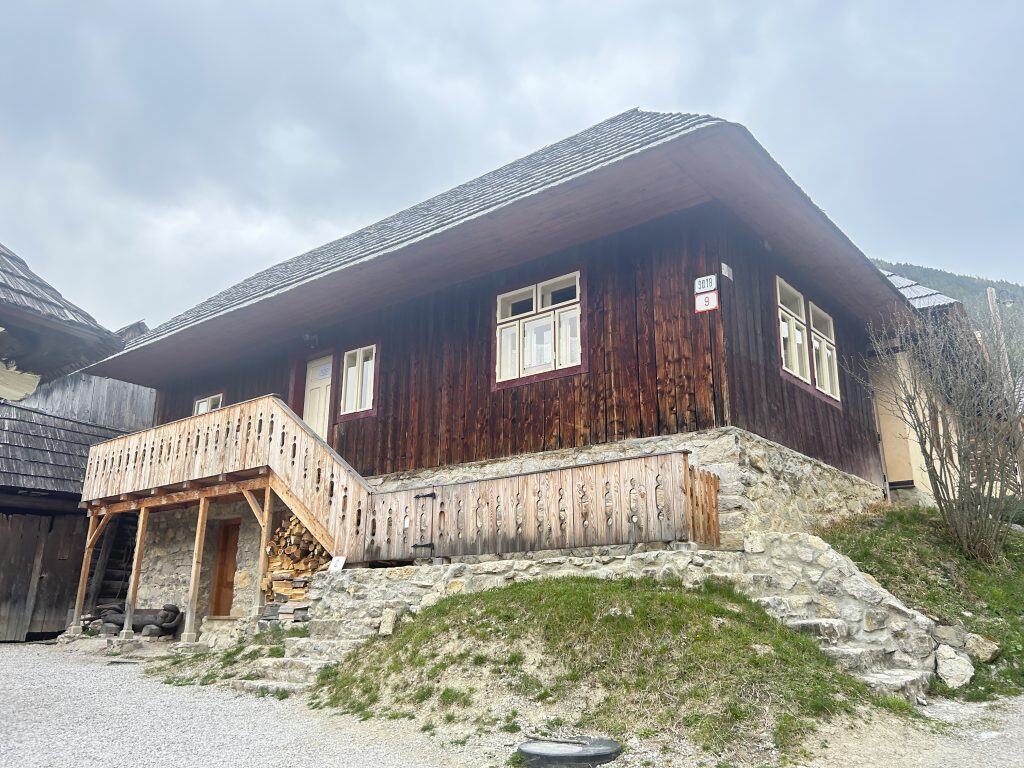
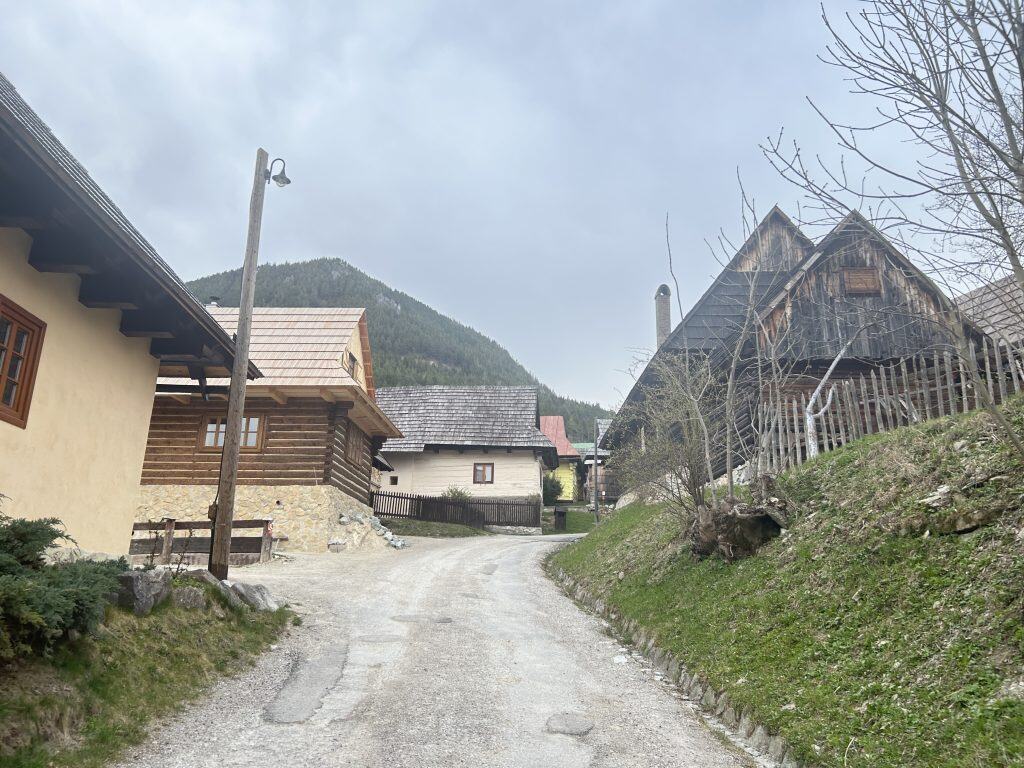
The houses in Vlkolínec are examples of traditional Central European wooden architecture. They were constructed using methods passed down through generations. These buildings are built entirely with wood, often on a stone underpinning, with the logs coated in clay plaster. Their steep, shingled roofs are a notable feature, designed to handle heavy snowfall. While this architectural style was once common across the region, it is now exceedingly rare, making Vlkolínec a preserved example of these building traditions.
Preservation and UNESCO Recognition
The village’s remote location was a primary factor in its preservation. It prevented the influx of modern construction and allowed its traditional form to survive intact. Recognizing its exceptional value, the Czechoslovak government designated Vlkolínec a protected folk architecture reserve in 1977. Its importance was further recognized globally in 1993, when it was inscribed on the UNESCO World Heritage list. Today, Vlkolínec stands as a significant example of a traditional Central European village.




Things to Do and See
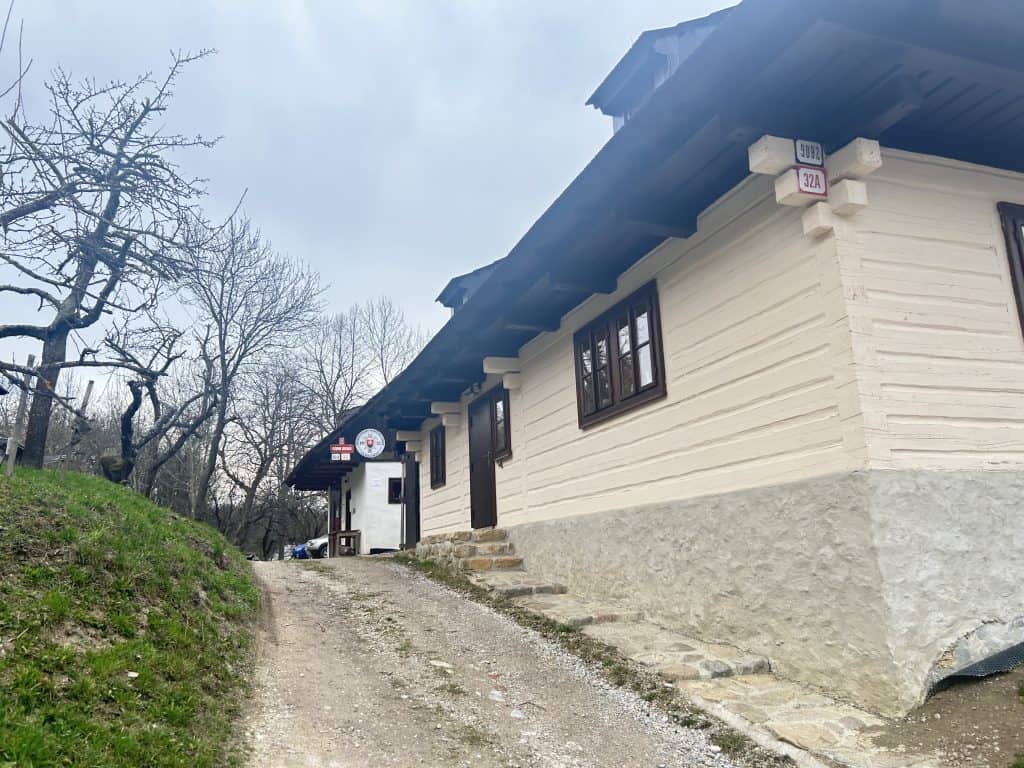
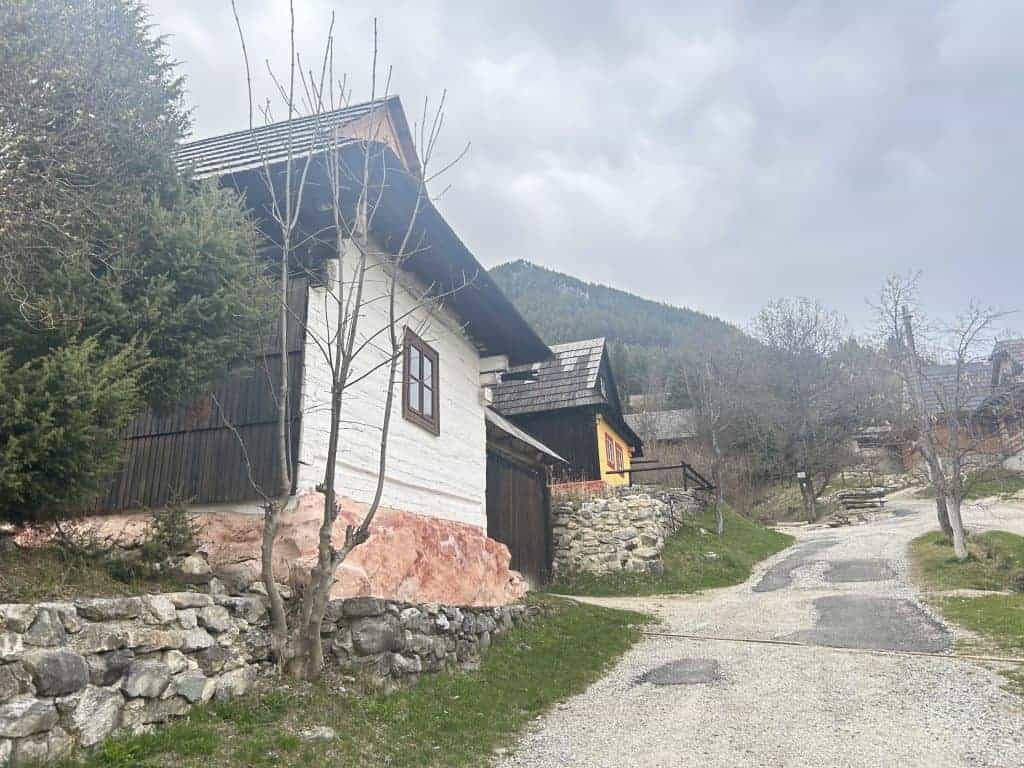
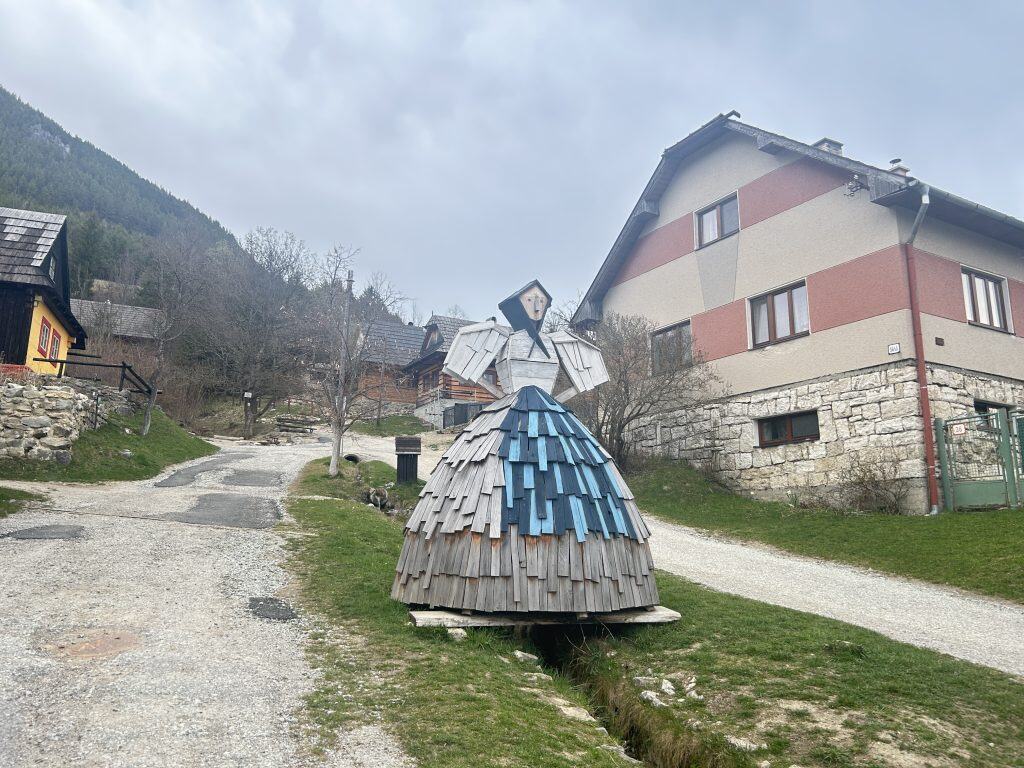
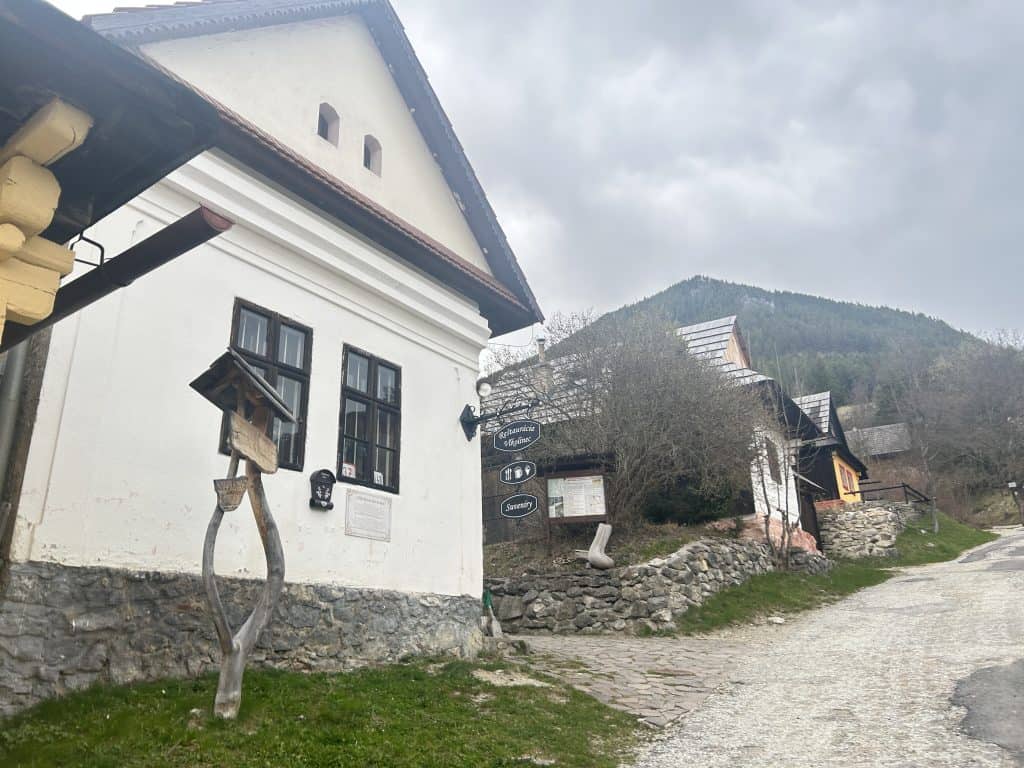
The primary sight in Vlkolínec is the village itself, which functions as an open-air museum of folk architecture. The settlement consists of 45 preserved log houses built in the traditional style on narrow lots. As visitors walk along the main unpaved street, they can observe the construction of these homes. The logs are coated with clay and typically painted in characteristic pastel colors like blue, pink, and white. The careful preservation means there are no intrusive modern elements like power lines visible in the historic core.
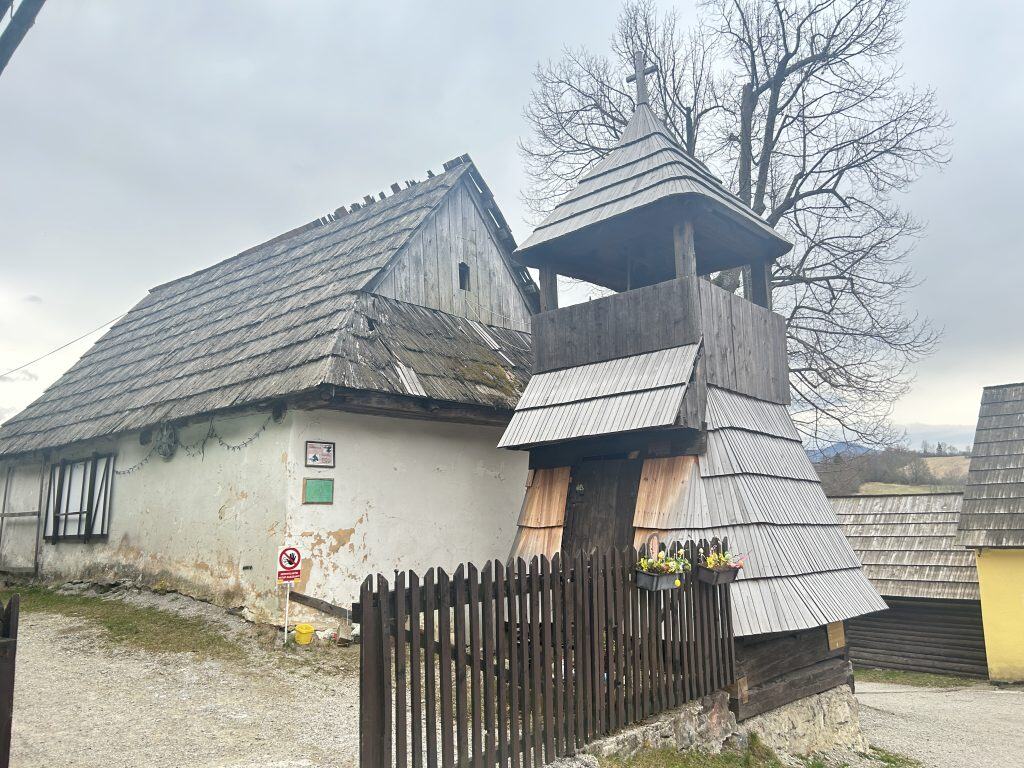
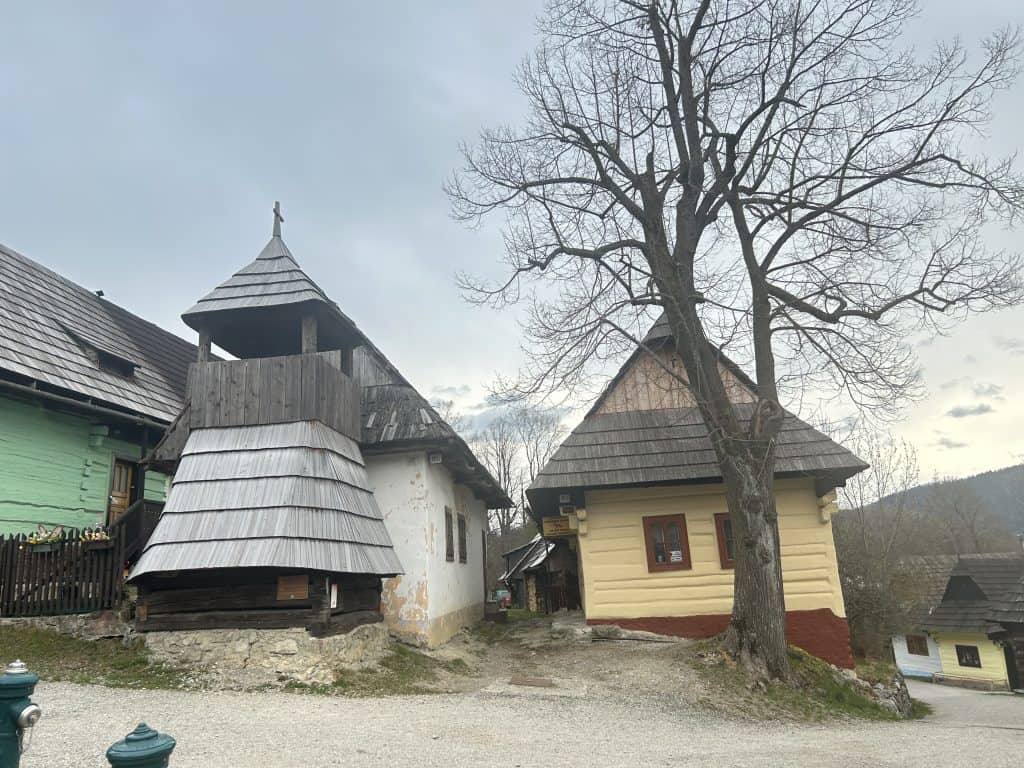
Several specific structures stand out within the village ensemble. A two-story wooden belfry from 1770 is located centrally and is one of the oldest preserved buildings. The only stone building in the historic core is the Church of the Visitation of the Virgin Mary, which was constructed in 1875. Near the belfry, a historic log-lined well from 1860 is also preserved and remains functional. To provide insight into the daily life of former inhabitants, one of the houses, the Farmer’s House (Roľnícky dom), is open as a museum, showcasing a traditional three-room interior with period-appropriate tools and furnishings.


How to Get to Vlkolínec
Reaching Vlkolínec involves travel to the city of Ružomberok in central Slovakia. From there, a final approach by road is required. Direct vehicle access into the protected village itself is not permitted for tourists.
Arriving by Air: Nearby Gateways
The closest major airport to Vlkolínec is Poprad-Tatry Airport (TAT), located approximately 70 kilometers away. However, it has limited international connections. Other well-connected options, though further, include Krakow (KRK) in Poland, Budapest (BUD) in Hungary, and Bratislava (BTS). From any of these airports, the journey must be completed by train, bus, or car to Ružomberok.
The Open Road: Driving to the Village
Driving offers flexibility for reaching Vlkolínec. The nearby city of Ružomberok is well-connected to Slovakia’s main road network. From Ružomberok, Vlkolínec is approximately 10 kilometers to the south. Direct vehicle access into the historic village is restricted. A designated parking lot is available at the village’s base. From this parking area, visitors must walk uphill for about 15-20 minutes to enter Vlkolínec.
Connecting by Coach: A Regional Journey
Regional bus services connect to the area. From the main bus station in Ružomberok, you can take a local bus service that stops at ”Biely Potok.” This stop is located at the turn-off from the main road that leads up to Vlkolínec. From the bus stop, it is an uphill walk of over a kilometer to reach the village entrance. It is advisable to check local schedules in advance.
On Track: A Journey by Rail and Bus
The closest major train station is in Ružomberok. The station is a key hub on Slovakia’s main railway line, with frequent connections from major cities like Bratislava, Žilina, and Košice. From the Ružomberok train station, you would then need to transfer to a local bus or take a taxi to the entry point of Vlkolínec. The final part of the journey is then completed on foot.
Driving Distances
The driving distance to Vlkolínec from 8 major regional cities, according to Google Maps:
- Bratislava, Slovakia – 265 kilometers (3 h 00 min)
- Žilina, Slovakia – 62 kilometers (1 h 00 min)
- Košice, Slovakia – 186 kilometers (2 h 10 min)
- Budapest, Hungary – 203 kilometers (3 h 20 min)
- Krakow, Poland – 141 kilometers (2 h 40 min)
- Vienna, Austria – 347 kilometers (3 h 50 min)
- Brno, Czech Republic – 283 kilometers (3 h 20 min)
- Ostrava, Czech Republic – 155 kilometers (2 h 20 min)
Looking to Explore more of Slovakia and Europe?