Prešov | Exploring Slovakia
Prešov is a city in Eastern Slovakia and the seat of the Prešov Region. With approximately 83,000 inhabitants, it is the third-largest city in Slovakia. It also serves as the largest city and the cultural heart of the historical Šariš region. The city has several historical names, including the Hungarian name Eperjes, the German name Preschau, and the Polish name Preszów. These names reflect its long history within the Kingdom of Hungary and its early settlement by German colonists, as well as its proximity to Poland.
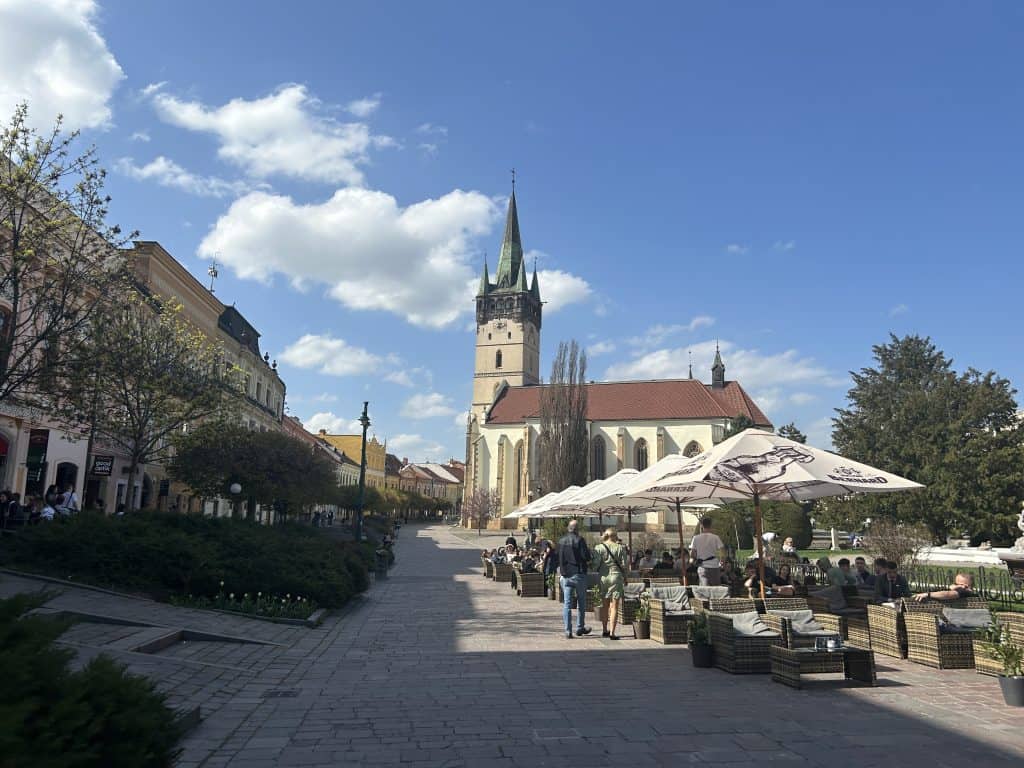
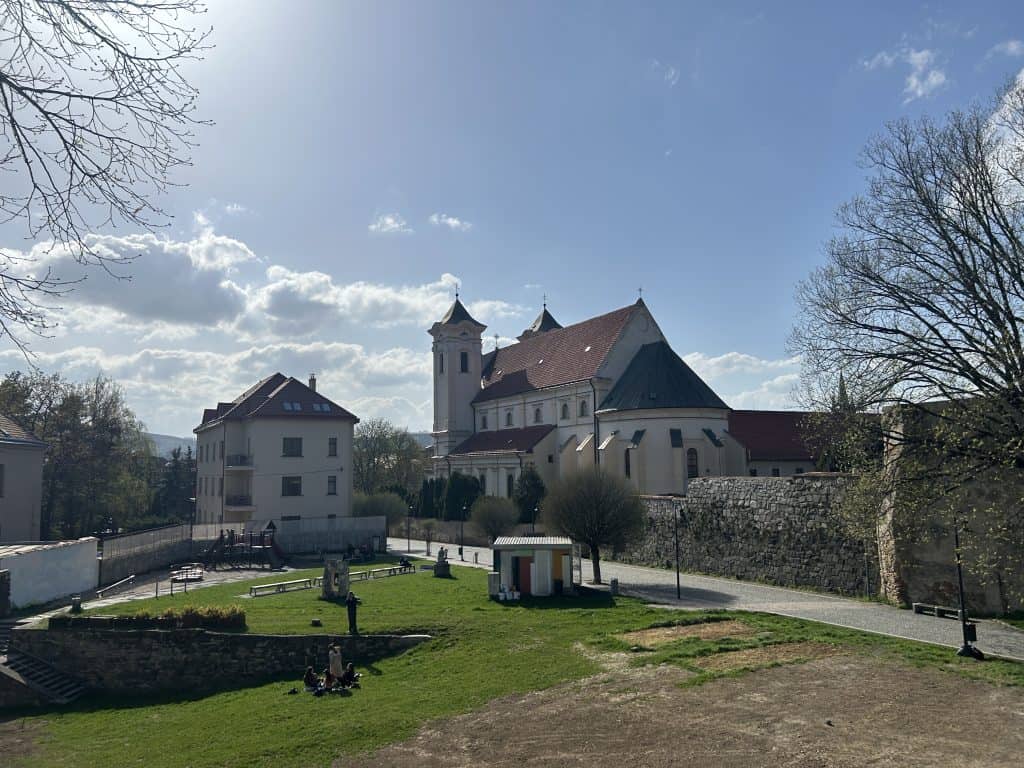
The city’s identity is shaped by its history as a multi-ethnic royal town and its significant religious importance. It is the seat of both the Greek Catholic Metropolitan and the Orthodox Church in Slovakia. For centuries, its location on key trade routes brought it prosperity, which is reflected in the well-preserved historic center centered on Hlavná ulica (Main Street). This historical core, with the impressive Co-Cathedral of Saint Nicholas at its heart, stands in contrast to the city’s later development.
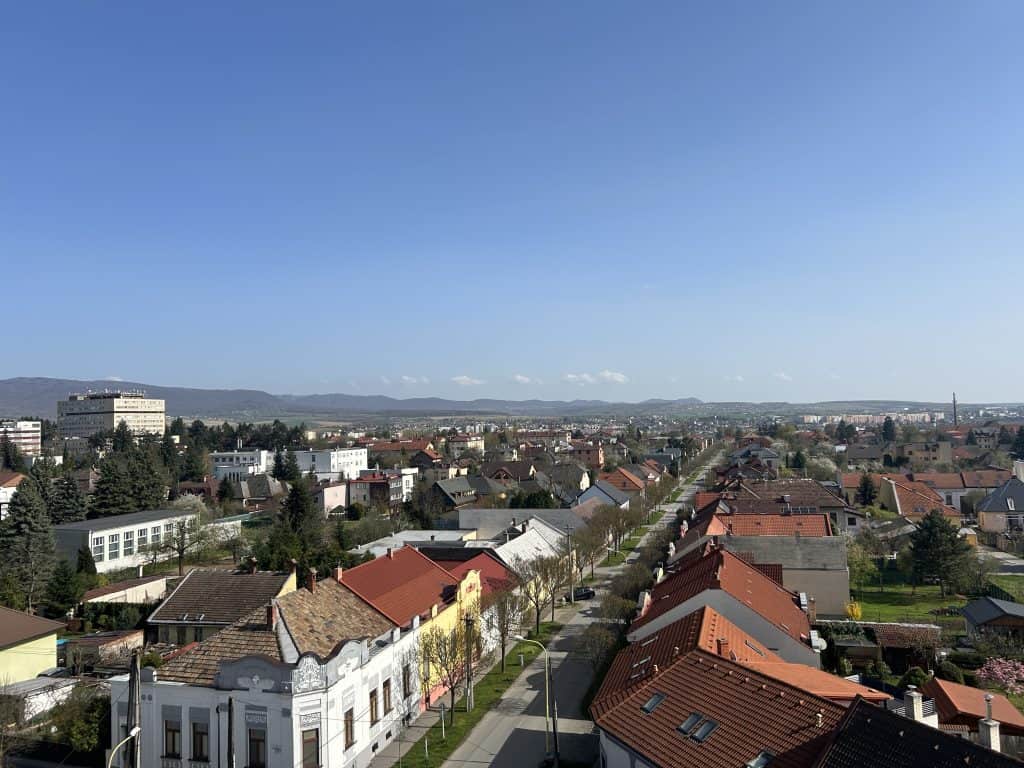
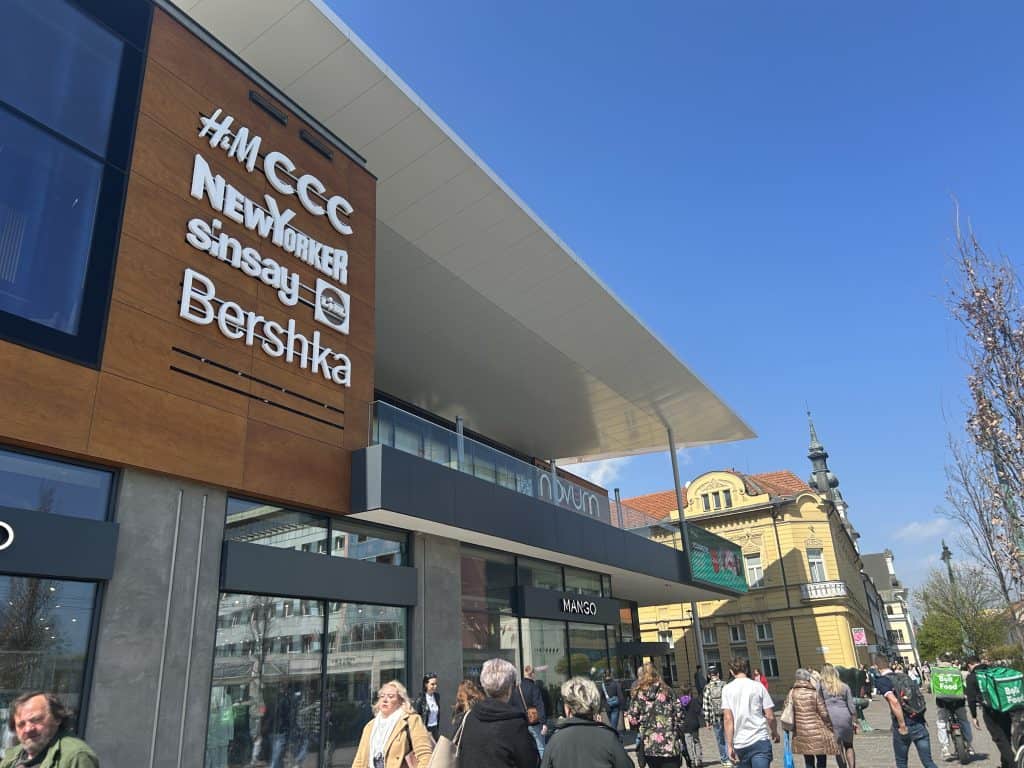
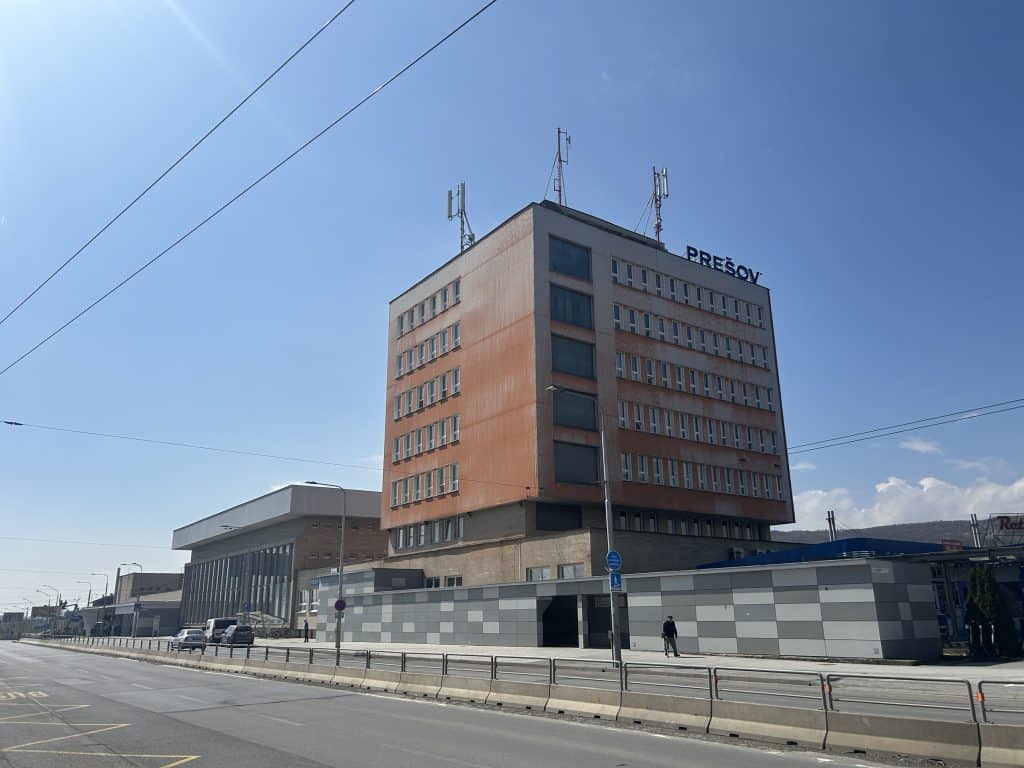
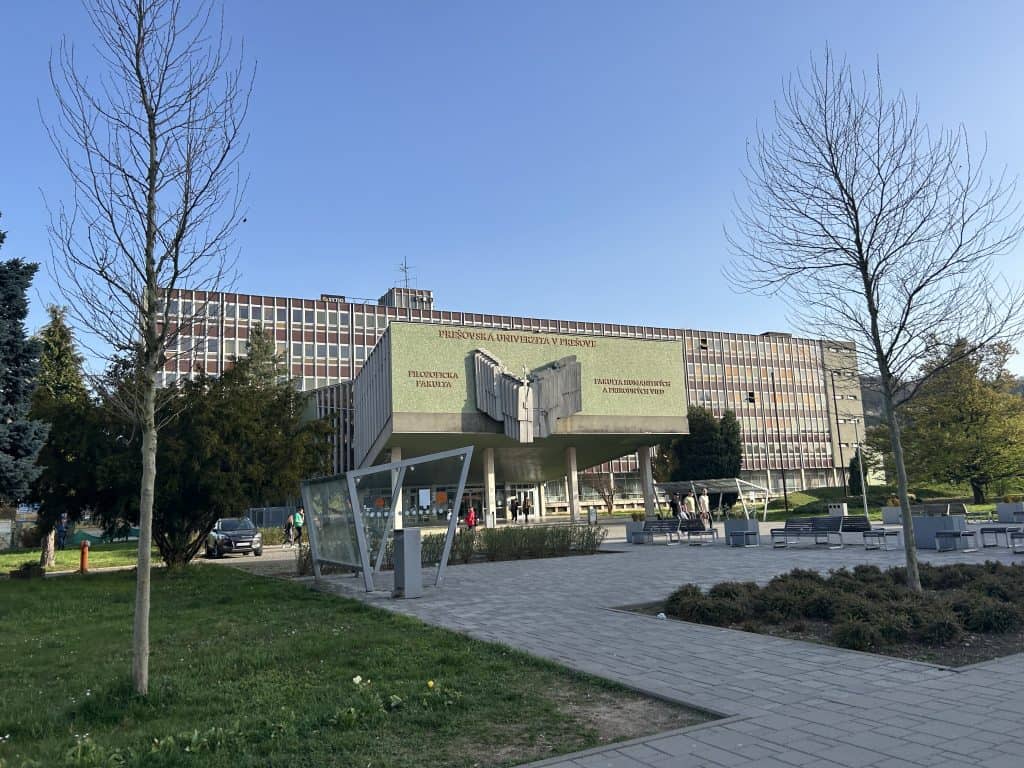
During the 20th century, Prešov underwent significant industrialization under the socialist government of Czechoslovakia. It became a major hub for manufacturing, particularly in heavy machinery, electrical engineering, and the textile industry, with large factories built on its outskirts. While this industrial past is still a part of its economic character, the modern city is also a major administrative and academic center, home to the University of Prešov. This blend of history, industry, and education makes it a key regional destination.





History of Prešov
The area around Prešov has been inhabited for thousands of years, but its development as a town began in the Middle Ages. The city’s growth was significantly influenced by the arrival of German colonists, and it was granted town privileges in 1299. Its location on the border of the Kingdom of Hungary made it an important center for trade with the Polish-Lithuanian Commonwealth. The city, known for centuries by its Hungarian name Eperjes, has a complex history that includes periods of prosperity, conflict, and significant demographic changes, especially during the tumultuous 20th century.
German Colonization and Royal Privileges
The area was left sparsely populated after the Mongol invasion of 1241. Due to this, the Kingdom of Hungary invited German colonists, often called Spiš Saxons, to settle the region and help rebuild its economy. These settlers were instrumental in the development of Prešov. The settlement grew in importance, and in 1299, it was granted its town privileges by the king. For centuries, the town was predominantly German-speaking. Its location on the border meant that trade, particularly with the powerful Polish-Lithuanian Commonwealth, played a crucial role in its development during the 15th and 16th centuries.
The 20th Century and the Slovak Soviet Republic
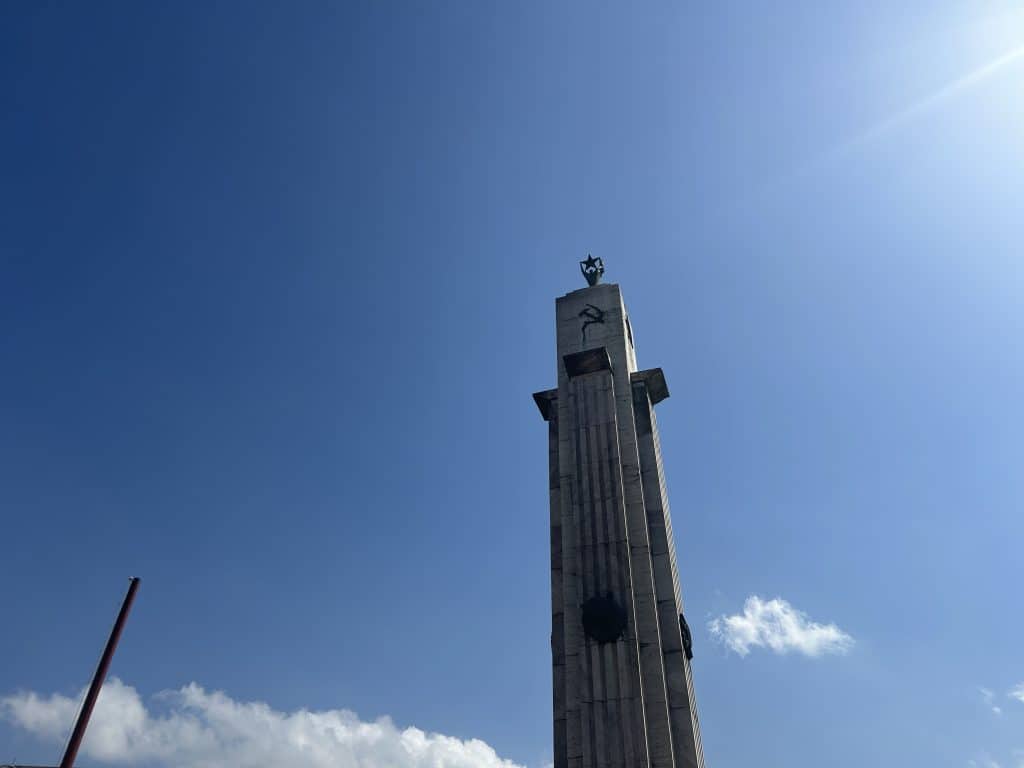
Prešov became a part of the newly founded Czechoslovakia in 1920, after its troops occupied eastern Slovakia following World War I. However, this transition was not without conflict. In 1919, during a period of revolutionary turmoil, Hungarian troops briefly liberated Prešov. This led to the establishment of the short-lived Slovak Soviet Republic, with Prešov as its capital. This communist state, one of the first in Europe, lasted for less than a month before Czechoslovak troops regained control. This brief episode remains a unique and often overlooked part of the city’s complex 20th-century history.
World War II and Post-War Development
World War II brought several significant developments to Prešov. After Košice became a part of Hungary in 1939 under the First Vienna Award, Prešov became the largest and most important city in eastern Slovakia. By 1940, the city had a population of around 4,300 Jews. In 1942, a large part of the Jewish population was deported to ghettos in Poland, and only a few survived the Holocaust. The city was liberated by the Red Army on January 19, 1945. The war was followed by the communist rule of Czechoslovakia, during which the population of Prešov increased rapidly as the city became a major industrial hub.




Sights in Prešov
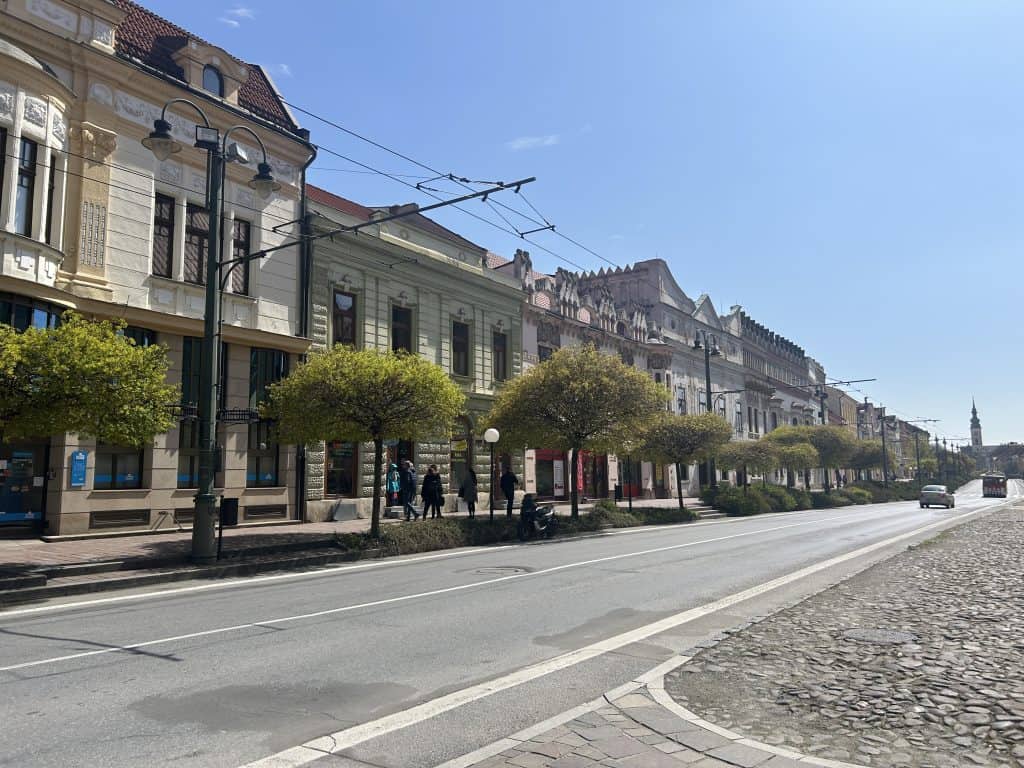
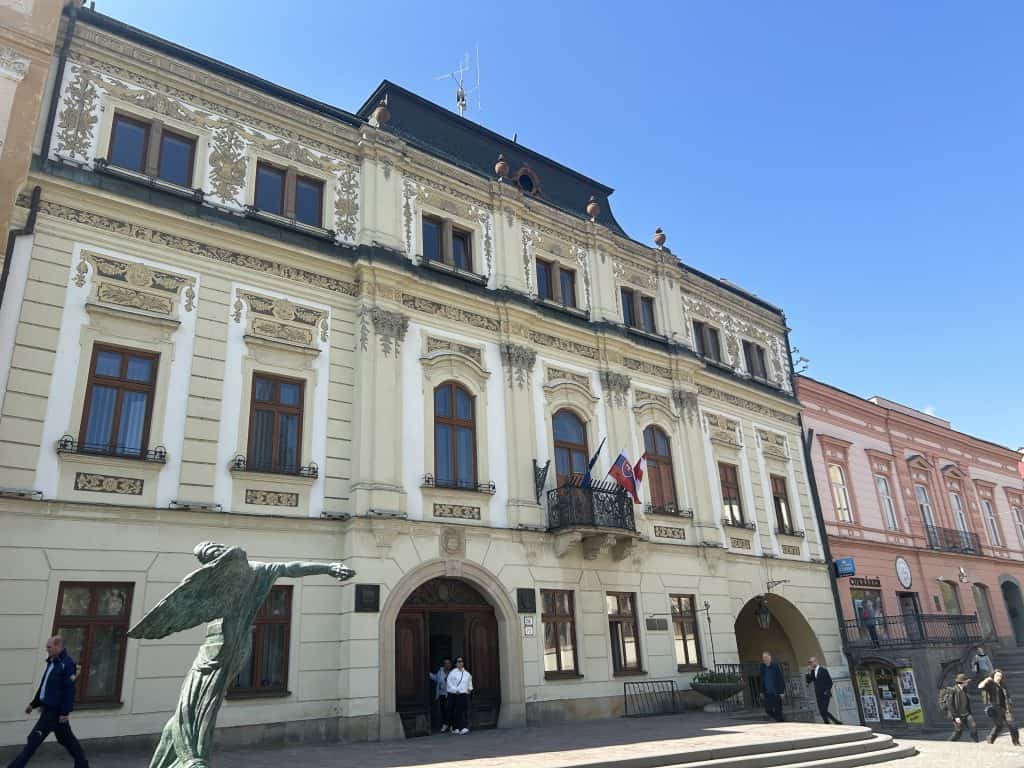
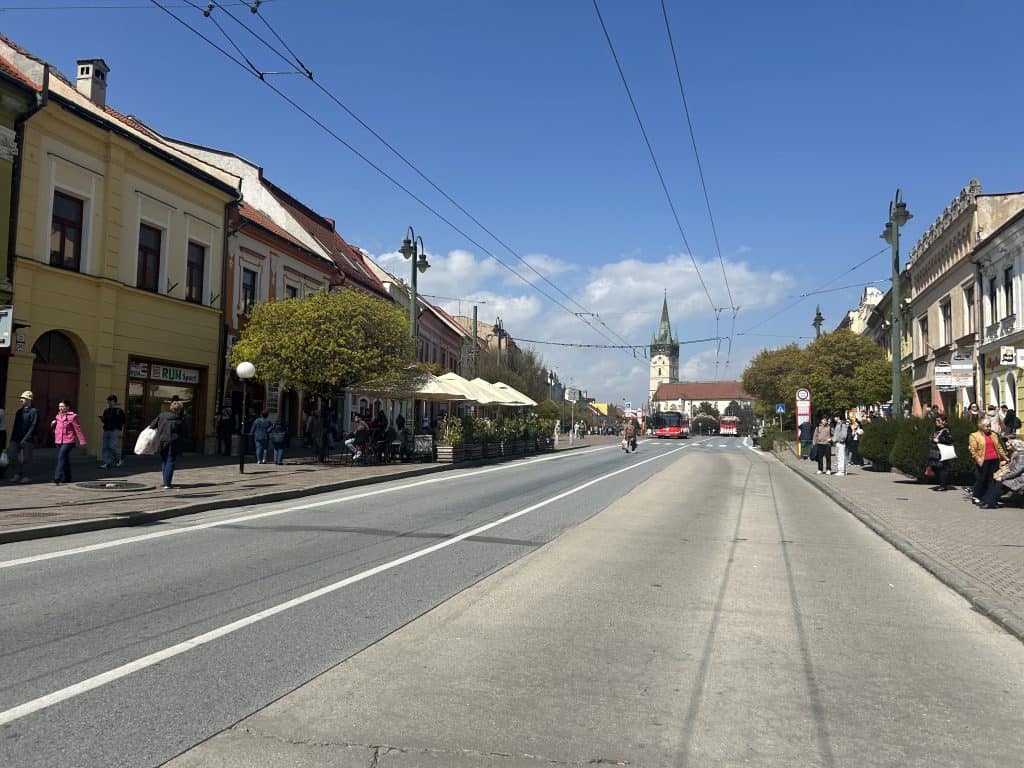
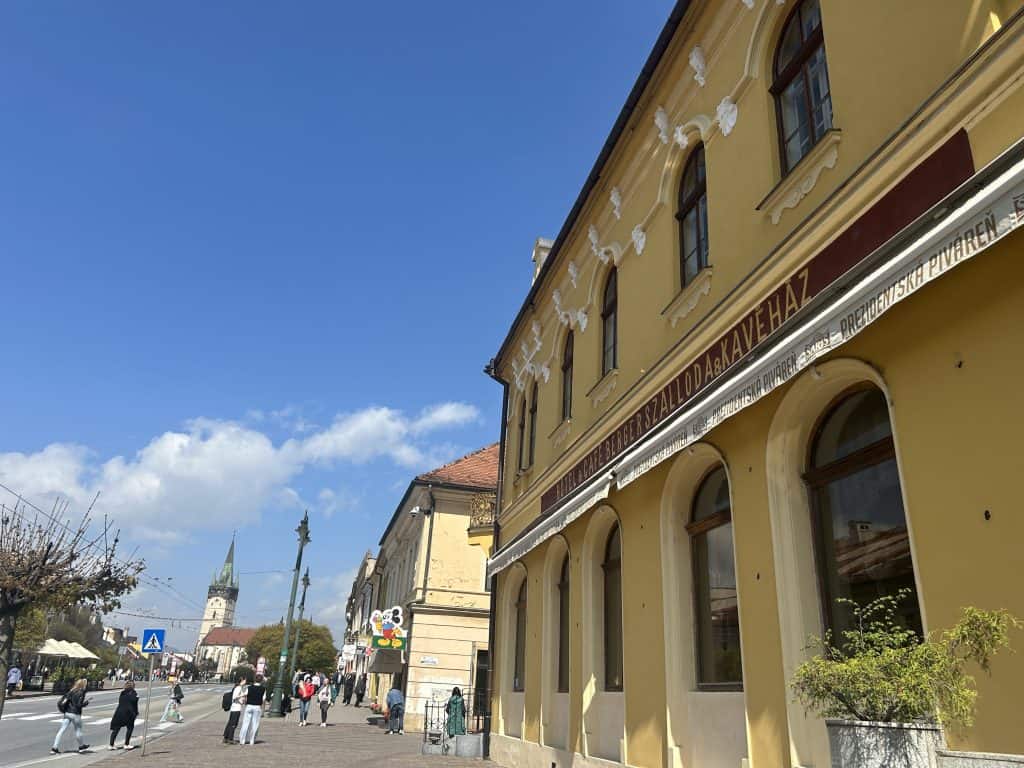
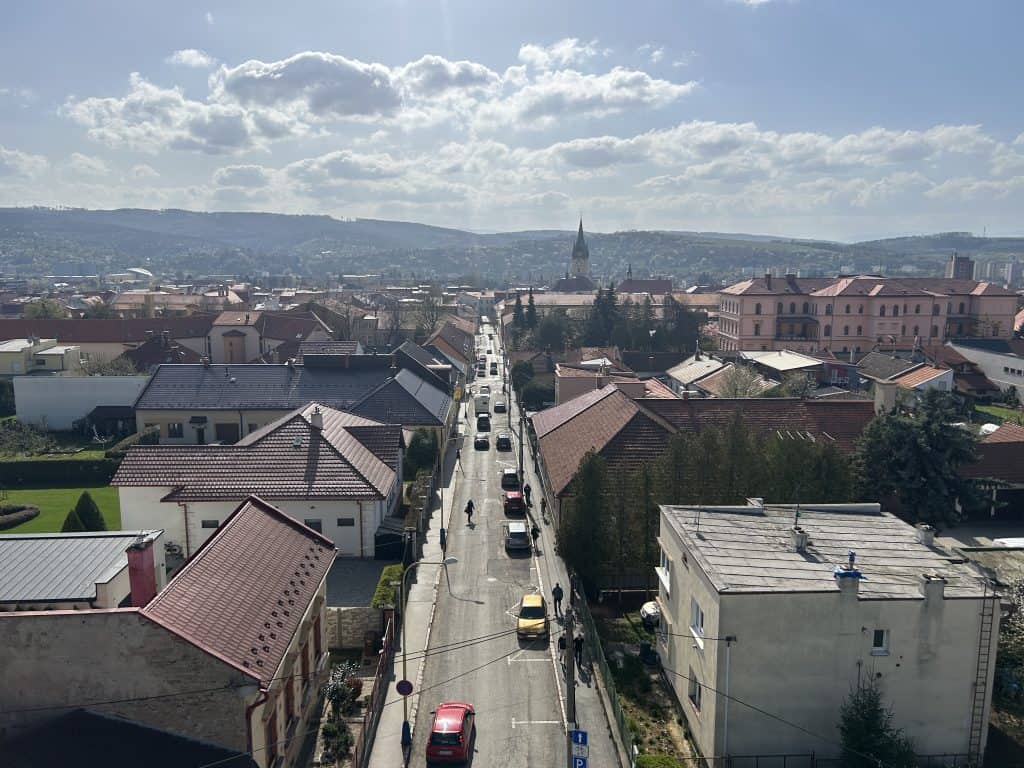
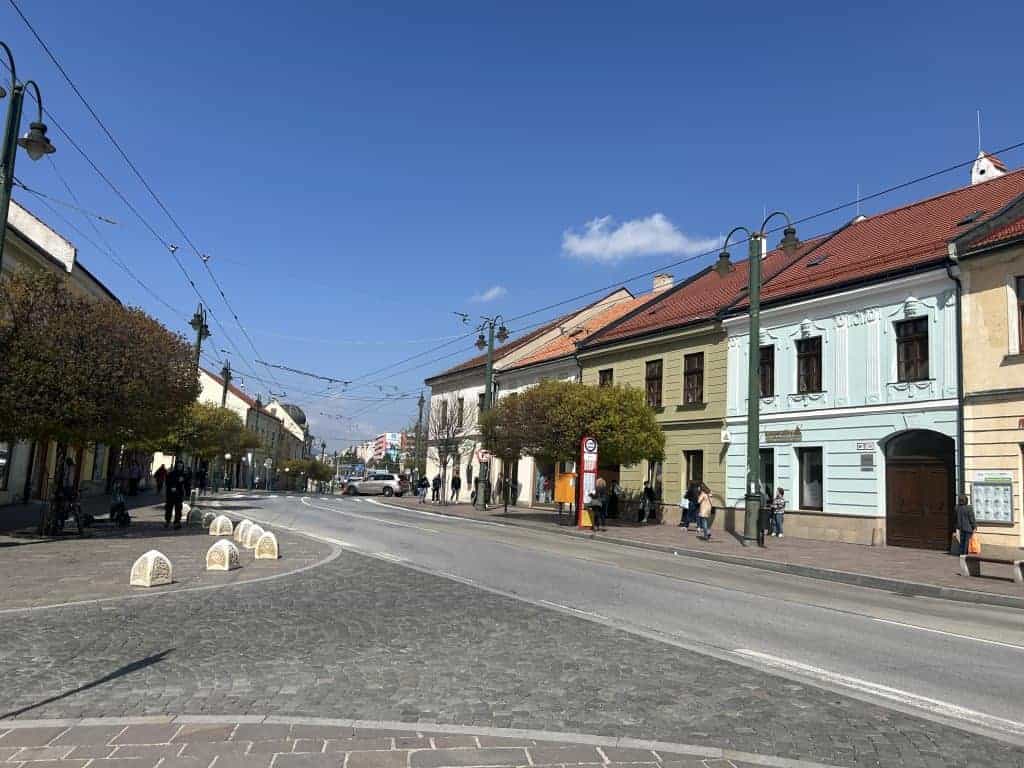
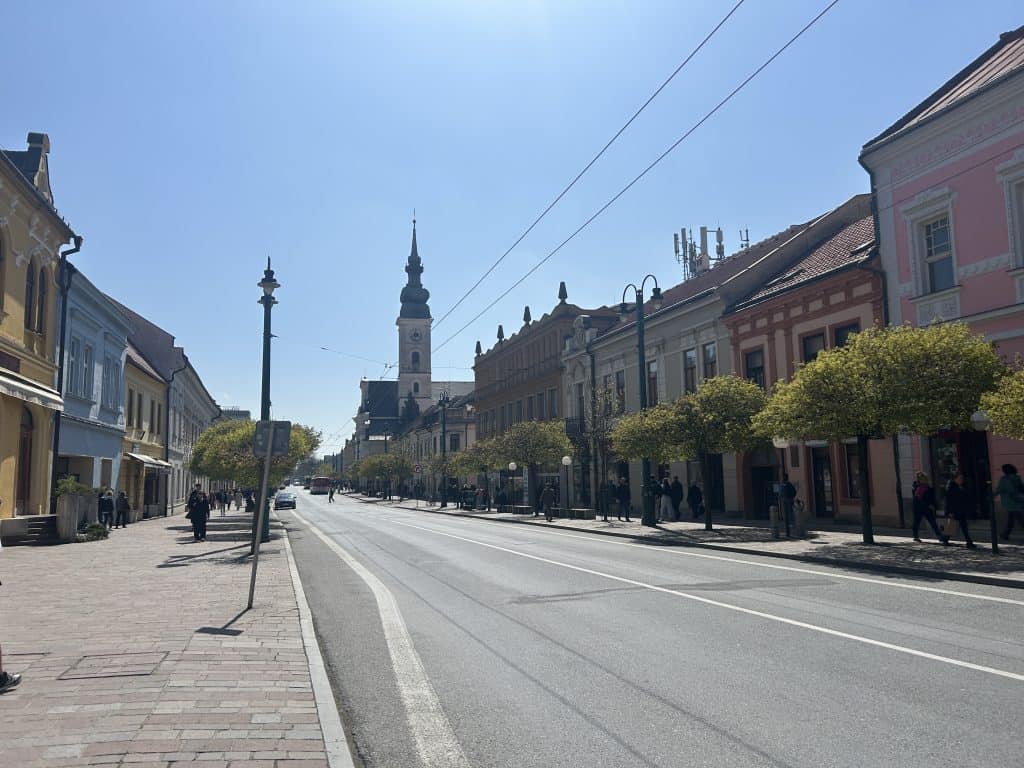
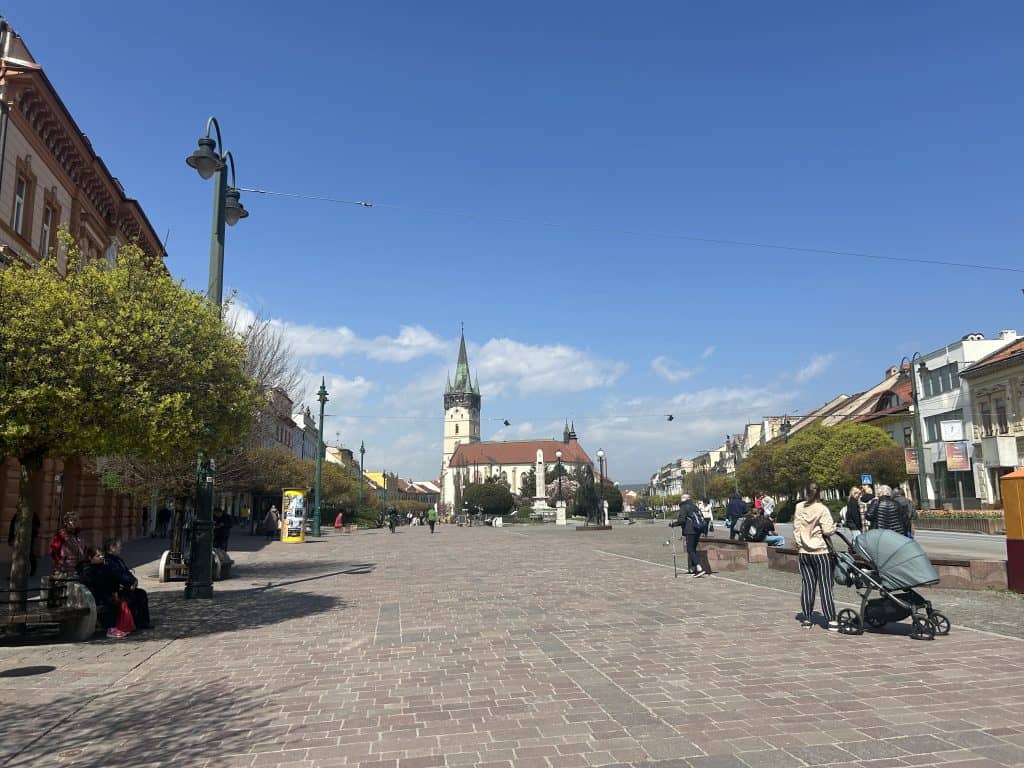
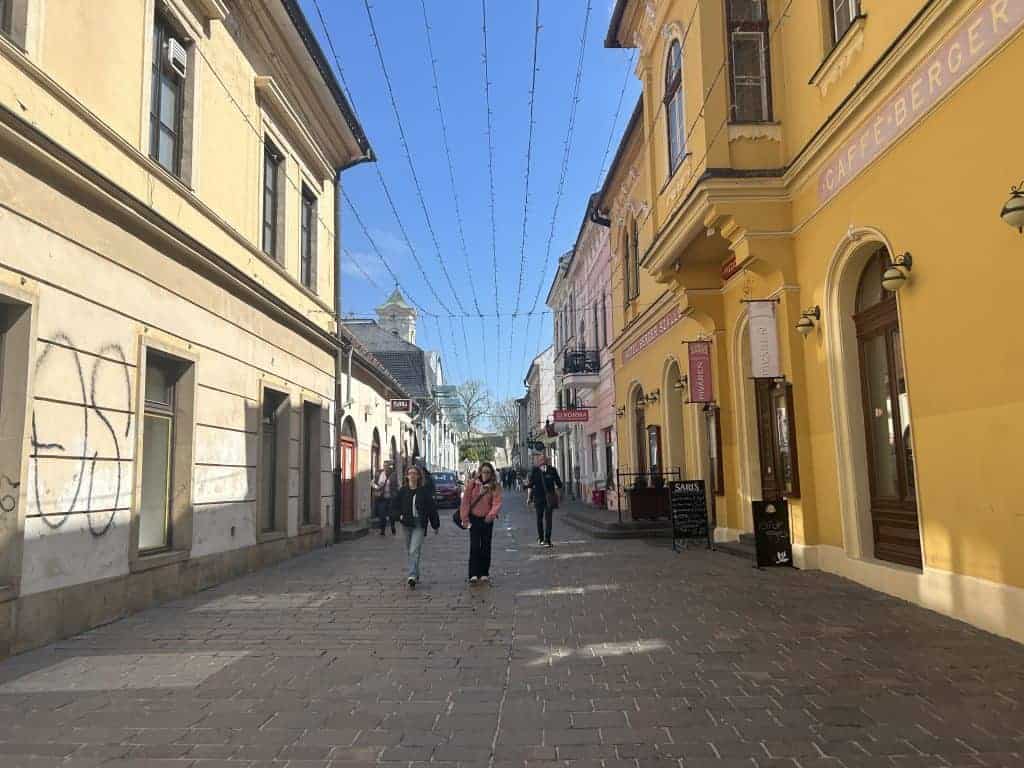
Prešov is a diverse city with a lot of attractions for a visitor. The main highlight is the historical center, which is located along the long, spindle-shaped Hlavná ulica (Main Street). This street is a must to walk along and enjoy when visiting the city. It is here that you will find the city’s most impressive landmark, the Co-Cathedral of Saint Nicholas, as well as a collection of historic burgher houses, palaces, and other churches. A unique feature of the city is its historic Calvary complex, a pilgrimage site on a hill with beautiful views.
Beyond the historic core, Prešov offers several interesting cultural institutions and unique sights. The city has a professional theatre, a historic water tower that now serves as an observation tower, and several museums that tell the story of the region. A small pedestrian path along the route of the former city wall provides a pleasant walk. For those interested in a unique piece of geography, the city is also notable for being located on the 49th parallel north.
Co-Cathedral of Saint Nicholas
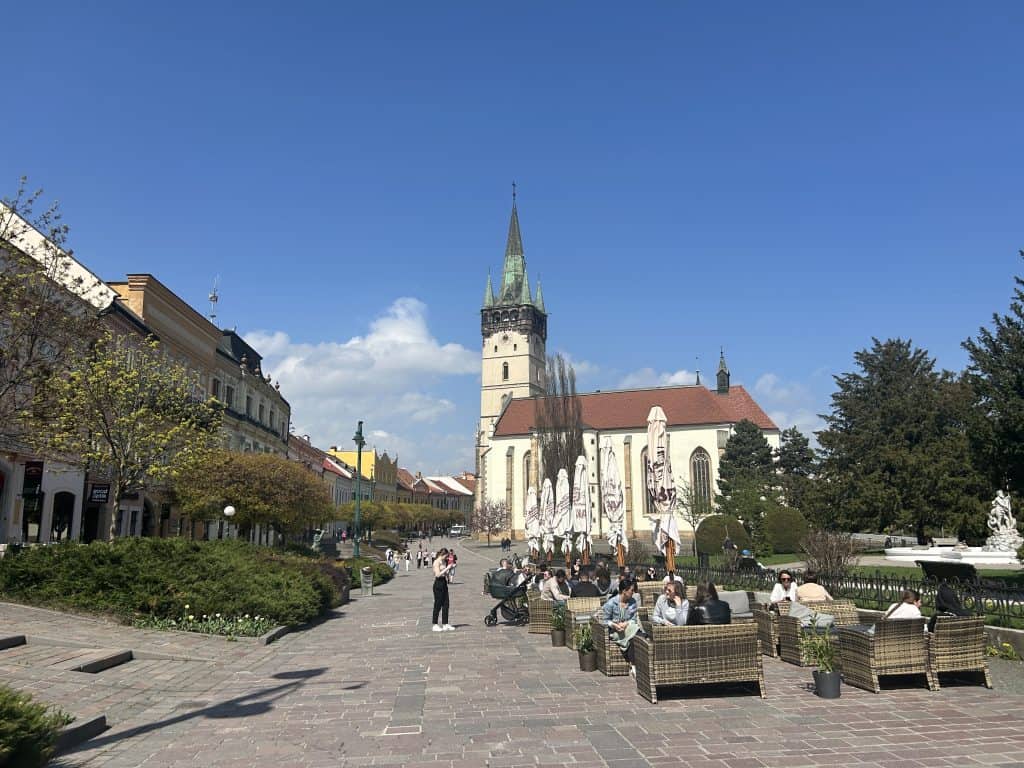
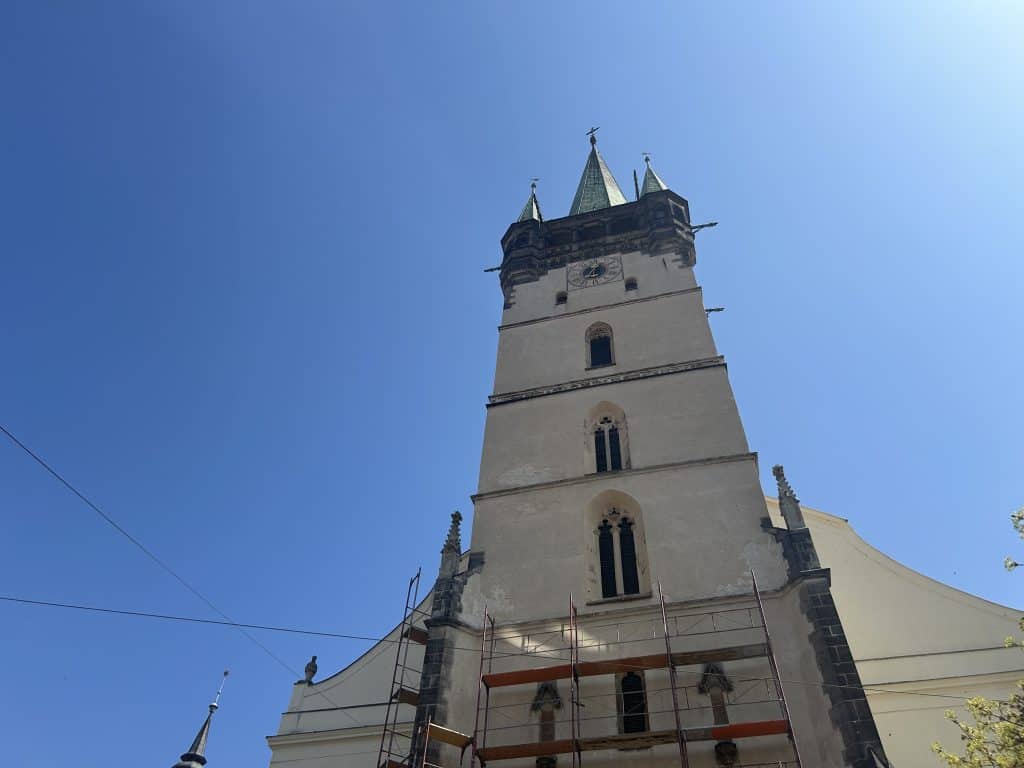
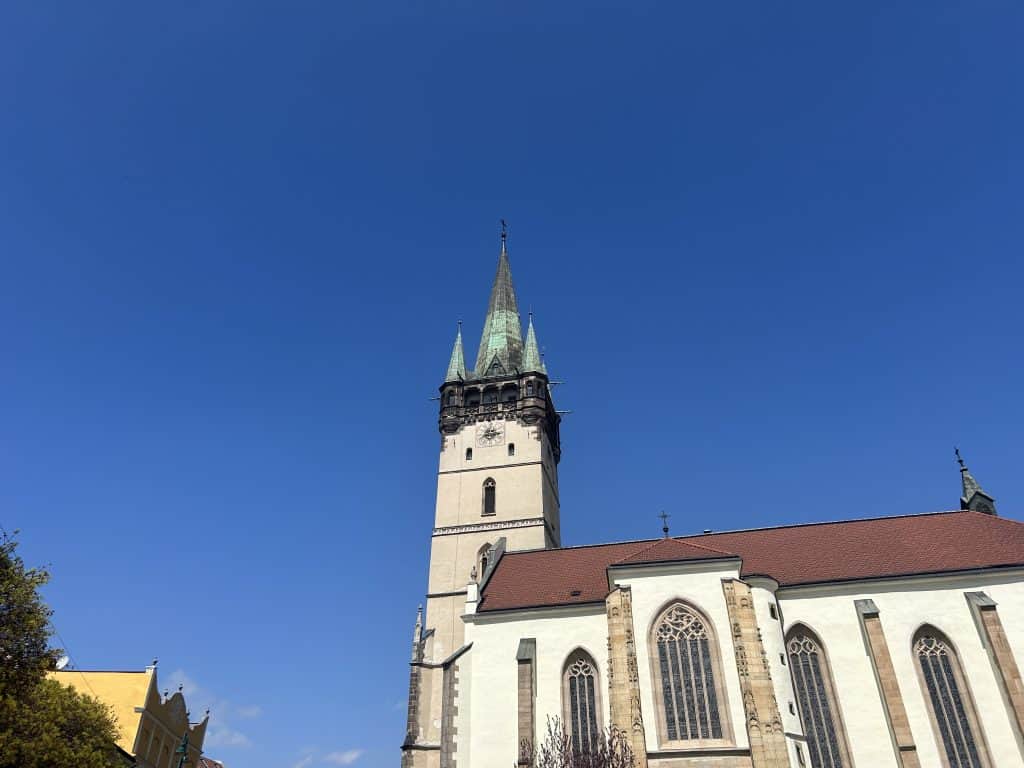
In the middle of Hlavná ulica is the impressive Co-Cathedral of Saint Nicholas. With a tower that reaches a height of 71 meters, it is visible from far away and is one of the main landmarks of Prešov. The church was originally built in the 14th century as a Gothic hall church. The last stage of its construction was not completed until the year 1515. The interior of the church is home to a magnificent late-Gothic main altar and other valuable historical furnishings. The church is a Roman Catholic co-cathedral, sharing the status of a diocesan seat.
Hlavná ulica (Main Street)
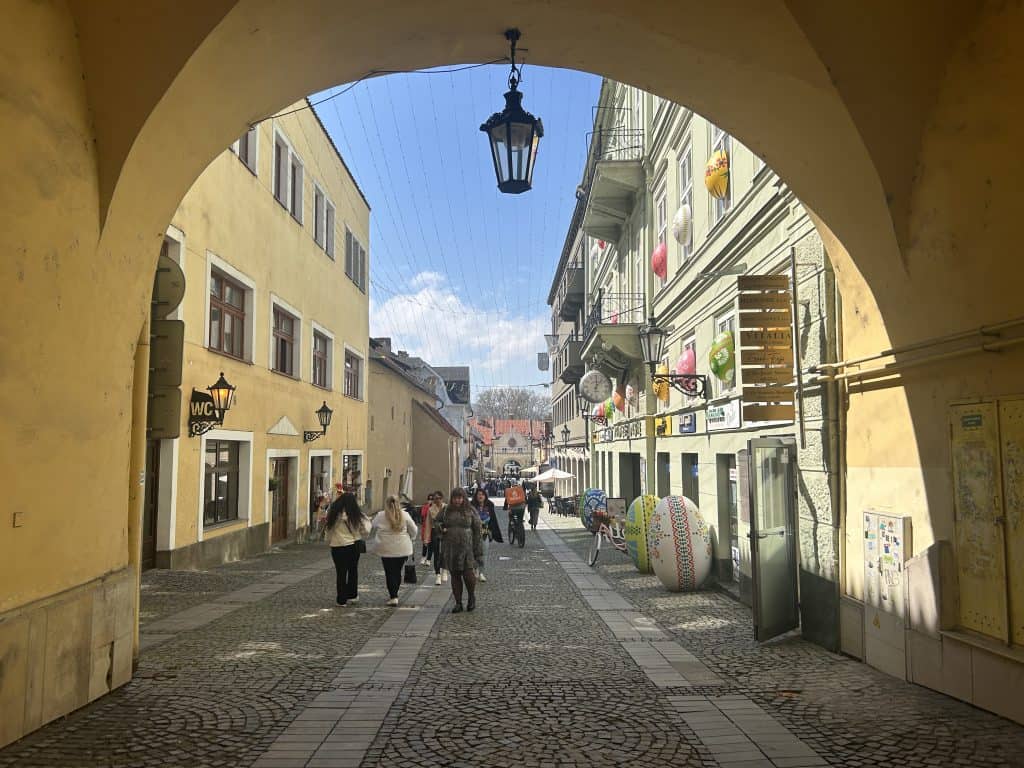
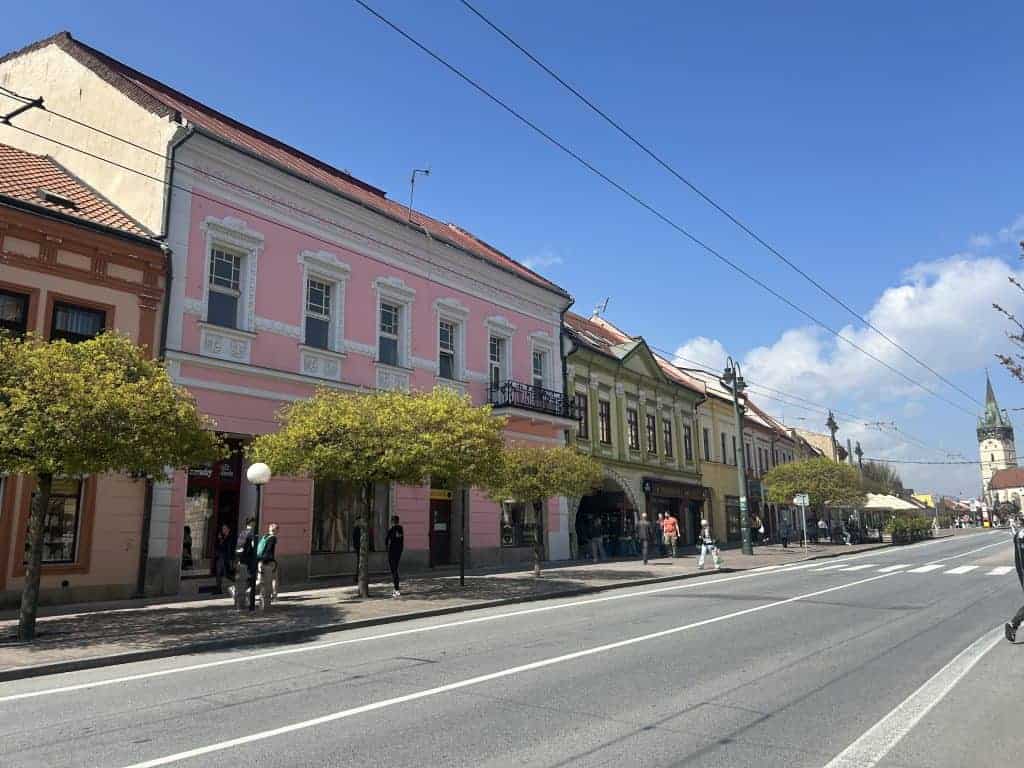
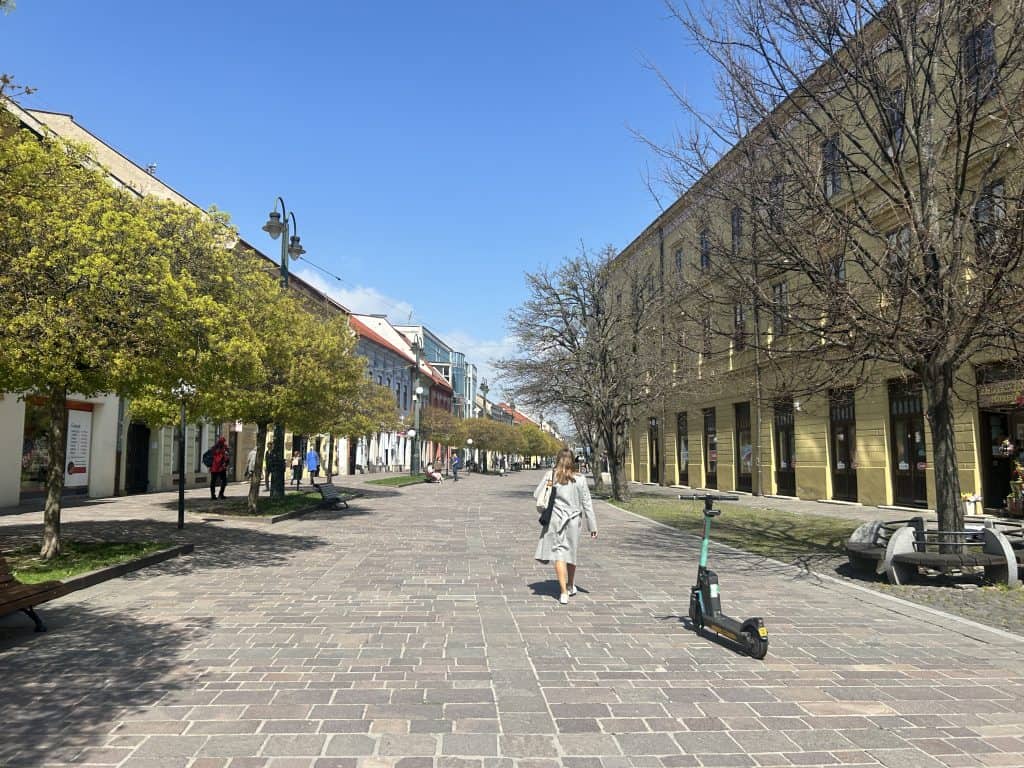
Hlavná ulica, or Main Street, is the historical and social heart of Prešov. This long and wide street forms a spindle-shaped square that is lined with beautifully restored historic burgher houses and palaces. These buildings showcase a variety of architectural styles, from Gothic to Baroque and Neoclassical. The street is the main pedestrian zone in the city and is filled with restaurants, cafes, and shops. It is a hub of activity and hosts the city’s main events and markets. At the center of the street is a beautiful park with fountains and statues.
Prešov Calvary (Kalvária)
The Prešov Calvary is a beautiful Baroque complex of chapels located on a hill on the western side of the city. A Calvary is a series of chapels or stations that represent the Way of the Cross. The complex in Prešov was built in the 18th century and is one of the most beautiful in Slovakia. A path winds its way up the hill, passing by the small chapels, and culminates in the main Church of the Holy Cross at the top. The site is a popular pilgrimage destination and also offers stunning panoramic views of the city and the surrounding landscape.
Rákóczi Palace
The Rákóczi Palace is one of the most beautiful and historically significant buildings on Hlavná ulica. This Renaissance palace was built in the late 16th century. It is named after the powerful Rákóczi noble family, who owned the palace for a time. The building is known for its beautiful courtyard with arcades and its ornate facade. Today, the palace houses the main branch of the Prešov Museum, which features collections on the history and ethnography of the Šariš region. The palace is a prime example of Renaissance architecture in eastern Slovakia.
Neptune Fountain and Statue of John the Baptist
In the park in the center of Hlavná ulica, there are several beautiful fountains and statues. The most famous of these is the Neptune Fountain, a Baroque fountain from the 18th century that depicts the Roman god of the sea. Nearby is the magnificent Immaculata statue group, another impressive Baroque work. Further down the street, in front of the Greek Catholic Cathedral of St. John the Baptist, stands a large and dramatic statue group. This modern work depicts the baptism of Christ by St. John the Baptist in the Jordan River. These sculptures add to the beauty of the main street.
Church of St. Alexander Nevsky
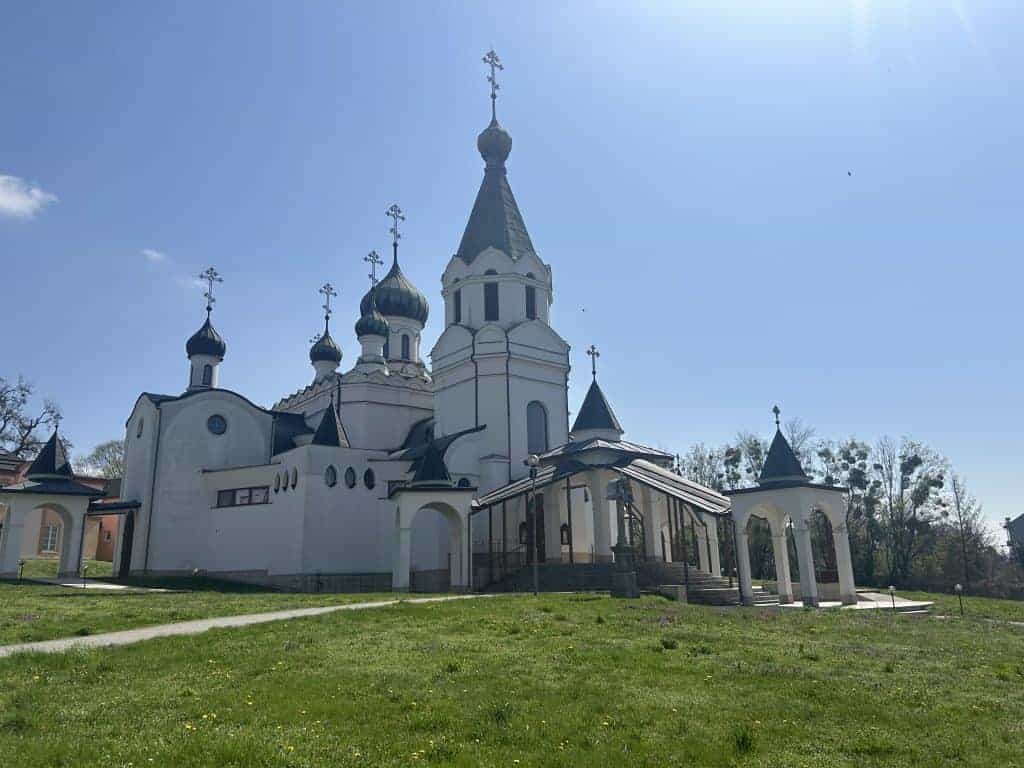
The Church of St. Alexander Nevsky is the cathedral of the Orthodox Church in Slovakia. The church was built at the end of the 1940s. Its construction is a direct result of the actions of the communist government, which forcibly liquidated the Greek Catholic Church and transferred its property to the Orthodox Church. The architecture of the church is based on traditional Russian orthodox designs. It stands as a symbol of a complex and often painful period of religious history in the region.
Jonáš Záborský Theatre
The Divadlo Jonáša Záborského, or Jonáš Záborský Theatre, is the professional drama theatre in Prešov. The theatre was founded in 1944 and has its home in two different buildings. The historic building is the former public theatre, but it is the new, modern building from the socialist era that is the more prominent. The new building is a large, functionalist structure that is a notable piece of late modernist architecture. The theatre is named after Jonáš Záborský, a Slovak nobleman and writer from the 19th century.
Prešov Water Tower
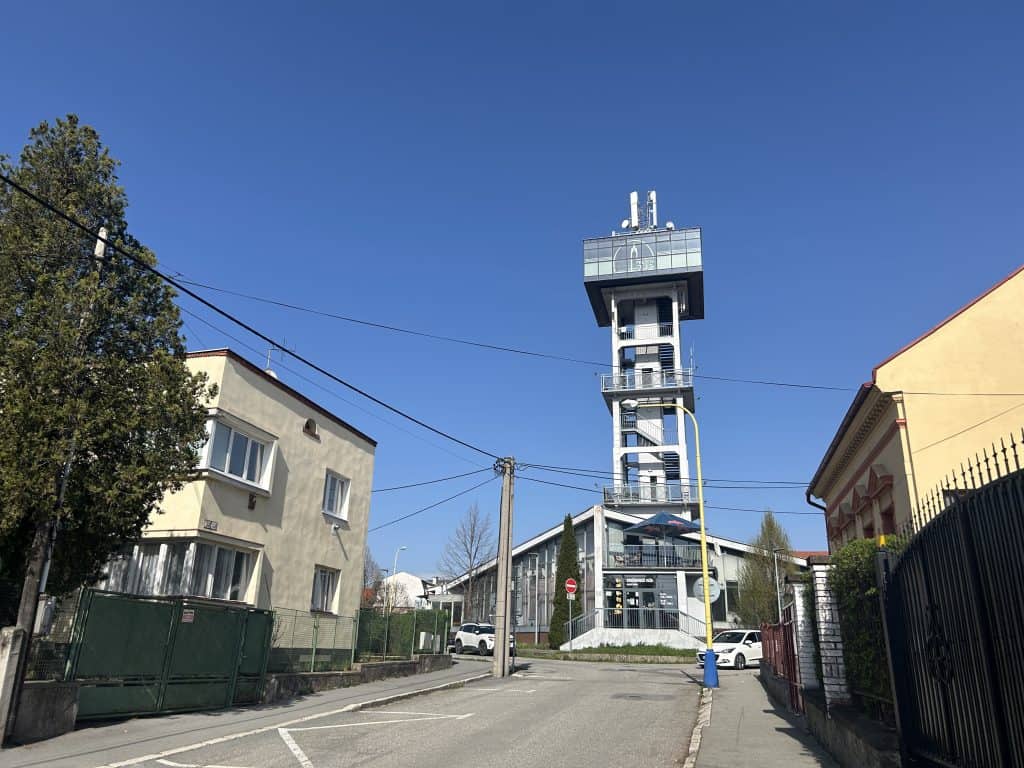
The local water tower is no longer only a water tower. Construction of the original tower began in 1910. It eventually fell into ruin but was carefully restored and reopened in 2015 as an observation tower. At a height of 29 meters, it offers a great panoramic view of Prešov and its surroundings. The historic tower is an interesting example of early 20th-century industrial architecture. It is located in the southern part of the city and has become a popular attraction for both locals and tourists.
Opal Mines
Located in the Slanské vrchy mountains, a short drive from Prešov, are the unique Slovak Opal Mines. These historic mines are believed to be the oldest opal mines in the world, with mining activity dating back to the Roman Empire. The precious opal from these mines was famous for its unique play of color and was highly prized by royalty. The mines were closed for many years but have recently been reopened for tourists. Visitors can take a guided tour through the historic tunnels to learn about the history of opal mining and see where the famous gem was extracted.
Šariš Castle Ruins
The ruins of Šariš Castle are located on a large volcanic hill just outside of Prešov. The castle was one of the largest and most important medieval castles in Slovakia. It was the administrative center of the historical Šariš county. The castle was built in the 13th century and was destroyed by an explosion in the 17th century. Today, visitors can hike up the hill to explore the extensive ruins of the castle walls and towers. The site offers spectacular panoramic views of the entire region.
Traveling with Kids
Prešov and its surrounding region offer a good range of activities for families traveling with children. The city’s main pedestrian street, Hlavná ulica, is a safe and enjoyable place for a family walk, with a large central park that is perfect for a break. For a unique and exciting adventure, the nearby Slovak Opal Mines offer guided tours through historic tunnels, which can be a thrilling experience for older children. The city also has several indoor and outdoor recreational facilities suitable for families.
The wider Šariš region is filled with castles and natural attractions that can be great for family excursions. A hike up to the ruins of Šariš Castle is a fun adventure that rewards you with spectacular views. The city’s parks are also equipped with public playgrounds. This combination of unique historical sights and accessible outdoor recreation makes for a well-rounded family visit.
Activities for Kids in Prešov
For families seeking memorable outings, Prešov provides unique experiences that blend adventure with education. A trip into the historic Slovak Opal Mines offers a journey into an underground world, while a visit to the city’s modern water park provides a full day of aquatic fun.
Slovak Opal Mines
A visit to the Slovak Opal Mines, located a short drive from Prešov, is a fantastic adventure for families with school-aged children. These are the oldest opal mines in the world. A guided tour takes visitors into the historic underground tunnels where the precious gem was once extracted. Kids can learn about the history of mining, the geology of the region, and see the tools that were used by the miners. The cool, underground environment and the stories of the famous opals found here make for an exciting and educational experience that is very different from a typical museum.
Aquapark Delňa
The Aquapark Delňa is a large indoor and outdoor water park located in the southern part of Prešov. It is a popular destination for families, especially during the summer. The complex features numerous swimming pools, including a large recreational pool and several thermal pools with mineral water. A major highlight for children is the variety of water slides, from gentle ones for younger kids to more thrilling ones for older kids. The park also has a large grassy area for sunbathing and a children’s playground, making it a complete destination for a full day of family fun.
Playgrounds in Prešov
Prešov provides public playgrounds where children can enjoy free play in safe environments. These play areas are important social spots for local families and offer a welcoming space for visiting children to have some fun. A stop at a playground is a simple and effective way to break up a day of sightseeing.
Playground on Hlavná ulica
The main playground in the city center is located in the large park that runs down the middle of Hlavná ulica. This playground is modern and well-equipped, featuring a variety of play structures suitable for different age groups. It includes swings, slides, and climbing frames. Its central location is extremely convenient for families exploring the historic heart of the city. It provides a perfect spot for a play break between visiting the cathedral and the other sights on the main street.
Playground at the Delňa Reservoir
The recreational area around the Delňa reservoir, where the water park is located, also features a public playground. This play area is part of a larger complex that includes sports fields and walking paths. The playground provides another excellent option for families, especially for those who are already visiting the water park or the surrounding area. The combination of a playground and the open green spaces around the reservoir makes it a popular spot for family recreation.
Sports in Prešov
Prešov has a rich and diverse sporting tradition, with a particularly strong passion for handball. The city’s professional men’s handball team, HT Tatran Prešov, is the most successful and dominant club in the history of Slovakia. Ice hockey and football are also very popular sports, with local clubs that have long histories and dedicated followings. The city is also home to one of the only cycling velodromes in the country, a unique facility that hosts national and international events. This variety of sports at a high level makes Prešov a major sporting hub in eastern Slovakia.
HT Tatran Prešov (Handball)
Handball is the most successful sport in Prešov, and HT Tatran Prešov is the local club. Founded in 1952, the team plays in the Niké Handball Extraliga, the top-tier league in Slovakia. They are the most awarded handball team in the country, with a total of 18 national titles. The team also won the Czechoslovak championship three times. They regularly play in the European Champions League. HT Tatran Prešov plays their home games at the Tatran Handball Arena, which has a capacity of 3,870 spectators.
HC Prešov (Ice Hockey)
Ice hockey has a long and proud tradition in the city. The local club, HC Prešov, was originally founded in 1928. The team played the 2024/25 season in the Slovenská Hokejová Liga, the second-tier league in Slovakia. After winning the playoff, the team was promoted and will play the next season in the top-tier Slovak Extraliga. The team won the Slovak Championship once, in 1932, when they were known as Effort Prešov. They play their home games at the Zimný Štadión, which has a capacity of 3,600 spectators.
1. FC Tatran Prešov (Football)
1. FC Tatran Prešov is the oldest football club in Slovakia, founded in 1898. The club has a long and storied history and has spent many seasons in the top tier of both Czechoslovak and Slovak football. They have won the Slovak Cup and have also had success in European competitions in the past. While the club currently competes in the second tier of the Slovak league system, they have a large and loyal fanbase. They play their home matches at the Tatran Stadium. The rivalry with FC Košice is known as the Eastern Slovak Derby.
FBC Prešov (Floorball)
Floorball is a rapidly growing sport in Slovakia, and the city is represented at the highest level by FBC Prešov. The men’s team competes in the Slovak Floorball Extraliga, the top tier of the sport in the country. The club has established itself as a strong competitor in the league and is helping to grow the popularity of floorball in the eastern part of the country. They play their home matches in one of the local sports halls. The club has a strong youth program and is a key part of the city’s modern sporting landscape.
VK Prešov (Women’s Volleyball)
Women’s volleyball is represented in the city by the club VK Prešov. The team competes in the Extraliga, which is the top professional volleyball league for women in Slovakia. The club has established itself as a consistent presence in the top division and competes against the best teams from across the country. They play an important role in the local sports community, providing a platform for female athletes to compete at a high national level. They play their home matches at a local sports hall.
Prešov Cycling Velodrome
One of the more unique sports venues in Prešov is its Velodrome. Construction began in 1981, and the velodrome was first inaugurated in 1989. Its embankments were built with material from old buildings that were demolished. According to several sources, this is the only cycling velodrome in Slovakia. The facility hosts national and international track cycling competitions. It is a key piece of infrastructure for the development of cycling in the country and a unique landmark in the city of Prešov.





Getting Around in Prešov
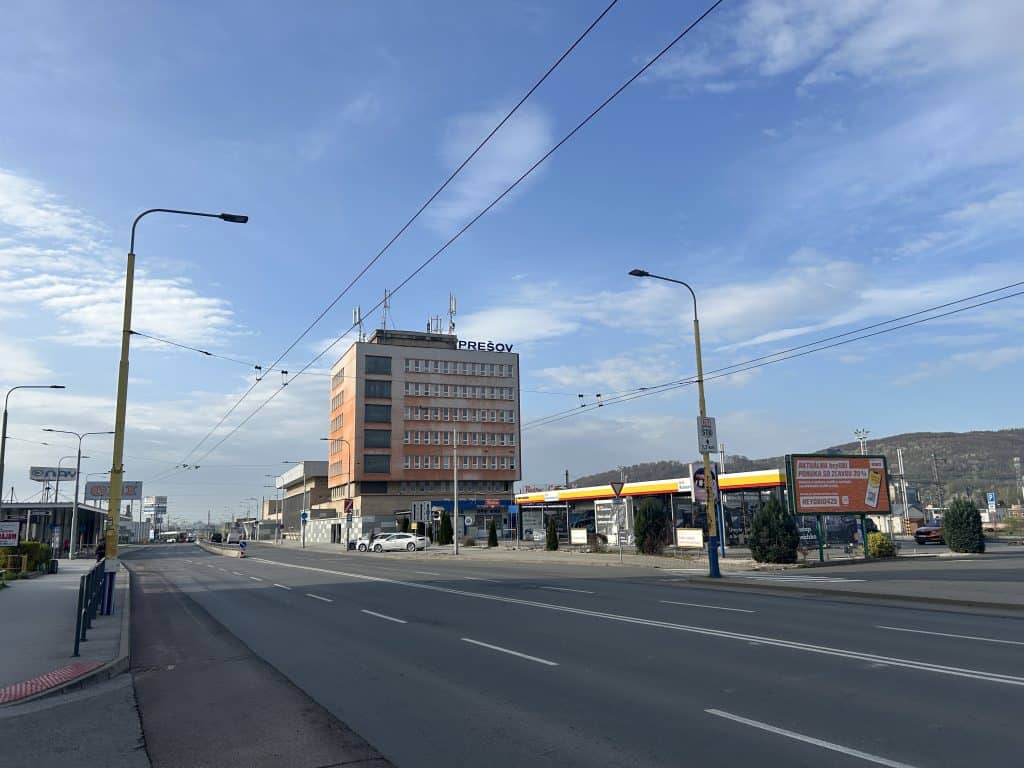
Navigating Prešov is facilitated by a comprehensive public transport system and a city center that is very conducive to walking. The main mode of public transportation within the city is an extensive network of buses and trolleybuses, which are managed by the municipal authority DPMP. These services connect the city center with all of the residential districts and suburban areas. For exploring the historic Hlavná ulica and its surroundings, walking is by far the best option. Taxis and ride-sharing services are also widely available.
Using Buses and Trolleybuses
The public transport system in Prešov is operated by DPMP (Dopravný podnik mesta Prešov). The network consists of a large fleet of buses and also a trolleybus system. Trolleybuses are electric vehicles connected to overhead wires and are a quiet and environmentally friendly way to travel on the city’s main routes. The buses serve areas not directly reached by the trolleybuses. Tickets can be purchased at kiosks, from ticket machines, or through mobile apps. This system is an affordable and reliable way for visitors to navigate the city.
Exploring by Foot
The historical and commercial heart of Prešov is best explored on foot. The central area, which is centered on the long, spindle-shaped Hlavná ulica, is largely pedestrianized. Walking is the most immersive way to experience the city’s atmosphere and architecture. All the main sights within the historic center, such as the Co-Cathedral of Saint Nicholas, the Rákóczi Palace, and the various fountains and statues, are within a short walking distance of each other. A walk up to the Calvary complex also offers great views.
Navigating by Car
A car can be useful for exploring the wider Šariš region around Prešov, including the nearby castles and opal mines. The city is located at the junction of several major national roads and is connected to the national motorway network. Parking is generally available throughout the city, with paid parking zones in the city center. While driving in the center can be busy, a car provides the most flexibility for taking day trips to the many attractions in the beautiful countryside of eastern Slovakia.
How to Get to Prešov
Prešov, located in eastern Slovakia, is a well-connected city that serves as a regional transportation hub. While the city does not have its own passenger airport, it is very close to the international airport in Košice. The city lies at the intersection of several major national roads and is connected to the main motorway system. The train is another excellent option, as Prešov is a key stop on both domestic and international railway lines. Long-distance buses also provide extensive connections to the rest of the country and abroad.
Arriving by Air
The closest major airport to Prešov is Košice International Airport (KSC), located just 40 kilometers to the south. KSC offers direct flights to several important European hubs, including London, Prague, Vienna, and Warsaw. From the airport, there are frequent and direct bus services that travel to Prešov, with a journey time of about 30-40 minutes. For a wider range of flight options, Kraków John Paul II International Airport (KRK) in Poland is another popular gateway, located about 200 kilometers to the north.
Driving into the City
Driving to Prešov is straightforward as the city lies at the intersection of several major roads. The most important of these is the D1 motorway (E50), which connects Prešov with Košice to the south and with Poprad and Bratislava to the west. National Road 18 connects to the north, while National Road 21 leads towards the Polish border. These excellent road connections make the city easily accessible by car from all directions. Remember that you will need a digital vignette to use the Slovak motorways.
Journey by Rail
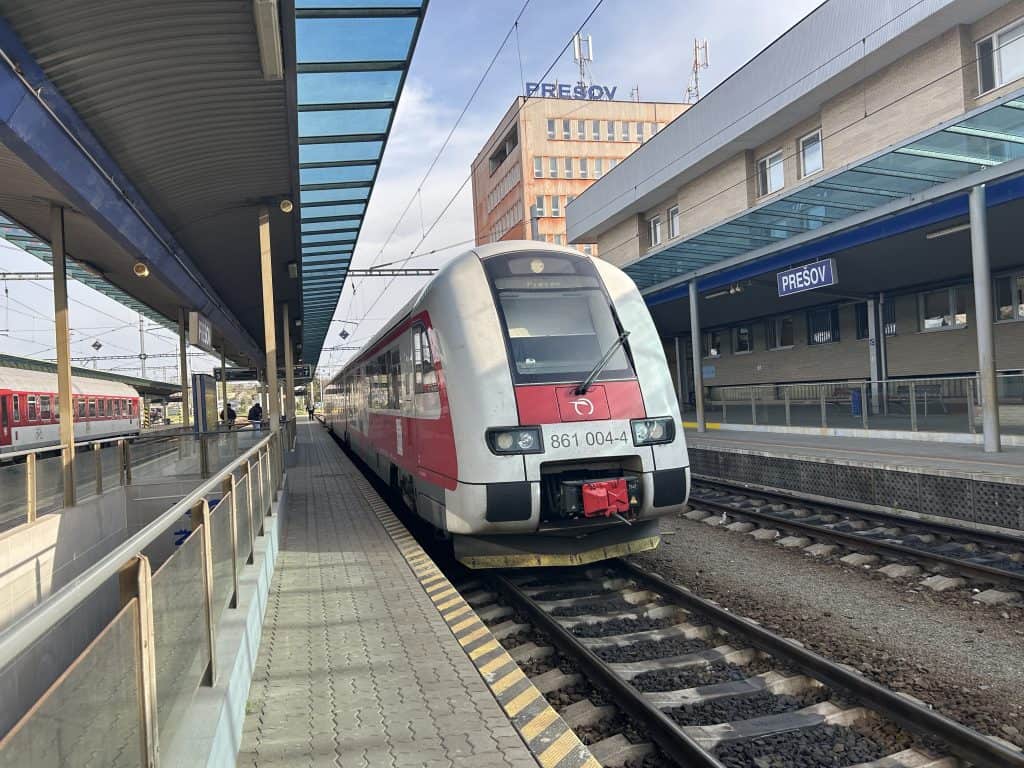
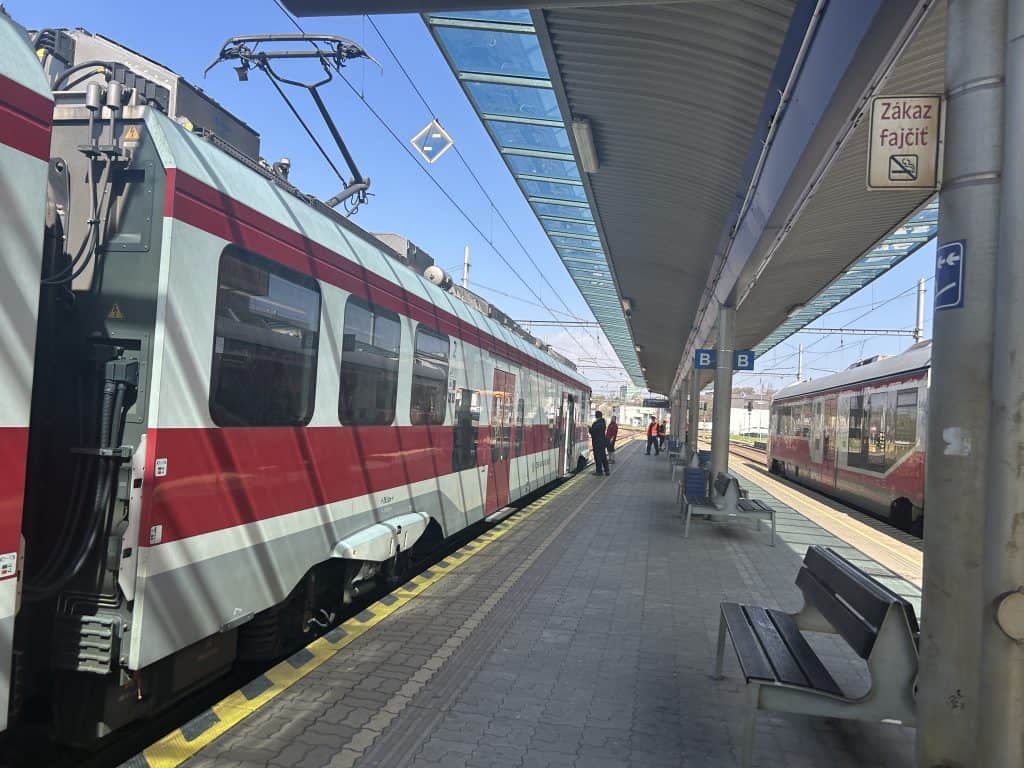
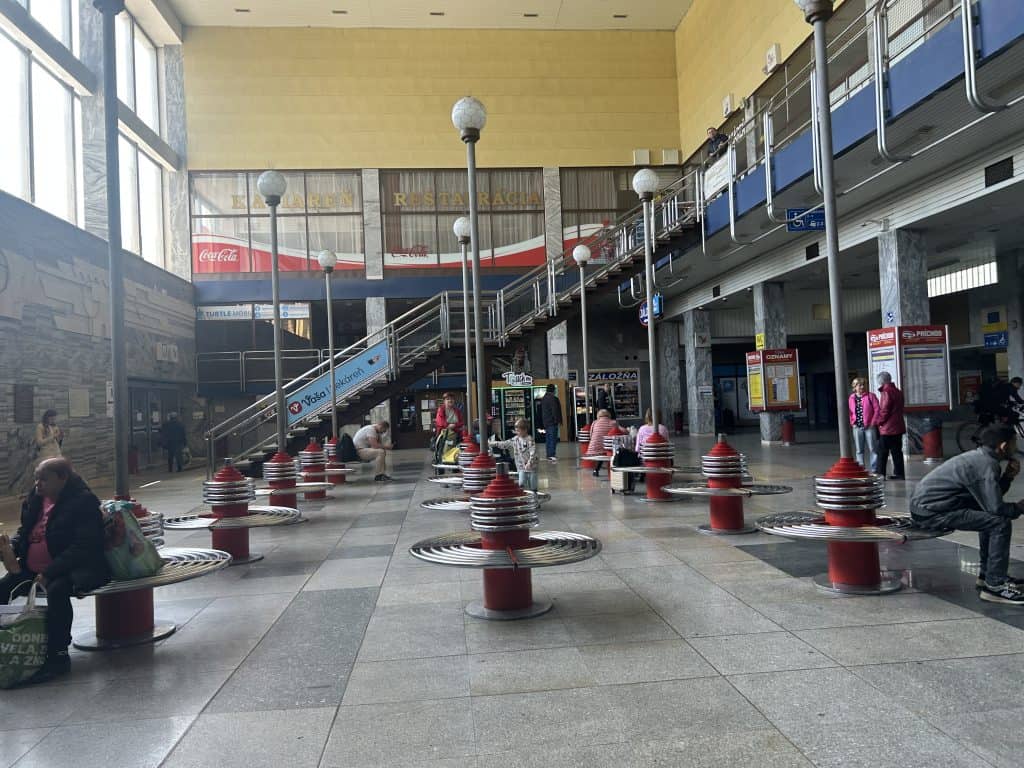
Prešov has its own main train station that is well-connected to the Slovak railway network. The national rail operator, Železničná spoločnosť Slovensko (ZSSK), runs frequent express and regional trains. There are direct services to Košice, with connections at the nearby junction of Kysak for trains to Bratislava and the rest of the country. Regional trains also connect Prešov with nearby destinations like Bardejov. In addition, the private operator Leo Express runs a direct international train service from Prešov to Prague in the Czech Republic.
Connecting by Bus
Prešov has a large bus station that serves as a hub for numerous long-distance and regional bus routes. Many different companies operate services that connect the city with most other major cities in Slovakia. The bus is often an economical alternative to the train and provides more direct connections to many smaller towns in the region. There are also extensive international bus connections, especially to cities in neighboring countries like Poland, Hungary, and Ukraine. The bus station is located next to the main train station for convenient transfers.
Driving Distances
The driving distance to Prešov from 20 regional cities, according to Google Maps:
- Košice, Slovakia – 40 kilometers (0 h 30 min)
- Poprad, Slovakia – 78 kilometers (0 h 50 min)
- Miskolc, Hungary – 125 kilometers (1 h 30 min)
- Rzeszów, Poland – 130 kilometers (1 h 50 min)
- Uzhhorod, Ukraine – 135 kilometers (2 h 00 min)
- Banská Bystrica, Slovakia – 165 kilometers (2 h 00 min)
- Debrecen, Hungary – 188 kilometers (2 h 20 min)
- Kraków, Poland – 200 kilometers (2 h 50 min)
- Žilina, Slovakia – 217 kilometers (2 h 20 min)
- Katowice, Poland – 275 kilometers (3 h 20 min)
- Lviv, Ukraine – 290 kilometers (4 h 00 min)
- Budapest, Hungary – 300 kilometers (3 h 20 min)
- Bratislava, Slovakia – 403 kilometers (4 h 00 min)
- Brno, Czech Republic – 480 kilometers (4 h 40 min)
- Vienna, Austria – 485 kilometers (4 h 50 min)
- Warsaw, Poland – 490 kilometers (5 h 20 min)
- Zagreb, Croatia – 665 kilometers (6 h 30 min)
- Belgrade, Serbia – 675 kilometers (6 h 30 min)
- Prague, Czech Republic – 685 kilometers (6 h 40 min)
- Ljubljana, Slovenia – 875 kilometers (8 h 20 min)
Looking to Explore more of Slovakia and Europe?


This post was first published 2025-05-23 and was updated 2025-07-30