Paterna | Exploring Spain
Paterna is a city and municipality in the comarca of Horta Oest, located in the immediate metropolitan area of Valencia, Spain. It sits on the left bank of the Turia River, with parts of the Turia Natural Park within its territory. With a municipal population of approximately 73,000 residents, it is one of the largest suburbs of Valencia. Its proximity to the main city and to key infrastructure has made it an important residential and economic center.
While the municipality is large, the historic and cultural heart is the central urban area, which is the main focus of this guide. This core is where the main historical landmarks, including its medieval tower and cave dwellings, are concentrated. The character of the city is therefore a blend of this historic center and the modern expansion that surrounds it. Paterna is also known for its historical connection to the ceramics industry and local festivals.


A Short History of Paterna
The history of Paterna tracks its development from ancient settlements through its role as a strategic defensive point for Valencia, and into its modern identity as a major suburban city. Its name and its most important monument are direct legacies of its early history. The city’s growth has always been closely linked to that of the neighboring capital.
Ancient Origins and Roman Villas
The first human settlements in the Paterna area date back to the Neolithic and Bronze Ages. During the classical period, its location in the fertile plain near the major Roman city of Valentia Edetanorum made it a prime location for agriculture. Archaeological evidence points to the existence of several Roman villas in the area. These were large agricultural estates dedicated to producing food for the nearby city, taking advantage of the fertile soil and the water from the Turia River.
The Tower and Muslim Era
The most significant early development in Paterna occurred during the period of Muslim rule in Spain. The Torre de Paterna (Paterna Tower), the town’s most prominent landmark, was constructed during this era, likely in the 11th or 12th century. The tower was part of the defensive belt of the Taifa of Valencia. It served as a watchtower to control the surrounding area and to warn the capital city of any approaching threats from the north. Its construction solidified Paterna’s strategic importance.
Christian Reconquest and Modern Growth
In 1237, Paterna was conquered by the Christian forces of King James I of Aragon as part of the Reconquista. The town and its castle were granted to Artal de Luna, one of the king’s knights. For centuries, it remained a feudal lordship focused on agriculture. The town’s modern growth began in the 20th century. Its proximity to Valencia led to rapid industrialization and population growth, transforming it from a small agricultural town into a major industrial and residential suburb.


Things to Do and See
Paterna’s main points of interest are concentrated in its historic urban core. They reflect its past as a defensive outpost, a feudal town, and a center for local traditions like ceramics and cave-dwelling.
The Tower of Paterna
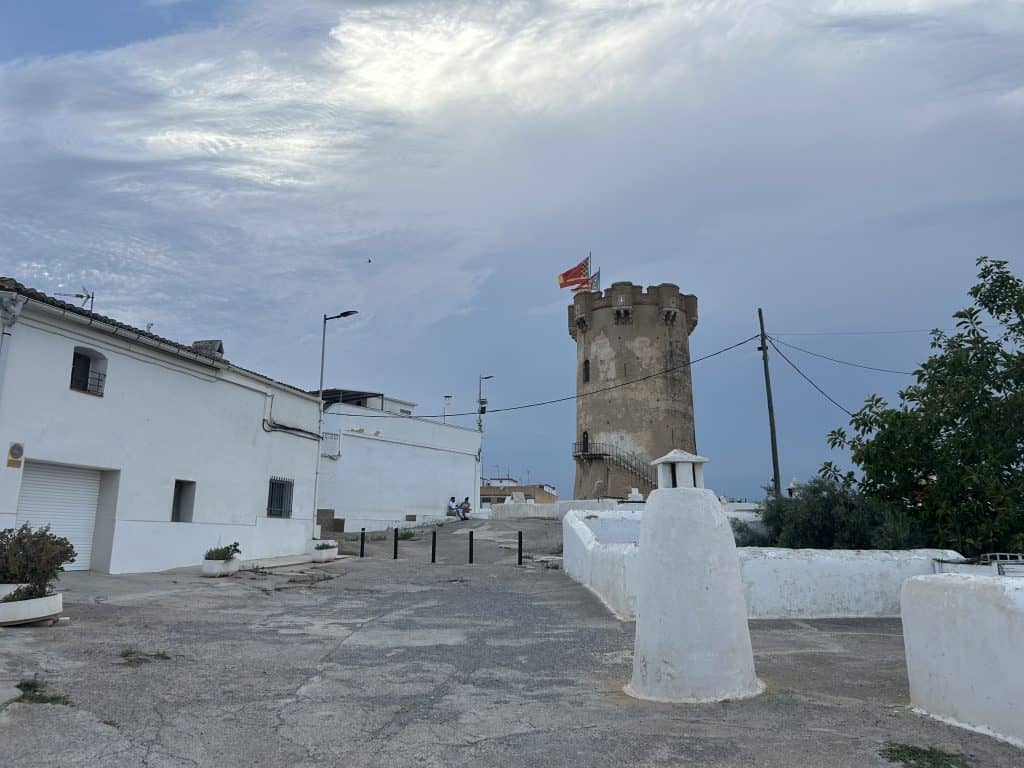
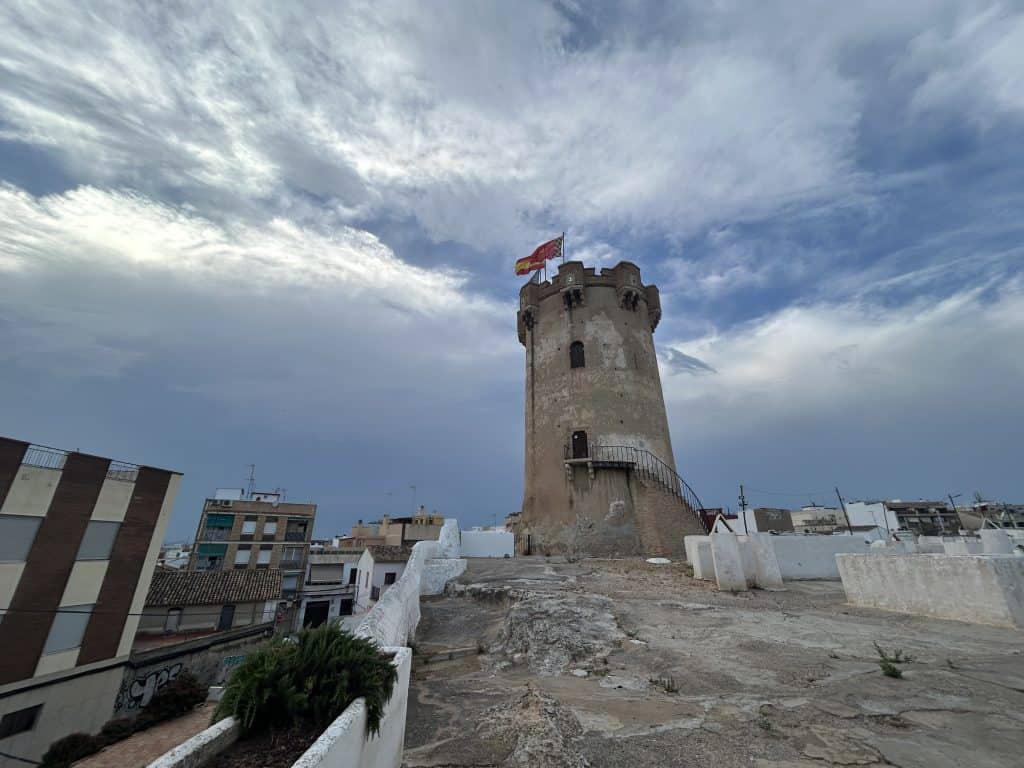
The Tower of Paterna (Torre de Paterna) is the primary landmark of the city. This freestanding stone watchtower dates back to the Almohad period in the 12th century. It stands 19.5 meters high and has a diameter of about 10 meters at its base. The tower was a key part of the defensive system for the city of Valencia. It has been declared a Site of Cultural Interest. Visitors can climb to the top for views of the town.
The Caves of Paterna
The Caves of Paterna (Cuevas del Batà y la Torre) are a feature of the town’s heritage. This complex consists of numerous cave-dwellings carved into the soft clay hillside near the tower. These caves served as homes for working-class families from the 19th century until the 1970s. Some have been restored and are open to the public as a museum space. They showcase the living conditions and specific culture associated with this type of housing.
Palace of the Counts of Villapaterna
The Palace of the Counts of Villapaterna (Palacio de los Condes de Villapaterna) is a notable building from the 18th century. It was constructed on the site of the old Moorish fortress, or alcázar, that once stood next to the tower. The palace has a neoclassical design. Today, this historic building serves as the Paterna Town Hall (Ayuntamiento de Paterna). It is the administrative center of the municipality.
Church of St. Peter the Apostle
The Church of St. Peter the Apostle (Iglesia de San Pedro Apóstol) is the main church in Paterna’s historic center. The original church was built in the 14th century, shortly after the Christian reconquest, though the current building is the result of many later renovations. Its most prominent exterior feature is its Baroque bell tower. The church is located next to the Town Hall and the Tower, forming the historic core of the old town.
Paterna Ceramics Museum
The Paterna Ceramics Museum (Museo de Cerámica de Paterna) is dedicated to the town’s important history of ceramic production. Paterna was a major center for ceramics during the medieval and Renaissance periods. Its green and white patterned pottery, known as Paterna ware, was exported across the Mediterranean. The museum is located in the old town hall building, ”El Castell.” It houses a large collection of these historic ceramics, found in local archaeological digs.
Gran Teatre Antonio Ferrandis
The Gran Teatre Antonio Ferrandis is the main municipal theater and cultural venue in Paterna. Named after the acclaimed Spanish actor who was born in the town, the theater hosts a full calendar of events. The programming includes professional theater productions, concerts, dance performances, and local cultural events. The modern facility serves as a key cultural hub for the residents of the municipality.



Sports in Paterna
Paterna has an active local sports scene with a strong tradition in football and the regional sport of Pilota Valenciana. The municipality is also known for being the location of the main training ground for one of Spain’s top football clubs.
Football
Football is the most followed sport in Paterna. The town has its own local club with a long history. It is also home to the modern training facilities of a major La Liga team. This makes the municipality a key center for football activity in the Valencia region. The local club provides a platform for community engagement and youth development.
Paterna CF
The town’s local football club is Paterna CF. Founded in 1928, the club has a long history of competing in the regional and national lower leagues of Spanish football. They play their home games at the Estadio Gerardo Salvador. The club is an important institution in the local community. It has a large number of youth teams for different age categories.
Valencia CF Training Center
Paterna is home to the Ciudad Deportiva de Paterna, the training ground and academy of Valencia CF. This large, modern complex is where the first team of the La Liga club trains daily. It is also home to the club’s renowned youth academy, which has produced many professional footballers. While not a public venue, its presence makes Paterna a key location in Spanish professional football.
Pilota Valenciana
Pilota Valenciana is a traditional ball game with deep roots in the region. Paterna has a strong tradition in this sport. It is played in a variety of styles, with one of the most popular being escala i corda, played in a specific court called a trinquet. The sport is a key part of local cultural heritage.
Trinquete de Paterna
The town has its own Trinquete de Paterna. This is the official indoor court where Pilota Valenciana is played. The trinquet hosts professional and amateur games throughout the year. It serves as a major hub for the sport in the Valencia metropolitan area. Attending a game here offers a direct look into one of the region’s most important cultural traditions.





How to Get to Paterna
As a major municipality in the Valencia metropolitan area, Paterna is exceptionally well-connected to the city’s transport network. It is easily accessible by metro, bus, and car from Valencia city center and the airport.
Riding the Metro and Bus Network
The most efficient way to reach Paterna is via the Metrovalencia network. Tram line 4 connects Paterna directly with the city of Valencia. The municipality also has several stops on Metro line 2, which provides a faster link to the city center. In addition, a network of local yellow buses (Autobuses Urbanos de Paterna) serves the different neighborhoods within the municipality. Always check official sources for up-to-date ticket information.
An Excursion by Car
Paterna is located at a key junction of Valencia’s main ring roads and motorways. The V-30 and CV-30 ring roads provide easy access from the port and other parts of the metropolitan area. The CV-35 motorway, also known as the Pista de Ademuz, runs directly through Paterna. This connects it with Valencia city center and the interior of the province.
From the Airport and Main Stations
Paterna’s location is directly adjacent to Valencia Airport (VLC). The airport is only about 4 kilometers away, making a taxi ride very short. The main train stations of Valencia, Estació del Nord and Joaquín Sorolla, are also easily accessible. From there, one can take the metro or a bus to reach Paterna in about 30-40 minutes.
Driving Distances
The driving distance from 10 major regional metropolises, according to Google Maps:
- Valencia, Spain – 8 kilometers (0 h 20 min)
- Zaragoza, Spain – 306 kilometers (3 h 10 min)
- Madrid, Spain – 346 kilometers (3 h 40 min)
- Barcelona, Spain – 348 kilometers (3 h 40 min)
- Bilbao, Spain – 572 kilometers (6 h 40 min)
- Seville, Spain – 654 kilometers (6 h 20 min)
- Toulouse, France – 714 kilometers (6 h 50 min)
- Lisbon, Portugal – 887 kilometers (8 h 30 min)
- Geneva, Switzerland – 1,013 kilometers (9 h 50 min)
- Paris, France – 1,360 kilometers (13 h 10 min)
Looking to Explore more of Spain and Europe?