Bucharest | Exploring Romania
Bucharest, known as București in Romanian, is the capital and largest city of Romania. Located in the southeastern part of the country, it is situated on the banks of the Dâmbovița River, which flows into the larger Argeș River, a tributary of the Danube. With a population of around 1.8 million within the city limits and over 2.1 million in the metropolitan area, Bucharest is one of the largest cities in the European Union. The city lies approximately 60 kilometers north of the Danube River and the Bulgarian border, with the Carpathian Mountains curving to its north.
The character of Bucharest is defined by a complex and visible layering of history. Its urban landscape is a blend of different architectural styles, reflecting its varied past. This includes historic Orthodox monasteries, grand neoclassical buildings from its time as a royal capital, and the monumental architecture of the communist era. This historical fabric exists alongside modern development, creating a city of contrasts. The city is known for its wide, tree-lined boulevards, particularly in the northern districts, which contributed to its old nickname, the ”Paris of the East.”
As the primary political, economic, and cultural center of Romania, Bucharest is home to the country’s main governmental, educational, and commercial institutions. It has a large student population associated with its numerous universities. The city’s districts show its diverse character, from the historic and now lively Old Town (Centru Vechi) to the large-scale residential areas and grand public buildings constructed in the 20th century. This mix of functions and styles gives the city its specific and dynamic atmosphere.


Good to Know When Visiting Bucharest
To help with planning a visit, here are several practical points covering daily essentials, timing, and efficient exploration of the city. Understanding these details can make a trip to Bucharest more convenient. This information is intended to provide a general overview for travelers preparing to visit this major Balkan capital.
The Daily Essentials
The official currency used in Bucharest is the Romanian Leu (RON). While Romania is part of the European Union, it has not yet adopted the Euro. It is advisable to have some local currency on hand, although credit and debit cards are widely accepted in most hotels, restaurants, and larger shops. The official language is Romanian. English is widely spoken in tourist areas and by younger generations, but less so in smaller, local establishments. Tipping is customary; a tip of around 10% is standard for good service in restaurants and for taxi drivers. The tap water in Bucharest is generally considered safe to drink, but many residents and visitors prefer bottled water. The electrical system uses Type F sockets with a standard voltage of 230V. As in any large city, visitors should be mindful of their belongings in crowded areas and on public transport.
Planning Your Calendar
Bucharest experiences four distinct seasons with a continental climate. The summers are hot, while the winters can be cold and snowy. The spring and autumn months are often considered the best time to visit, offering mild and pleasant weather for exploring the city. Major annual events include the George Enescu Festival, a prestigious classical music festival held every two years, and various street festivals during the summer. The city also has a growing Christmas market scene in December. For a first visit, three to four full days is generally sufficient to see the main sights. This allows time to explore the Old Town, visit the Palace of the Parliament, and see several key museums and parks.
A Tourist’s Toolkit for Exploration
The historic center of Bucharest, particularly the Old Town, is compact and best explored on foot. For longer distances, the city has an efficient public transport system consisting of a metro, buses, trams, and trolleybuses. The system uses a rechargeable smart card called the ”Activ” card, which can be loaded with credit for individual journeys or with various types of passes. These cards can be purchased and reloaded at kiosks and metro stations. It is highly advisable to book tickets for the Palace of the Parliament tour in advance, as it is a high-security government building and requires passport identification for entry. Many museums in Bucharest are closed on Mondays.
A Short History of Bucharest
The history of Bucharest is that of its development from a medieval fortress into a royal capital and finally into the modern capital of Romania. Its story is marked by periods of great cultural flourishing, as well as by fires, earthquakes, wars, and radical urban transformations in the 20th century. The city’s identity has been shaped by its role as the center of the Wallachian principality, its ”Belle Époque” era as the ”Paris of the East,” and the profound changes it underwent during the communist regime. This complex history is visible in the city’s eclectic architecture today.
Foundation and Princely Court
While the area has been inhabited since ancient times, the first written mention of Bucharest appeared in a document from 1459. The document was issued by Vlad the Impaler (Vlad III Dracula), the Prince of Wallachia. He established a fortified court here, recognizing its strategic position on the trade routes between the Ottoman Empire and Central Europe. In 1659, Bucharest became the permanent capital of the Principality of Wallachia. The city began to grow as a political and commercial center.
During the following centuries, the city saw periods of Ottoman and Phanariot Greek rule. It was also briefly occupied by the Habsburg and Russian Empires. Despite these changes, the city continued to develop. It became a center for religious life with the construction of numerous Orthodox churches and monasteries. Its location also made it a center for trade and craftsmanship in the region.
The ”Little Paris” Era
In the 19th century, Bucharest underwent significant development. In 1862, after the unification of the principalities of Wallachia and Moldavia, Bucharest was chosen as the capital of the new state of Romania. This new status led to a period of rapid modernization and construction. The city’s elite looked to France for cultural and architectural inspiration. This era brought the construction of grand, wide boulevards, such as Calea Victoriei, and many neoclassical and Beaux-Arts buildings.
This transformation earned the city the nickname ”Little Paris” (Micul Paris). The city became a center for high culture, with the construction of the Romanian Athenaeum, the National Theatre, and numerous palaces for the aristocracy. The city’s parks, such as the Cișmigiu Gardens, were also designed during this period. This era of elegance and prosperity defined the city’s character until the outbreak of World War II.
The 20th Century and Revolution
The 20th century brought new challenges. Bucharest suffered damage from German bombing during World War I and was occupied by Central Powers forces. After the war, the city continued to grow as the capital of Greater Romania. The city was again heavily damaged during World War II, this time by Allied bombing raids. Following the war, the communist regime was established in Romania. This led to the most drastic reshaping of the city in its history.
Under the rule of Nicolae Ceaușescu, particularly in the 1980s, large-scale demolition projects occurred. A vast area of the historic city center, including churches, synagogues, and thousands of homes, was destroyed to make way for the new Centrul Civic (Civic Centre) and the colossal Palace of the Parliament. This project fundamentally altered the city’s urban fabric. The Romanian Revolution of 1989, which brought an end to communist rule, began in Timișoara but culminated in Bucharest, with major confrontations taking place in the city center. This marked a new chapter for Bucharest, which then began a period of transition and regeneration.


Things to Do and See
Bucharest offers a range of attractions that showcase its layered history, with grand neoclassical buildings, historic churches, and monumental 20th-century architecture. The city’s main landmarks are concentrated in the historic center and along the main boulevards. These sights provide a look into the city’s past as the ”Paris of the East,” its time under communist rule, and its modern identity as a dynamic European capital.
The city’s public squares, such as Revolution Square, are sites of major historical events. The large parks provide green spaces for recreation. The Old Town, or Centru Vechi, has been restored and is now the city’s primary hub for dining and nightlife. The city’s museums are housed in historic buildings and contain significant collections of Romanian art and history.
Palace of the Parliament
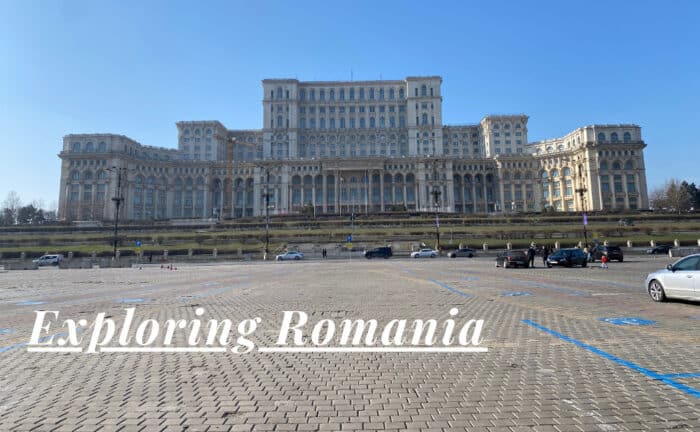
The Palace of the Parliament (Palatul Parlamentului) is one of the most well-known buildings in Bucharest. It is one of the largest administrative buildings in the world, second only to the Pentagon in the United States. Its construction began in 1984 under the orders of Nicolae Ceaușescu and was not fully completed before the fall of the Communist regime in 1989. The palace has over 1,000 rooms and is built from Romanian marble and other materials. It houses the Romanian Parliament (both the Chamber of Deputies and the Senate) and the National Museum of Contemporary Art. It also serves as an international conference center. Guided tours of its vast interior are available.
Centru Vechi
The Centru Vechi is the historic heart of Bucharest. This area features narrow cobblestone streets and a mix of buildings from different periods. For much of the 20th century, the area was neglected, but in the 21st century, it has undergone extensive restoration. It has been transformed into the city’s main nightlife and entertainment district. The area is packed with restaurants, bars, cafes, and clubs. It is largely a pedestrian zone and is a hub of activity both day and night. Key landmarks within the Old Town include the Stavropoleos Monastery and the historic Manuc’s Inn.
Romanian Athenaeum
The Romanian Athenaeum (Ateneul Român) is an ornate, circular concert hall in the center of Bucharest. Opened in 1888, it is a key landmark of the city. The building was designed by the French architect Albert Galleron and was financed almost entirely through public donations. The Athenaeum is known for its high dome and its neoclassical architecture. The interior concert hall features a large fresco that depicts scenes from Romanian history. The building is renowned for its excellent acoustics and is the home of the ”George Enescu” Philharmonic Orchestra.
National Museum of Village ”Dimitrie Gusti”
The National Museum of Village ”Dimitrie Gusti” (Muzeul Național al Satului ”Dimitrie Gusti”), often shortened to the Village Museum, is a large open-air museum. It is located in King Michael I Park, on the shores of Lake Herăstrău. The museum was established in 1936. It showcases traditional Romanian village life by featuring over 300 authentic houses and other buildings that have been relocated from different regions of Romania. Visitors can explore these diverse architectural styles. The museum provides insight into the rural culture and heritage of the country.
Stavropoleos Monastery
The Stavropoleos Monastery (Mănăstirea Stavropoleos) is an Eastern Orthodox monastery for nuns in the heart of the Old Town. It was built in 1724. It is a key example of the Brâncovenesc style of architecture, which is specific to Wallachia. The church is known for its intricate stone and wood carvings and its peaceful courtyard. The monastery also has a library with a collection of old books and icons. It stands as a tranquil religious site amidst the busy streets of the Old Town.
King Michael I Park
King Michael I Park (Parcul Regele Mihai I), formerly known as Herăstrău Park, is the largest park in Bucharest. It covers an area of about 187 hectares. The park is built around the large Lake Herăstrău. It contains extensive lawns, gardens, and walking paths. The park offers boat rentals on the lake and contains numerous cafes and restaurants. It is a popular spot for relaxation and outdoor activities. The Village Museum is located within its bounds, as is a Japanese Garden.
National Museum of Art of Romania
The National Museum of Art of Romania is housed in the former Royal Palace in Revolution Square. The museum holds the most extensive collections of Romanian art in the country. The collection is divided into two main galleries: the National Gallery, which features Romanian medieval and modern art, and the European Gallery, which features art from the 15th to the 20th centuries. The building itself is a significant historical landmark. The Romanian art section provides a comprehensive overview of the nation’s artistic development.
Cișmigiu Gardens
The Cișmigiu Gardens (Grădina Cișmigiu) are the oldest public gardens in Bucharest. The gardens were officially opened in 1860. The park was designed in the style of an English garden by the German landscape architect Carl Meyer. It features a large lake where rowboats can be rented in the summer. The gardens contain winding paths, fountains, and historical monuments dedicated to famous Romanian writers. It is a tranquil retreat located in the city center.
Arcul de Triumf
The Arcul de Triumf is a triumphal arch located in the northern part of Bucharest. The current arch was inaugurated in 1936. It was built to commemorate Romania’s participation in World War I. The design is based on the Arc de Triomphe in Paris. The arch stands 27 meters tall. It is decorated with sculptures created by Romanian artists. The arch is a key landmark on one of the city’s main boulevards.
Cărturești Carusel
The Cărturești Carusel is a large bookstore located in a restored 19th-century building in the Old Town. While it is a commercial establishment, it has become a major point of interest for visitors due to its interior design. The six-story building features elegant white balconies, staircases, and a large central atrium, giving it a bright and open atmosphere. The bookstore contains a large selection of books, music, and gifts. It also has a bistro on the top floor.
Sports in Bucharest
Bucharest has a passionate sports scene, particularly in football. The city’s dedication to sports is evident in its active clubs and the intense local rivalries that define much of the city’s sporting culture. These competitions draw large and passionate crowds. The city has a number of major sporting venues, including the Arena Națională for football and several large multi-sport halls for indoor sports.
The city is home to several of Romania’s most historically successful sports clubs. These clubs often have multiple sections for different sports, with the football, handball, and volleyball teams being particularly prominent. This creates a strong sporting identity in the city. The rivalries between these major clubs, particularly between Steaua and Dinamo, are a key feature of the national leagues.
Football
Football is by far the most popular sport in Bucharest and across Romania. The city boasts a fierce rivalry between its top teams, which has historically dominated the Romanian national league. The ”Eternal Derby” between FCSB (Steaua) and Dinamo attracts large and passionate crowds. The Arena Națională, a modern stadium, regularly hosts significant domestic and international games, including the 2012 UEFA Europa League Final.
FCSB
FCSB, the club historically known as Steaua București, is one of Romania’s most successful football teams. Founded in 1947 as the army sports club, it has won numerous national titles, including a record number of Liga I championships. Their greatest success came in 1986, when they won the European Cup (now the UEFA Champions League), becoming the first Eastern European team to do so. Their home ground is the Arena Națională.
Dinamo București
Dinamo București is the major rival of FCSB and is another historically successful club. Founded in 1948 as the club of the Ministry of Internal Affairs, they have won 18 Liga I titles. Dinamo became the first Romanian club to reach a European Cup semi-final in 1984. The rivalry with Steaua is one of the most intense in European football. The club has a large and dedicated fanbase.
Rapid București
Founded in 1923 by railway workers, Rapid București is another of the city’s most beloved clubs with a strong and passionate fan base. They have won the national title three times and have also won the Romanian Cup multiple times. The club is known for the intense atmosphere created by its supporters at home games. They are a key part of the city’s football heritage and rivalry network.
Handball
Handball is a highly successful sport in Bucharest, especially at the club level. Both the men’s and women’s teams from the city have achieved significant recognition and titles in European competitions. The sport has a dedicated following, and major games are well-attended. The city’s top clubs are among the best in Europe.
CSM București
Founded in 2007, the women’s handball team of CSM București achieved rapid success. The team won the EHF Champions League, the premier club competition in Europe, in 2016. This was a major achievement for Romanian club handball. The club regularly competes for both national and European honors and features many top international players. They play their home games at the Sala Polivalentă.
CSA Steaua București & Dinamo București
The men’s handball sections of CSA Steaua and Dinamo București are two of the most decorated in Romania. CSA Steaua has a rich history, having won the EHF Champions League twice, in 1968 and 1977. Dinamo București is also a dominant force in the modern Romanian handball league, having won the national title consistently in recent years. They also frequently compete in the EHF Champions League.
Rugby
Rugby union has a long and storied tradition in Bucharest. The Romanian national team, known as ”The Oaks,” often features a large number of players from the city’s clubs. This showcases Romania’s strong legacy in this physically demanding sport. The national team plays its home games in Bucharest at the Stadionul Național de Rugby Arcul de Triumf.
CSA Steaua & CS Dinamo București
The rugby sections of the major sports clubs, CSA Steaua București and CS Dinamo București, are two of the most successful in the history of the Romanian domestic league, the SuperLiga. CSA Steaua has won the most national championships. CS Dinamo is also a historic force in the sport. The rivalry between these two clubs has long been a central feature of Romanian rugby.


Getting Around in Bucharest
Navigating Bucharest is an adventure. Its extensive transport network connects historic neighborhoods with modern districts. Whether you prefer swift metro journeys or surface-level tram rides, various options exist. Understanding Bucharest’s transport system helps you explore its iconic landmarks and bustling streets with ease. The public transport system is composed of the metro, operated by Metrorex, and the surface network of buses, trams, and trolleybuses, operated by STB.
An integrated ticketing system is not fully in place, so different cards may be needed for the metro and the surface transport. The ”Activ” card is a rechargeable smart card used for STB buses, trams, and trolleybuses. For the metro, separate tickets or passes must be purchased. You can buy tickets and passes at kiosks and metro stations. Remember to validate your ticket immediately upon boarding surface transport and before entering the metro gates. Always check official sources for the most up-to-date information.
On Foot: The Old Town and Calea Victoriei
Walking is often the best way to experience Bucharest’s historic core. The Old Town (Centrul Vechi) is a large pedestrianized zone with a network of narrow streets. The city’s main historic avenue, Calea Victoriei, is also a pleasant route for a walk and is home to many major landmarks like the National Museum of Art and the Romanian Athenaeum. Areas like Revolution Square and University Square are also easily explored on foot. Comfortable shoes are recommended.
Riding the Metro
The Bucharest Metro is the quickest way to travel longer distances across the city. The system has five lines: M1, M2, M3, M4, and M5. The M1 and M3 lines form a loop around the city center. The M2 line is a key north-south route that connects the main business areas with the city center. The metro is modern and generally reliable. It operates from around 5:00 AM until 11:00 PM. Piața Unirii is a major interchange station connecting three of the lines.
A Network Above Ground: Buses, Trams, and Trolleybuses
Bucharest has an extensive network of buses, trams, and trolleybuses that covers areas not reached by the Metro. The bus network is very dense and is essential for connecting the suburban areas and outer districts. The tram network runs through many central streets and offers a different way to see the city. Trolleybuses are electric buses that operate on specific routes. Be aware that surface transport can often be affected by the city’s heavy traffic.
A Quick Ride: Taxis and Ride-Sharing
Official taxis are widely available in Bucharest. It is standard practice to check that the company name is displayed and that the driver uses the meter. Ride-sharing apps like Uber and Bolt also operate extensively in Bucharest and are often a very popular and convenient alternative. These are booked via smartphone apps, which provide the price upfront and a simple payment process. They can be a good option for avoiding language barriers or negotiating fares.
How to Get to Bucharest
Traveling to Bucharest is straightforward, with several transport options catering to different preferences and budgets. For flights, Henri Coandă International Airport (OTP) is Bucharest’s main gateway, offering extensive connections across Europe. A secondary option is Băneasa Airport (BBU), closer to the city center but primarily serving business aviation. Those preferring to drive will find Romania’s improving road network leads directly to the capital. Buses provide a budget-friendly way to arrive from various European cities, while trains offer a relaxed journey into Bucharest’s Gara de Nord.
Arriving by Air: Henri Coandă Airport
Flying is often the quickest way to reach Bucharest. Henri Coandă International Airport (OTP) is the main international hub. It is located just north of the city. The airport is well-connected to major European cities. Many airlines offer direct flights, including national carriers like TAROM and major low-cost carriers like Wizz Air and Ryanair. From the airport, a direct train line connects to the main train station, Gara de Nord. Express buses and taxis are also readily available. Bucharest Aurel Vlaicu International Airport (BBU) is another option, though it primarily handles business and private aviation with limited commercial flights.
The Open Road: Driving to the Capital
Driving to Bucharest offers flexibility. Romania has a developing road network, with several major motorways connecting to the capital. The A1 motorway connects to the west of the country, while the A2 motorway runs to the port of Constanța on the Black Sea. The A3 motorway runs north towards Ploiești. A digital vignette (rovinieta) is mandatory for using motorways and national roads in Romania. It can be purchased online or at gas stations. Border crossings from neighboring countries like Hungary and Bulgaria are generally efficient.
Connecting by Coach
Bus travel is a budget-friendly option for reaching Bucharest. Numerous international bus lines operate to the city from across Europe. Companies like FlixBus and Eurolines are popular choices. They connect Bucharest with destinations like Budapest, Sofia, Istanbul, and Vienna. The main international bus station is often Autogara Militari, located in the western part of the city and connected to the metro system. Bus journeys can be long but are often comfortable.
On Track: A Journey by Rail
Traveling by train offers a different experience. Bucharest’s Gara de Nord is the primary railway station and a major rail hub in Southeastern Europe. The Romanian Railways (CFR Călători) operates domestic routes connecting Bucharest to all major cities in the country. International trains also connect to neighboring countries. Direct lines exist to cities like Budapest, Vienna, Sofia, and Istanbul. Some of these routes, particularly night trains, can be a comfortable way to travel long distances.
Driving Distances
The driving distance from 10 regional cities, according to Google Maps:
- Constanța, Romania – 226 kilometers (2 h 20 min)
- Varna, Bulgaria – 271 kilometers (3 h 40 min)
- Plovdiv, Bulgaria – 301 kilometers (4 h 40 min)
- Sofia, Bulgaria – 397 kilometers (6 h 00 min)
- Chișinău, Moldova – 436 kilometers (7 h 30 min)
- Cluj-Napoca, Romania – 449 kilometers (6 h 10 min)
- Timișoara, Romania – 534 kilometers (6 h 30 min)
- Belgrade, Serbia – 611 kilometers (8 h 00 min)
- Istanbul, Turkey – 645 kilometers (8 h 20 min)
- Budapest, Hungary – 831 kilometers (8 h 40 min)
Looking to Explore more of Romania and Europe?