
Exploring Bulgaria
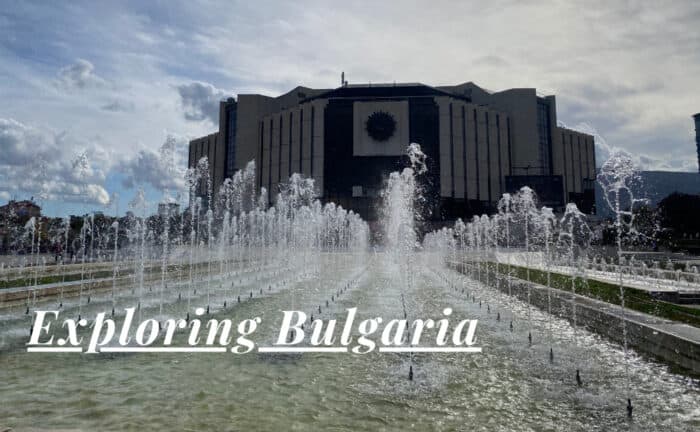
Exploring Bulgaria
Bulgaria is a country located in Southeastern Europe, on the eastern part of the Balkan Peninsula. The nation’s capital and largest city is Sofia. With a population of approximately 6.8 million inhabitants, Bulgaria’s geography is notably diverse, and it encompasses the Balkan Mountains, the Rhodope Mountains, and a long coastline on the Black Sea. The country’s official language is Bulgarian, which uses the Cyrillic alphabet, an alphabet that has its origins in the First Bulgarian Empire.
The country’s identity is shaped by its long and layered history. It has been home to ancient Thracian tribes and was later a part of the Roman and Byzantine empires. The medieval Bulgarian Empires were major powers in the region, and they left a lasting cultural and religious legacy. After centuries of Ottoman rule, a national revival in the 19th century led to the re-establishment of the modern state. Today, Bulgaria is a member of the European Union, and it balances its rich historical heritage with its development as a modern European nation.
Population of Bulgaria
The population of Bulgaria is approximately 6.8 million people. The majority of the inhabitants are ethnic Bulgarians, who make up over 84% of the population. The country is also home to several significant minority groups. The largest of these is the Turkish minority, which constitutes over 8% of the population, and the Roma community, which makes up nearly 5%.
The dominant religion in the country is Eastern Orthodox Christianity. Over 75% of the population adheres to the Bulgarian Orthodox Church, an institution that has been central to the nation’s identity for centuries. The largest minority religion is Islam, which is practiced primarily by the Turkish population and some Bulgarian Muslims, known as Pomaks. There are also smaller communities of Catholics and Protestants, as well as a small Jewish community.
Location of Bulgaria
Bulgaria is strategically situated in Southeastern Europe, occupying the eastern portion of the Balkan Peninsula. The country’s location has historically made it a crossroads, and it has served as a bridge between Europe and Asia. To the east, the country is bounded by the Black Sea, which provides it with vital maritime access and a long coastline. The southern border of Bulgaria is shared with Greece and Turkey.
To the west, Bulgaria shares borders with Serbia and North Macedonia. The northern border is primarily defined by the Danube River, which separates the country from Romania. Bulgaria is a member of the European Union, which it joined in 2007, and it is also a member of NATO. Its position gives it geopolitical importance in the Balkan region and on the western coast of the Black Sea.
Geography of Bulgaria
The geography of Bulgaria is remarkably diverse for a country of its size. The Balkan Mountains, known in Bulgarian as Stara Planina, run east-west through the country’s center. This range effectively divides the country into the Danubian Plain in the north and the Thracian Plain in the south. The Danube River forms most of the northern border with Romania, and it is a vital waterway for the region. To the south are the Rhodope Mountains, a range known for its picturesque villages, deep gorges, and rich folklore.
Bulgaria is also home to two other major mountain ranges. The Rila Mountains in the southwest include the highest peak on the Balkan Peninsula, Musala, which stands at 2,925 meters. The nearby Pirin Mountains are a UNESCO World Heritage Site, known for their alpine landscapes and glacial lakes. The country’s eastern border is formed by the Black Sea coast, which offers extensive sandy beaches and is home to popular resort towns like Sunny Beach and Golden Sands.
A Short History of Bulgaria
The history of Bulgaria is long and complex, and the region has been a cradle of civilization for millennia. The area was home to the ancient Thracians, and it was later conquered by the Roman Empire. The first Bulgarian state was formed in the 7th century, and the medieval Bulgarian Empires became major powers in Europe. This was followed by a long period of Ottoman rule, which ended with a national revival in the 19th century. The 20th century brought further challenges, including participation in two world wars and decades of communist rule, before the country re-emerged as a modern democracy.
The First and Second Bulgarian Empires
The First Bulgarian Empire was established in 681 by Khan Asparuh, and it became a major political and cultural power in Southeastern Europe. A pivotal moment was the adoption of Christianity in the 9th century and the creation of the Cyrillic alphabet at the Preslav and Ohrid literary schools. This golden age came to an end in the 11th century. The Second Bulgarian Empire was established in 1185 with its capital at Tarnovo. This state also became a significant regional power, but it was eventually conquered by the expanding Ottoman Empire at the end of the 14th century.
Ottoman Rule and the National Revival
For nearly 500 years, the Bulgarian lands were under the rule of the Ottoman Empire. During this period, the Bulgarian culture and the Orthodox Church were preserved, often in monasteries. In the 19th century, a National Revival movement began, which aimed to restore the Bulgarian language, culture, and an independent state. A key event in this struggle was the April Uprising of 1876. Although the uprising was brutally suppressed by the Ottomans, it drew international attention to the Bulgarian cause and ultimately led to the Russo-Turkish War of 1877-1878, which resulted in the re-establishment of a Bulgarian state.
The 20th Century and Beyond
The modern state of Bulgaria was officially established in 1878. The 20th century was a turbulent period for the country. It participated in the Balkan Wars and on the losing side of World War I, which resulted in significant territorial losses. In World War II, Bulgaria was allied with Nazi Germany, but it famously saved its Jewish population from deportation to extermination camps. After the war, the country fell under the influence of the Soviet Union and became a communist state, the People’s Republic of Bulgaria. The communist regime ended in 1989, and since then, Bulgaria has transitioned to a democratic republic and a market economy.
Entry Points to Bulgaria
Bulgaria is an accessible country with multiple entry points by air, sea, and land that connect it with the rest of Europe and beyond. The country has three main international airports that serve as the primary gateways for most visitors. For those traveling overland, there are numerous border crossings with its five neighboring countries. The country also has two major seaports on the Black Sea, which are primarily used for cargo but also serve some passenger ferries and cruise ships.
Gateways to the Sky
Air travel is a common and convenient way for international visitors to arrive in Bulgaria. The country’s three main international airports offer connections to numerous destinations, serving a mix of full-service and low-cost carriers and providing access to the capital, the coast, and the interior. These airports are the main entry points for the majority of tourists.
Sofia Airport (SOF)
The main international airport is Sofia Airport (SOF), and it is located near the capital. It is the busiest airport in the country, and it is served by numerous international airlines with connections to major hubs in Europe and the Middle East. The airport has two terminals and is well-connected to the city center by both a metro line and several bus routes, making for an easy transfer upon arrival.
Burgas Airport (BOJ)
Burgas Airport (BOJ) is a major international airport located on the southern Black Sea coast. It is a key gateway for the popular summer resorts, such as Sunny Beach. The airport handles a very large number of charter and low-cost flights during the tourist season, bringing millions of visitors to the coast. Its modern facilities are designed to handle the high volume of seasonal traffic.
Varna Airport (VAR)
Varna Airport (VAR) is the third major airport, and it serves the northern Black Sea coast of Bulgaria. Like Burgas, it is a major hub for charter flights during the summer, providing access to resorts like Golden Sands and Albena. The airport is located very close to the city of Varna. It plays a crucial role in the tourism industry of the northern coastal region.
Black Sea Voyages
Bulgaria’s coastline on the Black Sea provides another entry point into the country. The country’s two main seaports are historic centers of trade that connect Bulgaria with the wider maritime world. These ports are vital for the Bulgarian economy and for regional trade.
Port of Varna
The Port of Varna is the largest seaport complex in Bulgaria, and it is a major hub for cargo shipping in the Black Sea. In addition to its cargo operations, the port also has a modern passenger terminal. This terminal serves cruise ships that tour the region and some passenger ferries connecting to other Black Sea countries. The port is a key part of the city’s economy and history.
Port of Burgas
The Port of Burgas is the second major seaport in Bulgaria and another key hub on the Black Sea coast. It is a major port for bulk cargo and oil, and it plays a vital role in the country’s trade. The port also has facilities for passenger traffic, and it is a stop for some cruise ships during the summer season. Its location near the major tourist resorts makes it an important entry point for sea travelers.
Overland Routes
Bulgaria’s land borders with its five neighbors are open to international travelers, offering numerous routes into the country. These crossings are key corridors for regional trade and tourism, connecting Bulgaria with the rest of the Balkan Peninsula and Europe. The road and rail connections are generally well-developed.
Kulata Border Crossing (Greece)
The border with Greece has a major crossing at Kulata. This is the primary land route for travelers moving between the two countries. It is located on the main road that connects Sofia with Thessaloniki. This crossing is a part of a major Pan-European transport corridor, so it is a busy and important link.
Kapitan Andreevo Border Crossing (Turkey)
The border with Turkey has a main crossing at Kapitan Andreevo. This is a very busy border crossing, as it is on the main route for road traffic between Europe and Turkey. It is a key corridor for both tourism and international freight, and it is one of the busiest land borders in Europe. The crossing connects to the Turkish city of Edirne.
Ruse Border Crossing (Romania)
The border with Romania is largely defined by the Danube River. The main crossing is the Danube Bridge at the city of Ruse. This is the primary land route connecting Sofia with the Romanian capital of Bucharest. The bridge is a combined road and rail bridge and is a key piece of infrastructure for the entire region.
Join Us in Exploring Bulgaria


Exploring More of Europe?
Join us in exploring more of what Europe has to offer. It is not only Bulgaria that we have been exploring.