Kimstad, Östergötland | Exploring Sweden
Kimstad is a locality in Östergötland County, situated within the administrative boundaries of Norrköping Municipality. The community is located in the middle of the fertile Östgöta plains, positioned strategically between the two major cities of Norrköping and Linköping. The town’s modern identity and growth are directly linked to the establishment of its railway station in the 19th century. This event transformed it from a simple parish into a key point of transit and a growing residential community. Kimstad lies along the banks of the Motala ström, the significant river that flows through the region.
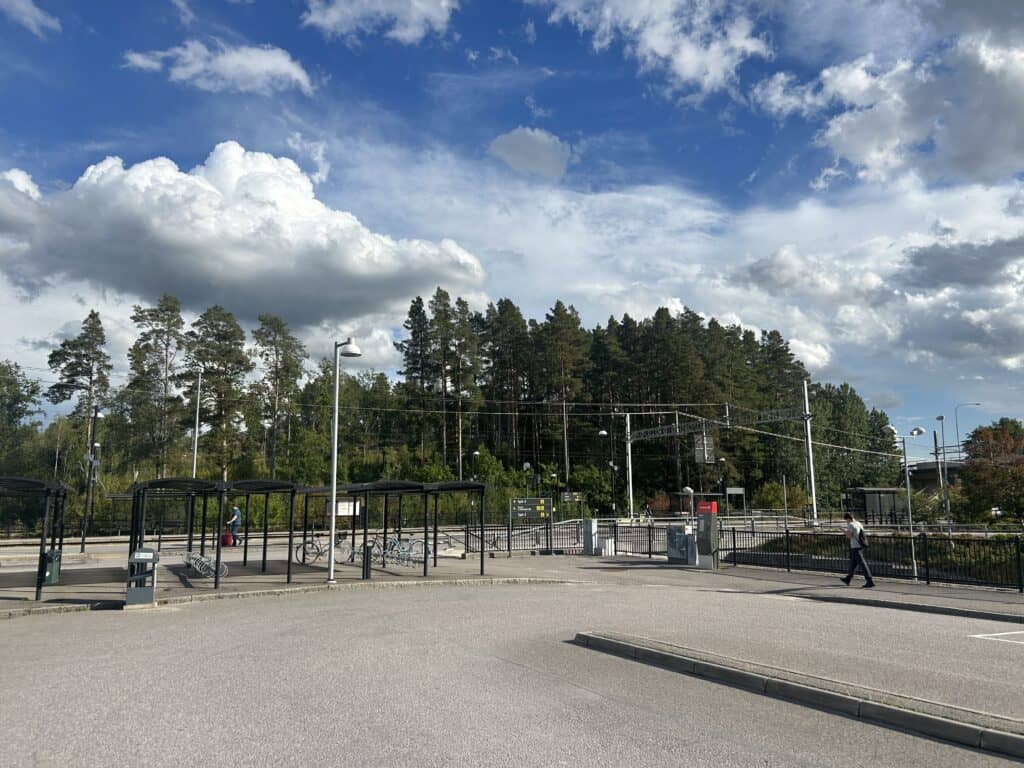
Today, Kimstad functions primarily as a commuter town, a role defined by its excellent railway connections. The presence of the Östgötapendeln commuter train service allows residents easy access to the employment and commercial centers of both Norrköping and Linköping. This connectivity has made it an attractive location for those seeking a quieter, small-town lifestyle without sacrificing the benefits of urban proximity. The locality itself has a compact center with local services that cater to the daily needs of its residents. Its character is therefore a blend of a peaceful residential village and a well-connected modern suburb.

History of Kimstad
The history of Kimstad is a story of transformation, from an ancient agricultural parish centered around a medieval church to a modern community shaped by the railway. For centuries, the area was a stable but sparsely populated farming region. The pivotal moment in Kimstad’s development was the arrival of the Eastern Main Line railway in the 19th century. The construction of a station here created a new nucleus, attracting new residents, services, and commerce, and forming the basis of the town that exists today. This makes Kimstad’s history a clear example of how 19th-century infrastructure projects created new hubs of growth in rural Sweden.
Ancient Origins and Parish Life
The area around Kimstad has been inhabited for over a thousand years, which is evidenced by several Viking Age runestones found in the vicinity. The original Kimstad parish (socken) was established during the medieval period, with its first stone church constructed in the 12th century. For hundreds of years, the parish church was the undisputed center of the community’s spiritual, social, and administrative life. The surrounding area consisted of agricultural land and scattered farms. Life followed the seasons of planting and harvesting, and the community’s structure was defined by the church and a few large local manors that owned much of the land.
The Arrival of the Railway
The single most important event in the formation of modern Kimstad was the construction of the Östra stambanan (the Eastern Main Line). The railway line, connecting Stockholm with the south of Sweden, was built through the parish, and a station was opened in Kimstad in 1862. This immediately created a new center of gravity away from the old church village. The station became a hub for the transport of goods, particularly agricultural products from the surrounding plains. This new accessibility attracted craftsmen, merchants, and new residents, and a small settlement, or stationssamhälle, began to grow around the railway tracks.
Growth as a Commuter Town
Throughout the 20th century, Kimstad continued to grow steadily as a residential community. Its role as a transport hub was solidified with the establishment of the Östgötapendeln commuter train service in the modern era. This service provided fast and frequent connections to both Norrköping and Linköping, cementing Kimstad’s status as an ideal commuter town. The population has grown in recent decades as more people have moved to the locality, attracted by its good transport links and peaceful village atmosphere. The town today is primarily a residential area, with most of the working population commuting to jobs in the larger neighboring cities.
Sights in Kimstad
The sights in and around Kimstad are closely tied to its long history and its location within the Östgöta countryside. As a small locality, it does not have major tourist attractions within the town itself, but it serves as an excellent base for exploring one of the region’s most significant cultural landmarks. The main points of interest include its ancient church, the historic railway station, and the natural beauty of the Motala ström river. These sights offer a glimpse into the area’s journey from a medieval parish to a modern commuter town.
Löfstad Castle
The most prominent sight in the vicinity of Kimstad is Löfstad Castle (Löfstad slott), located just a few kilometers to the east. This magnificent and well-preserved Baroque castle dates back to the 17th century. The last private owner, Emilie Piper, bequeathed the castle and its contents to the Östergötland Museum, with the condition that it be preserved exactly as she left it. Today, it functions as a museum, offering guided tours that provide a fascinating look into the life of the Swedish nobility at the turn of the 20th century. The castle is also surrounded by beautiful gardens and a park, which are open to the public.
Kimstad Church
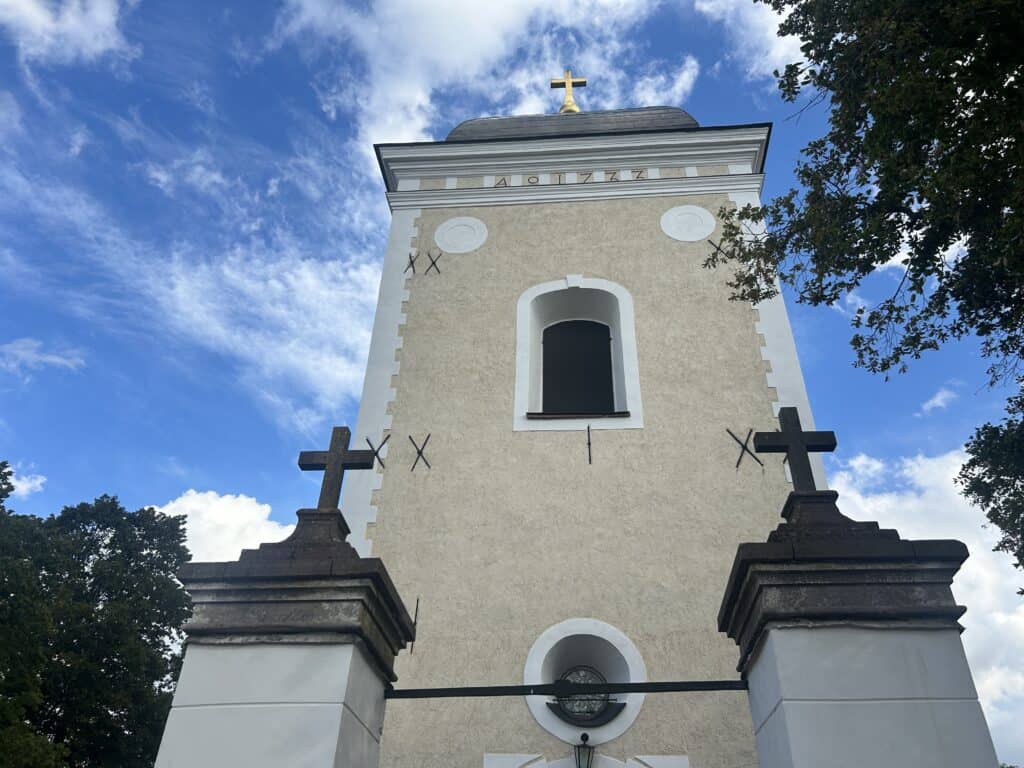
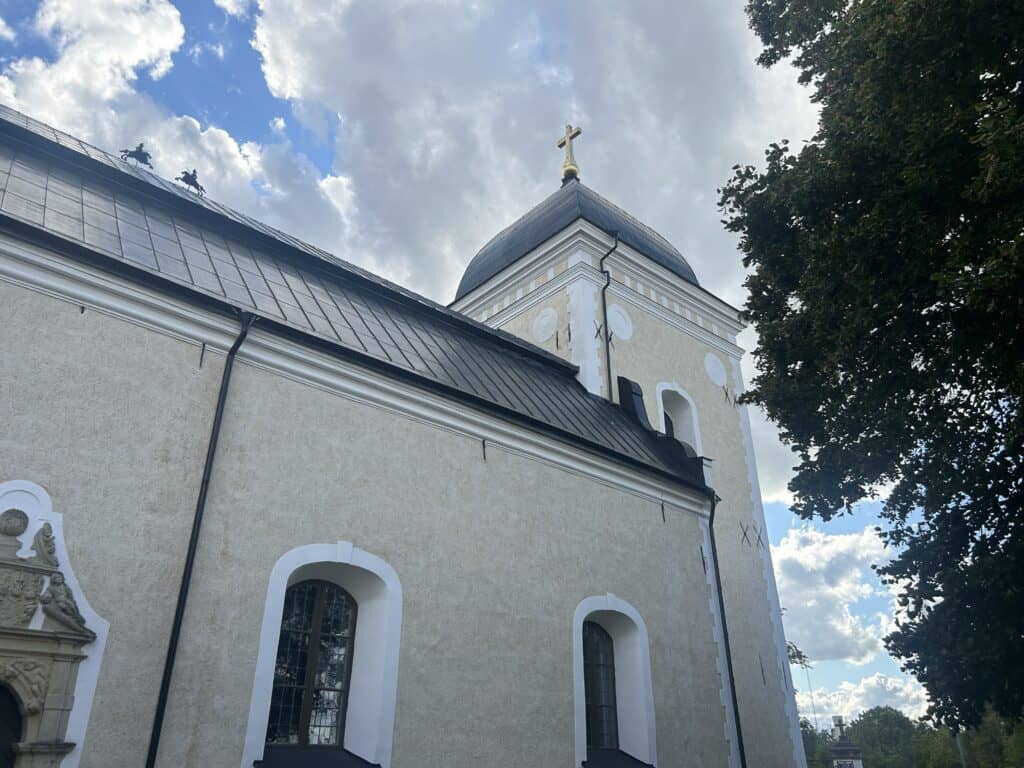
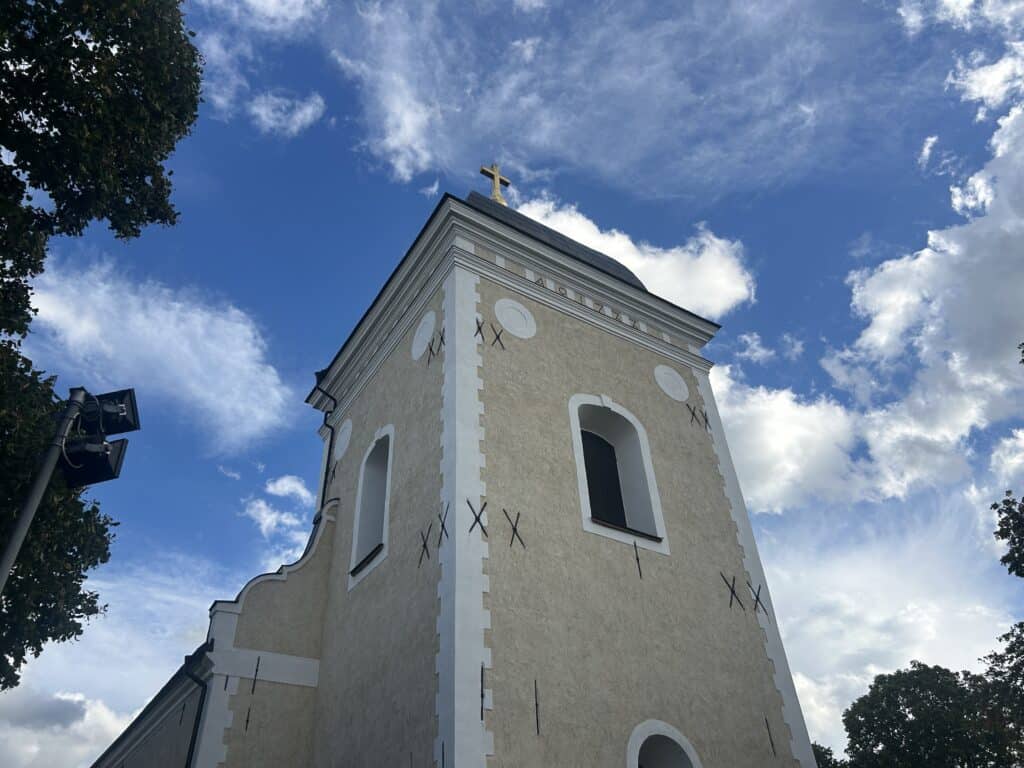
Kimstad Church (Kimstad kyrka) is the oldest building in the area and the historical heart of the parish. Its oldest parts, including the tower, date from the late 12th century. The church was built in a Romanesque style and has been altered and expanded several times over its long history. Inside, visitors can see remnants of medieval frescoes and several historic furnishings. The church is situated on a hill overlooking the surrounding plains, a short distance from the modern town center that grew up around the railway. Its well-preserved cemetery contains gravestones of generations of local families.
The Railway Station
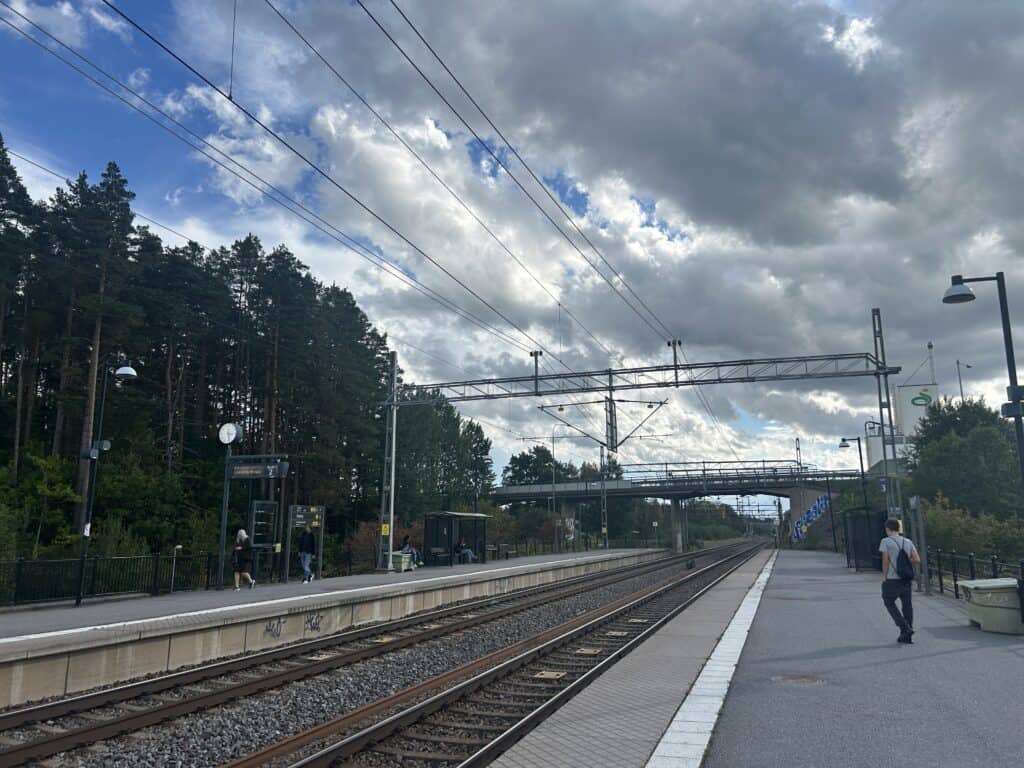
The Kimstad railway station building is itself a significant historical landmark. Constructed in the 1860s at the time of the railway’s opening, the wooden station house is a typical example of the architectural style used for smaller stations during this period of rapid expansion. The building is a direct physical link to the event that created the modern town. While the station today is a simple, functional stop for the commuter train, the old building stands as a monument to the railway’s transformative impact on the community. It represents the starting point of Kimstad’s journey to becoming the town it is today.
Motala Ström
The river Motala ström flows just to the south of Kimstad. As the primary waterway of Östergötland, the river has been a vital resource for the region for centuries. In the area around Kimstad, the river flows through a mix of open farmland and small groves of trees. The riverbanks offer opportunities for scenic walks and are also popular spots for recreational fishing. The presence of this major river adds a significant natural element to the landscape surrounding the town and has been a key factor in the agricultural prosperity of the parish throughout its history.
Sports in Kimstad
The sports scene in Kimstad is driven by community engagement and is centered around the main local sports club. The primary venue for sports in the town is Kimstad IP (Idrottsplats), which is the home ground for the local teams and the hub of athletic activity. As is common in smaller Swedish towns, the local sports club plays a vital social role, providing recreational opportunities for residents of all ages, especially the youth. The most popular sport is football, but other activities are also offered, reflecting the community’s commitment to an active lifestyle.
Kimstad GoIF (Football)
Kimstad GoIF (Gymnastik- och Idrottsförening) is the main sports club in the locality. The club’s largest section is football, and it operates teams for a wide range of age groups. These teams compete in the regional lower divisions of the Swedish football league system. The club is a central institution in the town, with its activities at Kimstad IP serving as important community events. It provides a crucial outlet for youth sports and is run largely by local volunteers.
Kimstad GoIF (Gymnastics)
In addition to football, Kimstad GoIF also has an active gymnastics section. This is very common for Swedish sports clubs of its type, which often offer a variety of sports under one organizational umbrella. The gymnastics group provides training for children and adults, focusing on physical development and recreation. The activities are typically held in the local school’s gymnasium. This section of the club is an important part of the town’s recreational offerings, especially for younger children.
Kimstad Ridklubb (Equestrian)
Located in the countryside just outside the main town, Kimstad Ridklubb is the local equestrian club. The club runs a riding school and offers lessons for riders of different ages and skill levels. It is an active part of the local community, organizing events and competitions. The club provides an opportunity for residents to engage with the area’s strong tradition of horse riding, which is a popular activity in the rural parts of Östergötland.
Skärblacka IF (Football)
The sports club of the neighboring town, Skärblacka IF, is also relevant to the sports scene in Kimstad. Due to the close proximity of the two towns, there is a friendly rivalry and also collaboration between the clubs. Some residents of Kimstad may participate in sports offered in Skärblacka, and vice versa. Skärblacka IF is a larger club and provides another option for local athletes in the area.
Linköping HC (Ice Hockey)
For elite-level sports, residents of Kimstad often look to the nearby major cities. Linköping HC is the premier professional ice hockey team in the region and one of the top teams in Sweden. The club plays its home games at the Saab Arena in Linköping, which is just a short train ride away from Kimstad on the Östgötapendeln. Many residents are passionate supporters of the team, and attending a game is a popular activity during the ice hockey season.

How to Get to Kimstad?
Reaching Kimstad is exceptionally convenient for a town of its size, primarily due to its strategic location on the main railway line between Norrköping and Linköping. This makes it one of the most accessible small towns in the region for those traveling by public transport. For those traveling by car, it is situated just a few kilometers from the E4, the most important motorway in Sweden. This excellent connectivity is a key feature of the town and is fundamental to its role as a commuter hub. The final approach to the town is via smaller regional roads that wind through the open agricultural landscape.
The town’s accessibility means that travelers have several efficient options for their journey. The train offers the most direct and fastest route for those coming from within the region or from major cities like Stockholm. Driving is also a very convenient option, providing flexibility upon arrival. Long-distance buses and air travel are viable, though they require a final transfer in one of the larger neighboring cities. The ease of getting to Kimstad has been a primary driver of its growth and its popularity as a residential location.
Traveling to Kimstad by Train
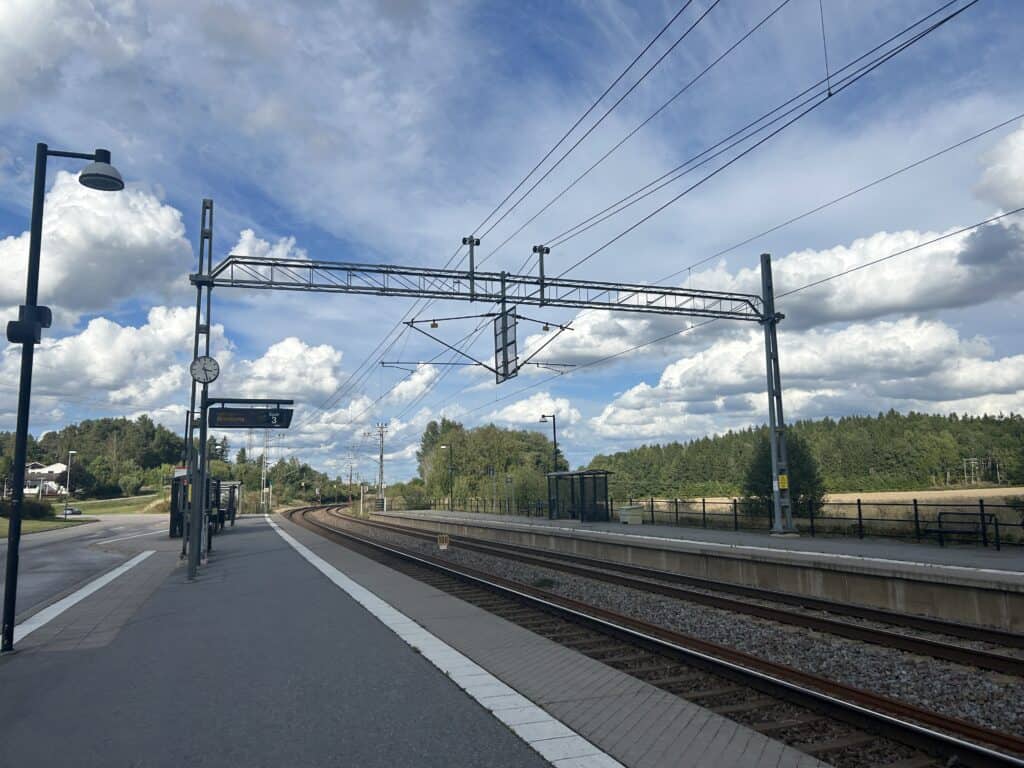
The most direct way to get to Kimstad is by train. Kimstad station is a stop on the Östgötapendeln commuter train line. This line provides frequent service, running roughly every 30 minutes during peak hours, between Norrköping and Linköping. The journey from either of these major cities takes only about 15 minutes. For travelers coming from further away, such as Stockholm, the route involves taking a high-speed SJ train to either Norrköping or Linköping and then making a simple transfer to the Östgötapendeln for the final short leg of the journey.
Driving to Kimstad
Kimstad is easily accessible by car. It is located just a few kilometers from the E4 motorway, which runs between Stockholm and Helsingborg. Travelers would take the exit for Norsholm/Kimstad and follow the local roads for about 5 minutes to reach the town. The proximity to the motorway makes the drive from major cities very straightforward. For instance, the drive from central Stockholm takes approximately two hours. Having a car is also useful for visiting nearby sights like Löfstad Castle.
Reaching Kimstad by Bus
While the train is the primary mode of public transport, Kimstad is also served by regional buses operated by Östgötatrafiken. These buses provide connections to nearby towns and villages that are not on the railway line, such as Skärblacka. For long-distance travelers, the main bus terminals are in Norrköping and Linköping. From these terminals, one can easily transfer to the Östgötapendeln train for the final part of the journey to Kimstad. This combination of long-distance bus and local train is a cost-effective travel option.
Nearby Airports and Flights for Kimstad
The two closest airports to Kimstad are Norrköping Airport (NRK) and Linköping City Airport (LPI). Both airports have a limited number of connections, primarily domestic flights to Stockholm and some international routes. From either airport, the easiest way to reach Kimstad is to take a taxi or airport bus to the respective city’s central station and then catch the Östgötapendeln train. For a much wider range of international flights, Stockholm Arlanda Airport (ARN) is the best option, with a direct train connection to Linköping and Norrköping.
Cycling to Kimstad
For regional travelers, arriving by bicycle is a pleasant option. The Östgöta plains are relatively flat, and a network of paved country roads and designated cycle paths makes for good cycling conditions. Kimstad is located along regional cycle routes that connect Norrköping and Linköping, including paths that run parallel to the Göta Canal a short distance away. This makes it an accessible destination for a day trip or as a stop on a longer cycling tour of the region.
Driving Distances
The driving distance from 20 regional cities, according to Google Maps:
- Skärblacka, Sweden – 8 kilometers (0 h 10 min)
- Norrköping, Sweden – 19 kilometers (0 h 20 min)
- Linköping, Sweden – 24 kilometers (0 h 25 min)
- Söderköping, Sweden – 35 kilometers (0 h 35 min)
- Motala, Sweden – 51 kilometers (0 h 50 min)
- Mjölby, Sweden – 55 kilometers (0 h 40 min)
- Nyköping, Sweden – 84 kilometers (0 h 55 min)
- Örebro, Sweden – 135 kilometers (1 h 50 min)
- Jönköping, Sweden – 155 kilometers (1 h 45 min)
- Stockholm, Sweden – 190 kilometers (2 h 5 min)
- Västerås, Sweden – 194 kilometers (2 h 25 min)
- Kalmar, Sweden – 218 kilometers (2 h 40 min)
- Växjö, Sweden – 221 kilometers (2 h 40 min)
- Uppsala, Sweden – 223 kilometers (2 h 35 min)
- Gothenburg, Sweden – 287 kilometers (3 h 5 min)
- Gävle, Sweden – 333 kilometers (3 h 35 min)
- Helsingborg, Sweden – 381 kilometers (3 h 45 min)
- Malmö, Sweden – 411 kilometers (4 h 5 min)
- Oslo, Norway – 411 kilometers (4 h 45 min)
- Copenhagen, Denmark – 453 kilometers (4 h 45 min)
Explore More of Östergötland and Sweden